Industry Focus Shifts to 6G Commercialization by 2030
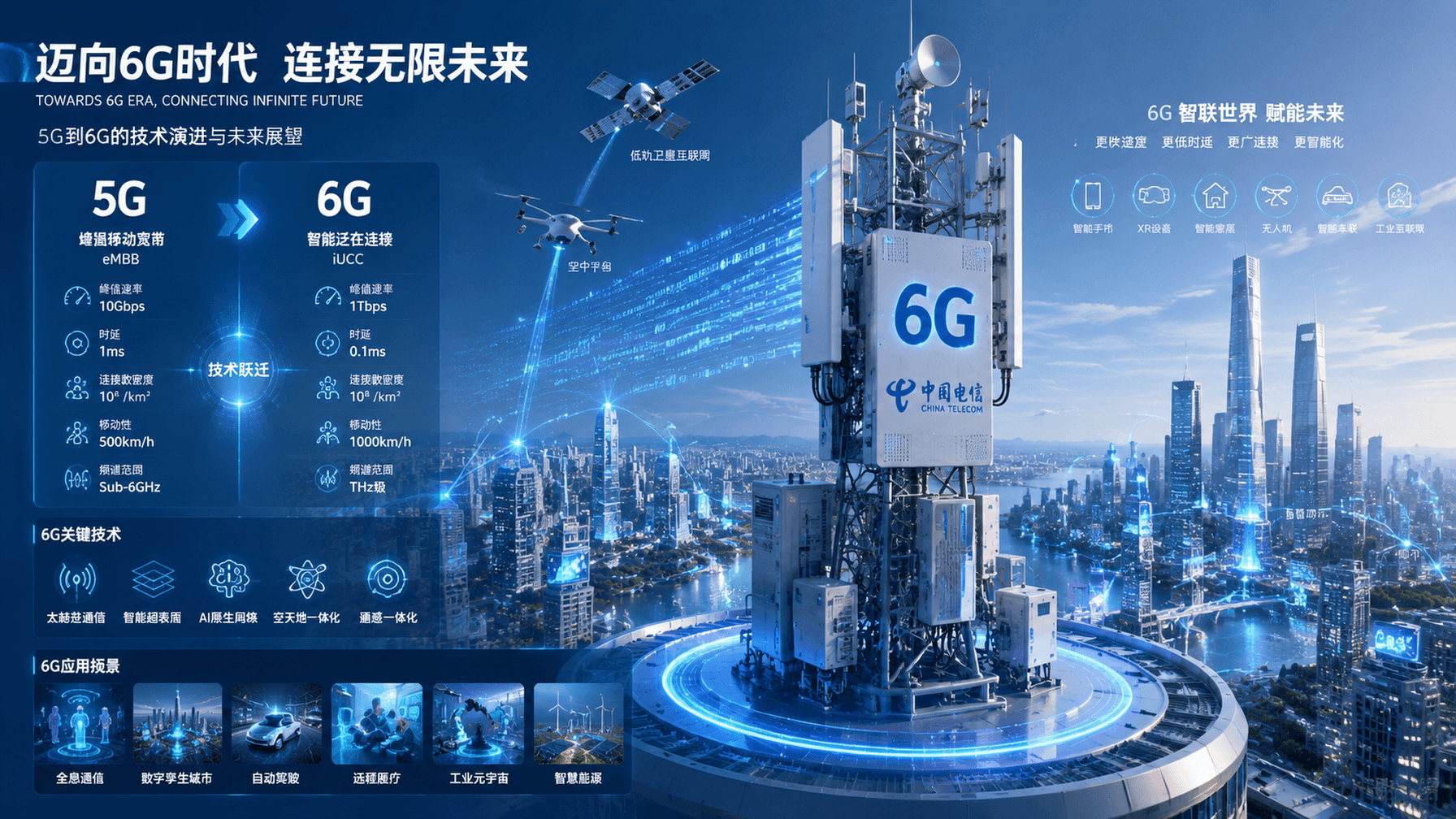
💡Understand the infrastructure timeline for 6G, which will be the backbone for next-gen distributed AI systems.
⚡ 30-Second TL;DR
What Changed
Target commercialization date for 6G is set for 2030.
Why It Matters
The transition to 6G will significantly increase bandwidth and reduce latency, enabling more complex edge-AI applications. Practitioners should monitor infrastructure readiness for future high-speed AI deployments.
What To Do Next
Monitor 3GPP 6G standard development meetings to understand how future network protocols will impact edge-AI latency requirements.
Key Points
- •Target commercialization date for 6G is set for 2030.
- •China is leading the race for large-scale 6G deployment.
- •Industry must address 5G performance gaps before transitioning to 6G.
🧠 Deep Insight
AI-generated analysis for this event — not the original article.
🔑 Enhanced Key Takeaways
- •The International Telecommunication Union (ITU) finalized the 'IMT-2030 Framework' in late 2023, which serves as the global foundation for 6G technical requirements and capabilities.
- •Key technical performance indicators for 6G include peak data rates reaching 1 Tbps and air interface latency reduced to sub-millisecond levels, significantly surpassing 5G-Advanced.
- •Integration of Non-Terrestrial Networks (NTN), including satellite, high-altitude platform stations (HAPS), and air-to-ground networks, is a core architectural requirement for 6G to ensure ubiquitous global coverage.
- •The concept of 'Native AI' is being integrated into the 6G air interface and network architecture to enable self-optimizing, self-healing, and energy-efficient network operations.
- •Spectrum research for 6G is heavily focused on the sub-THz (terahertz) frequency bands, which offer massive bandwidth but present significant challenges regarding propagation distance and hardware miniaturization.
🛠️ Technical Deep Dive
- Frequency Bands: Utilization of FR3 (7-24 GHz) and sub-THz bands (100 GHz - 3 THz) to achieve extreme throughput.
- Sensing and Communication: Implementation of Integrated Sensing and Communication (ISAC), allowing the network to function as a radar system for environmental mapping and object detection.
- Network Architecture: Shift toward a cloud-native, service-based architecture that leverages distributed computing and AI-driven radio resource management.
- Energy Efficiency: Target of 10-100x improvement in energy efficiency per bit compared to 5G to support sustainable deployment.
- Security: Adoption of quantum-resistant cryptographic algorithms to address future threats posed by quantum computing.
🔮 Future ImplicationsAI analysis grounded in cited sources
⏳ Timeline
Weekly AI Recap
Read this week's curated digest of top AI events →
👉Related Updates
AI-curated news aggregator. All content rights belong to original publishers.
Original source: Pandaily ↗
This is a summary, not the original. Read the source, or get the weekly briefing.
Weekly AI briefing
One email a week. Unsubscribe anytime.