India's First Private Rocket Vikram-1 Launches
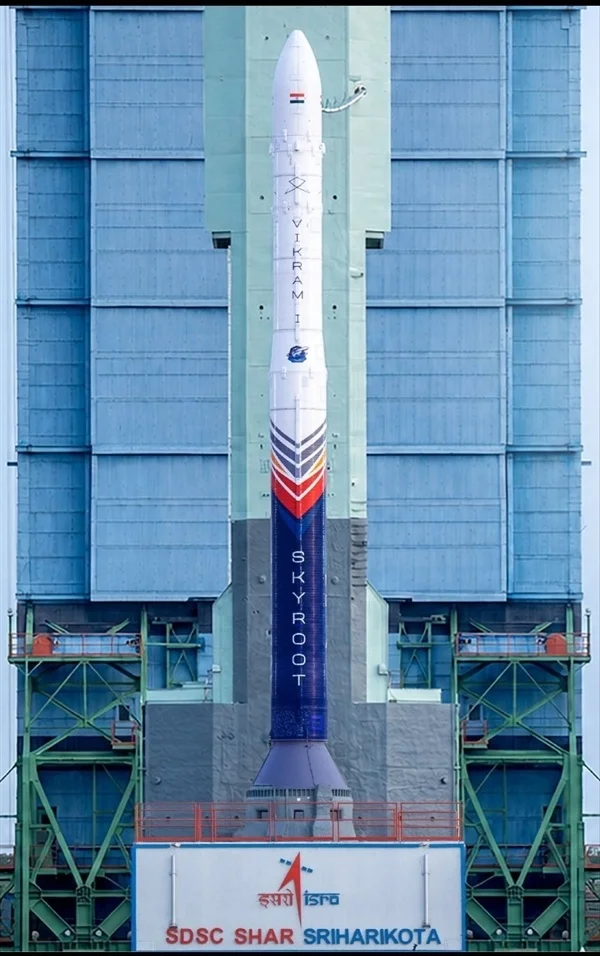
💡The rise of private space infrastructure in India creates new opportunities for low-cost, AI-integrated satellite data.
⚡ 30-Second TL;DR
What Changed
Vikram-1 is India's first private orbital-class launch vehicle.
Why It Matters
This launch signals the rapid growth of the private space sector in India, potentially lowering costs for satellite deployment and increasing accessibility for AI-driven earth observation startups.
What To Do Next
Monitor Skyroot Aerospace's launch data to evaluate potential cost-effective satellite deployment options for your AI-based remote sensing projects.
Key Points
- •Vikram-1 is India's first private orbital-class launch vehicle.
- •The mission 'Aagaman' signifies a shift in India's space industry landscape.
- •Launch conducted from Satish Dhawan Space Centre, Sriharikota.
🧠 Deep Insight
AI-generated analysis for this event.
🔑 Enhanced Key Takeaways
- •Skyroot Aerospace utilizes 3D-printed cryogenic and solid propulsion engines, significantly reducing the part count and manufacturing time for the Vikram-1 vehicle.
- •The Vikram-1 launch vehicle is designed specifically for the small satellite market, capable of placing approximately 300 kg into Low Earth Orbit (LEO).
- •Skyroot Aerospace was the first private startup to sign a Memorandum of Understanding (MoU) with the Indian Space Research Organisation (ISRO) to access their facilities and technical expertise.
- •The 'Aagaman' mission represents a critical validation of the 'multi-stage' launch capability, utilizing a four-stage architecture to achieve orbital insertion.
- •The company has successfully raised significant venture capital from investors like GIC (Singapore's sovereign wealth fund) to scale its production capacity for frequent launches.
📊 Competitor Analysis▸ Show
| Feature | Skyroot (Vikram-1) | Agnikul Cosmos (Agnibaan) | Rocket Lab (Electron) |
|---|---|---|---|
| Payload Capacity | ~300 kg (LEO) | ~100-300 kg (LEO) | ~300 kg (LEO) |
| Engine Tech | 3D-Printed Solid/Cryo | 3D-Printed Semi-Cryo | 3D-Printed Liquid (Rutherford) |
| Launch Site | Sriharikota (ISRO) | Sriharikota (Private Pad) | Mahia (NZ) / Wallops (USA) |
| Status | Orbital-Class | Suborbital/Orbital | Operational |
🛠️ Technical Deep Dive
- Architecture: Four-stage launch vehicle utilizing solid propulsion for the first three stages and a liquid-fueled fourth stage for precise orbital injection.
- Propulsion: Features the Kalam series of solid rocket motors, named after Dr. A.P.J. Abdul Kalam, which utilize carbon-fiber composite structures.
- Manufacturing: Extensive use of additive manufacturing (3D printing) for engine components to minimize weight and assembly complexity.
- Avionics: Integrated autonomous flight termination system and advanced inertial navigation systems for high-precision orbital insertion.
🔮 Future ImplicationsAI analysis grounded in cited sources
⏳ Timeline
Weekly AI Recap
Read this week's curated digest of top AI events →
👉Related Updates



AI-curated news aggregator. All content rights belong to original publishers.
Original source: cnBeta (Full RSS) ↗