Imvision Targets AI Imaging Chip Independence
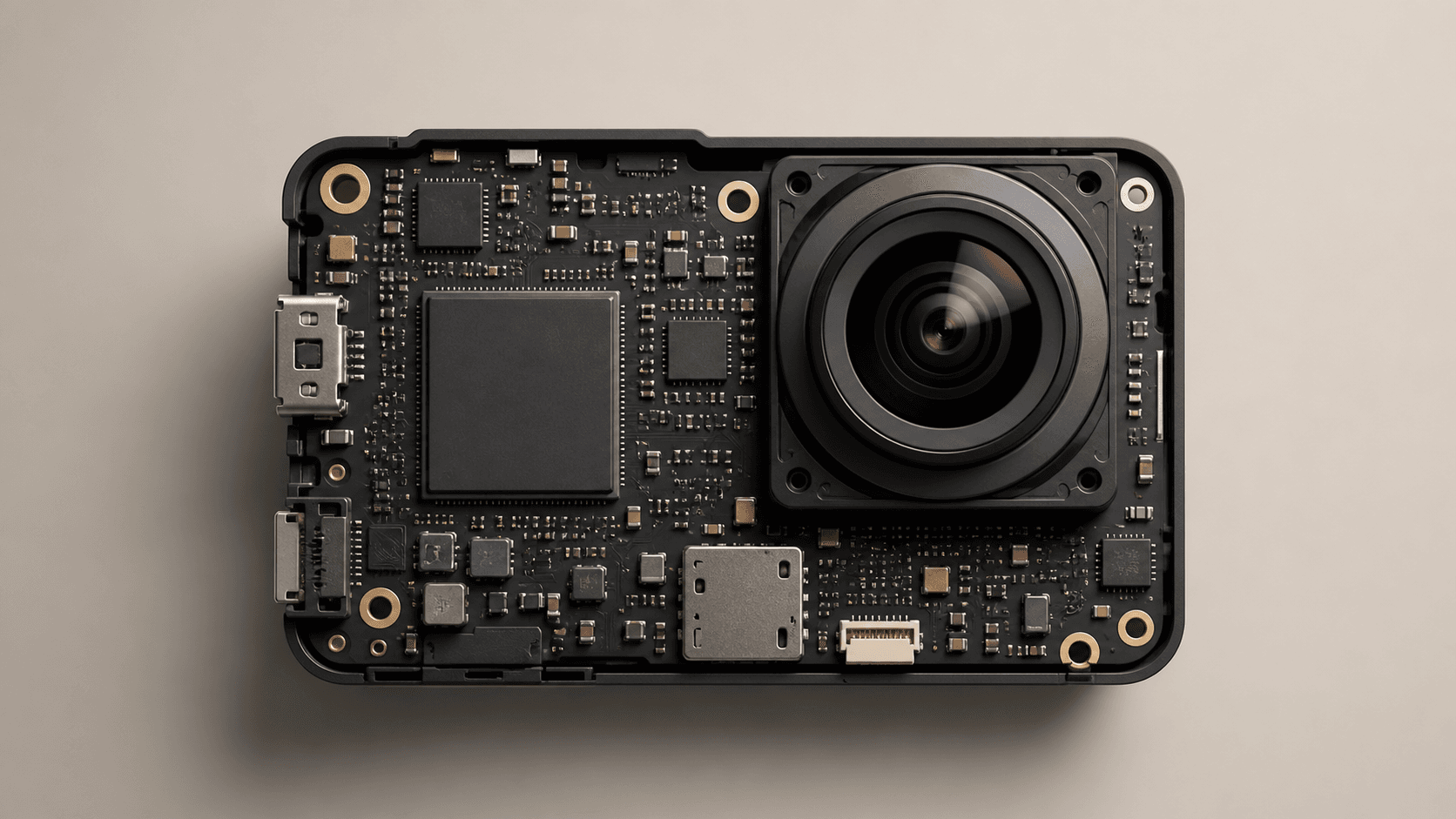
💡A SenseTime spin-out is challenging camera-chip incumbents with a path from AI co-processor to full SoC.
⚡ 30-Second TL;DR
What Changed
Imvision Innovation originated as a spin-out from SenseTime.
Why It Matters
If Imvision secures production design wins, camera manufacturers may gain another option for adding on-device AI capabilities. A successful transition to full SoCs would increase competitive pressure in edge vision hardware, although the article does not confirm commercial scale or customer commitments.
What To Do Next
If you build edge-vision products, request Imvision’s SDK, supported model formats, latency figures, and camera-reference designs before evaluating a hardware port.
Key Points
- •Imvision Innovation originated as a spin-out from SenseTime.
- •Its initial product strategy focuses on AI imaging co-processors used alongside primary camera chips.
- •The company aims to expand from a secondary chip supplier into a full SoC provider.
- •The move could reduce its dependence on Ambarella’s position in camera-chip markets.
🧠 Deep Insight
Background and context from public sources — not the original article. 7 sources cited.
🔑 Enhanced Key Takeaways
- •Imvision Innovation transitioned from a SenseTime smart-life business unit into an independent, self-funded entity in 2024.
- •The company's technology achieved commercial validation through integration into the Insta360 Ace Pro 2, which utilizes a dual-chip architecture.
- •Insta360 provided a strategic investment of 30 million yuan in 2025 following the successful deployment of Imvision's co-processor.
- •Imvision's V1 chip has achieved volume shipments to major consumer electronics manufacturers, including Sony, Transsion, and vivo.
- •CEO Zhang Jiehua brings specialized industry experience from his previous roles at DJI's chip division and STMicroelectronics.
📊 Competitor Analysis▸ Show
| Feature | Imvision Innovation | Ambarella | SigmaStar |
|---|---|---|---|
| Primary Role | AI Imaging Co-processor | Full SoC / Vision AI | Vision AI SoC |
| Market Position | Emerging / Niche | Established Leader | High Market Share (26.7%) |
| Strategy | Co-processor to SoC transition | Integrated platform provider | High-volume SoC supplier |
🛠️ Technical Deep Dive
- Imvision utilizes a dual-chip architecture strategy where their dedicated AI-ISP handles specific workloads like noise reduction and detail optimization alongside a primary 5nm AI chip.
- The product roadmap includes the V1 chip, which supports high-volume consumer imaging, and the V2 chip, which features upgraded AI performance capabilities.
- The architecture is designed to offload compute-intensive imaging tasks from the primary SoC to improve overall system efficiency in computational photography.
🔮 Future ImplicationsAI analysis grounded in cited sources
⏳ Timeline
📎 Sources (7)
Factual claims are grounded in the sources below. Forward-looking analysis is AI-generated interpretation.
Weekly AI Recap
Read this week's curated digest of top AI events →
👉Related Updates

AI-curated news aggregator. All content rights belong to original publishers.
Original source: Pandaily ↗
This is a summary, not the original. Read the source, or get the weekly briefing.
Weekly AI briefing
One email a week. Unsubscribe anytime.