Impact of 15th Five-Year Plan on macro policy logic
💡Understand how new consumption-led macro policies will reshape China's fiscal landscape and tech investment priorities.
⚡ 30-Second TL;DR
What Changed
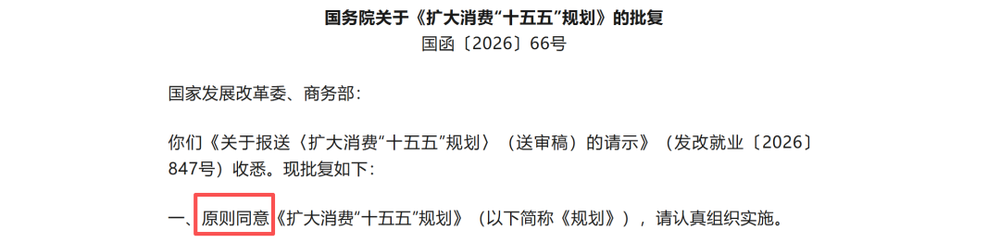
The plan sets a 3.7% annual growth target for retail sales.
Why It Matters
Macroeconomic policy shifts toward fiscal stimulus will influence investment priorities in infrastructure and domestic technology sectors, impacting the broader AI and tech ecosystem.
What To Do Next
Monitor fiscal spending allocations in the upcoming 15th Five-Year Plan to identify potential government-backed AI infrastructure and digital transformation projects.
Key Points
- •The plan sets a 3.7% annual growth target for retail sales.
- •Consumption targets limit the effectiveness of traditional interest rate cuts.
- •Policy focus must shift from monetary-led to fiscal-led to handle external shocks.
- •This shift may lead to a revaluation of value-based stock sectors.
🧠 Deep Insight
AI-generated analysis for this event — not the original article.
🔑 Enhanced Key Takeaways
- •The 15th Five-Year Plan emphasizes 'high-quality consumption' by prioritizing service-oriented sectors like elderly care, digital health, and green energy over traditional durable goods.
- •Fiscal policy under the 15th Five-Year Plan is increasingly tied to 'Special Sovereign Debt' issuance, designed to bypass local government debt constraints while funding national consumption vouchers.
- •The 3.7% retail sales target is structurally linked to the 'Dual Circulation' strategy, aiming to reduce reliance on export-led growth by increasing the domestic consumption-to-GDP ratio.
- •Monetary policy is transitioning toward 'structural liquidity' tools, such as targeted re-lending facilities for consumer finance, rather than broad-based interest rate adjustments.
- •Market analysts observe a shift in the 'Policy Transmission Mechanism,' where fiscal spending is now required to act as a multiplier for private sector investment, reversing the previous decade's reliance on credit expansion.
🔮 Future ImplicationsAI analysis grounded in cited sources
⏳ Timeline
Weekly AI Recap
Read this week's curated digest of top AI events →
👉Related Updates

AI-curated news aggregator. All content rights belong to original publishers.
Original source: 虎嗅 ↗
This is a summary, not the original. Read the source, or get the weekly briefing.
The weekly digest
One email a week. Unsubscribe anytime.