IBM Granite 4.2 Targets Local Enterprise AI
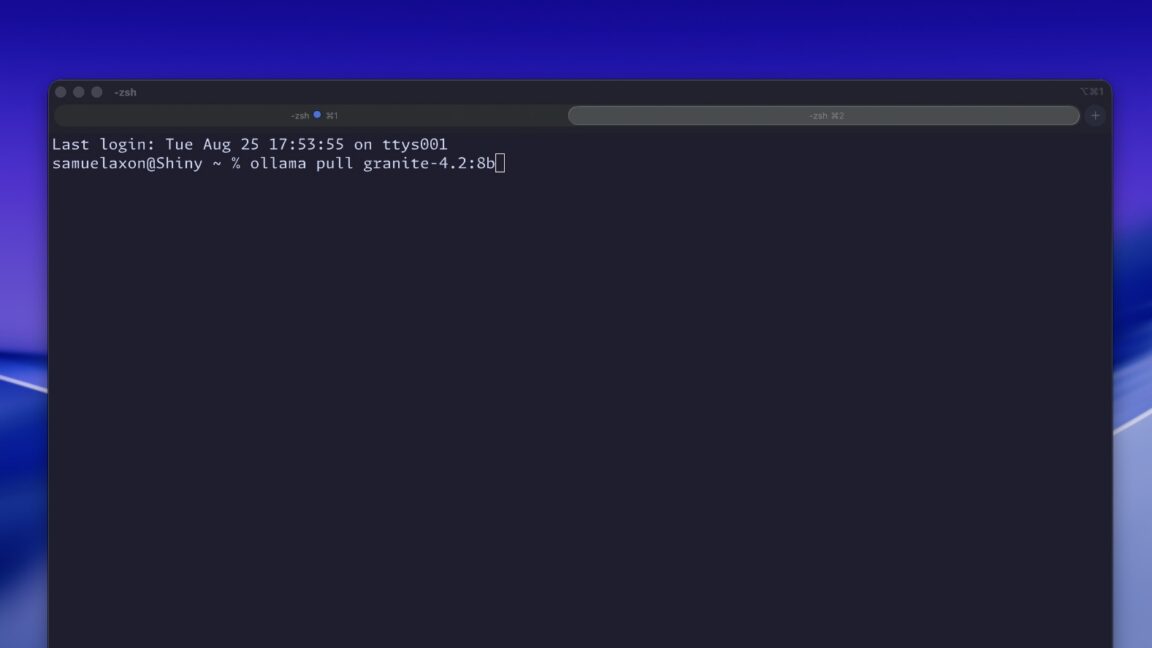
💡See how IBM is positioning Granite 4.2 for local, agentic, and predictable enterprise AI.
⚡ 30-Second TL;DR
What Changed
IBM has released the Granite 4.2 model family.
Why It Matters
Granite 4.2 could appeal to organizations seeking greater control over data, latency, and deployment behavior than fully hosted models provide. Its enterprise focus may make local agentic AI more practical for regulated or operationally sensitive workloads.
What To Do Next
Run IBM Granite 4.2 in your local LLM stack and compare its agentic workflow reliability, latency, and deployment controls with your current model.
Key Points
- •IBM has released the Granite 4.2 model family.
- •The models focus on agentic capabilities for multi-step AI workflows.
- •The positioning emphasizes predictable deployment in enterprise environments.
- •The launch reflects growing interest in running LLMs locally.
🧠 Deep Insight
Background and context from public sources — not the original article. 7 sources cited.
🔑 Enhanced Key Takeaways
- •Granite 4.2 models are trained on a massive corpus of 15 trillion tokens using a specialized five-phase pre-training strategy.
- •The architecture features a native 'thinking' mode that utilizes a
chain-of-thought process to allow for planning and verification before final output generation. - •The models support a native 128K token context window, which can be extended up to 512,000 tokens for processing large enterprise documents.
- •IBM implemented a multi-stage reinforcement learning pipeline specifically focused on agentic trajectories, such as tool usage, code execution, and terminal navigation.
- •The entire model family is released under the Apache 2.0 license, ensuring full commercial and academic flexibility for enterprise users.
📊 Competitor Analysis▸ Show
| Feature | IBM Granite 4.2 | Meta Llama 3.2 | Mistral NeMo |
|---|---|---|---|
| Architecture | Dense Decoder-only | Dense Decoder-only | Dense Decoder-only |
| Reasoning Mode | Native | Standard | Standard |
| Max Context | 512K | 128K | 128K |
| Licensing | Apache 2.0 | Llama 3.2 Community | Apache 2.0 |
| Primary Focus | Agentic/Enterprise | General Purpose | Efficiency/Local |
🛠️ Technical Deep Dive
- Model sizes: 3B, 8B, and 30B parameter variants.
- Architecture: Dense, decoder-only transformer design.
- Training data: 15 trillion tokens across five distinct phases.
- Reasoning mechanism: User-selectable toggle between full, low-effort, and non-thinking modes.
- Tooling: Native support for OpenAI-style API endpoints and vLLM integration.
- Fine-tuning: Supervised fine-tuning focused on reasoning and agentic-trajectory data.
🔮 Future ImplicationsAI analysis grounded in cited sources
⏳ Timeline
📎 Sources (7)
Factual claims are grounded in the sources below. Forward-looking analysis is AI-generated interpretation.
Weekly AI Recap
Read this week's curated digest of top AI events →
👉Related Updates

AI-curated news aggregator. All content rights belong to original publishers.
Original source: Ars Technica AI ↗
This is a summary, not the original. Read the source, or get the weekly briefing.
Weekly AI briefing
One email a week. Unsubscribe anytime.