🐼Pandaily•Stalecollected in 6m
Hygon 800B RMB Valuation in AI Spotlight
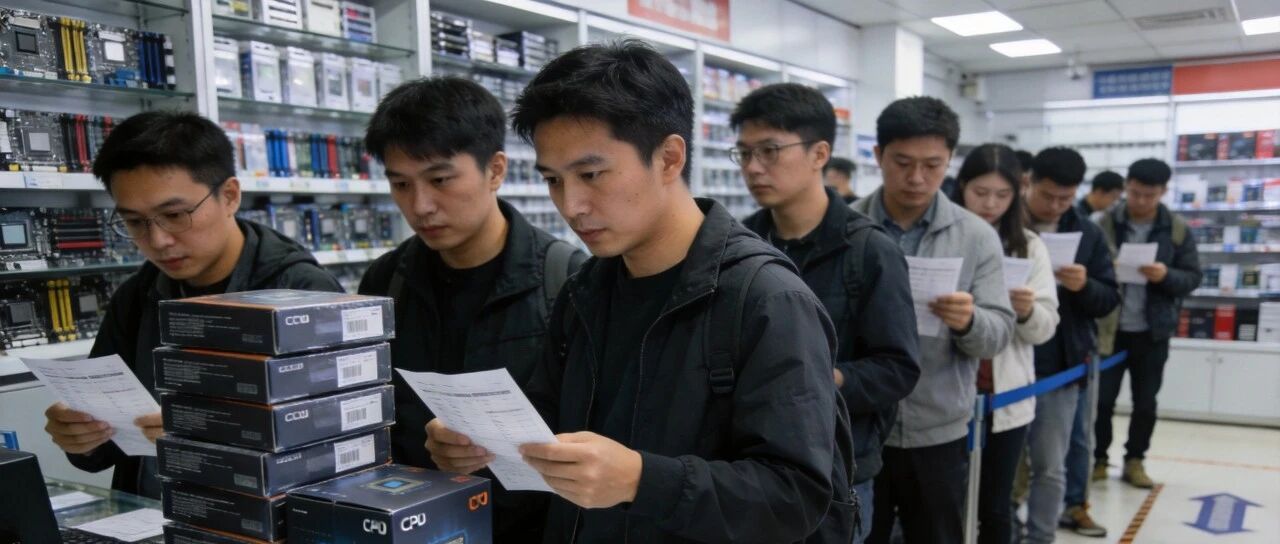
💡China's top server CPU eyes 800B RMB val as AI inference booms—time to test alternatives?
⚡ 30-Second TL;DR
What Changed
Hygon: China's dominant server CPU provider
Why It Matters
Signals potential shift to Chinese server CPUs for AI workloads, impacting global supply chains and costs as US vendors raise prices. AI practitioners may see new affordable inference options.
What To Do Next
Benchmark Hygon CPUs against AMD/Intel for AI inference clusters to evaluate cost savings.
Who should care:Enterprise & Security Teams
Key Points
- •Hygon: China's dominant server CPU provider
- •Surging AI inference demand driving market re-rating
- •AMD/Intel price hikes boost domestic substitution
- •800 billion RMB valuation under scrutiny
🧠 Deep Insight
AI-generated analysis for this event.
🔑 Enhanced Key Takeaways
- •Hygon's x86-compatible architecture stems from a 2016 joint venture with AMD, which provided the company with foundational Zen-based IP, distinguishing it from domestic ARM-based competitors.
- •The 800 billion RMB valuation is heavily influenced by the 'Xinchuang' (IT innovation) policy, which mandates the replacement of foreign hardware in critical Chinese government and state-owned enterprise sectors.
- •Hygon has expanded its portfolio beyond server CPUs to include DCU (Deep Computing Unit) accelerators, which are specifically optimized for AI inference tasks and are increasingly integrated into domestic AI server clusters.
📊 Competitor Analysis▸ Show
| Feature | Hygon (Dhyana/DCU) | Huawei (Kunpeng/Ascend) | Intel (Xeon/Gaudi) |
|---|---|---|---|
| Architecture | x86 (AMD-derived) | ARM (v8/v9) | x86 (Proprietary) |
| Ecosystem | High (x86 compatibility) | Medium (Proprietary) | Very High (Global standard) |
| AI Focus | DCU (Inference) | Ascend (Training/Inference) | Gaudi (Training/Inference) |
| Market Access | China (Domestic focus) | China (Domestic focus) | Global (Restricted in China) |
🛠️ Technical Deep Dive
- CPU Architecture: Utilizes the Dhyana series, which maintains x86 instruction set compatibility, allowing for seamless migration of legacy enterprise software stacks.
- DCU Architecture: Based on a GPGPU architecture optimized for FP16 and INT8 precision, specifically targeting large language model (LLM) inference workloads.
- Interconnect: Employs proprietary high-speed interconnects for multi-chip communication, aiming to reduce latency in distributed AI inference clusters.
- Manufacturing: Relies on domestic foundry partnerships to mitigate risks associated with US export controls on advanced node lithography.
🔮 Future ImplicationsAI analysis grounded in cited sources
Hygon will face significant margin pressure if domestic foundry costs remain higher than TSMC.
Transitioning to domestic manufacturing nodes typically involves lower yields and higher per-unit costs compared to established global foundries.
The company's valuation will decouple from global semiconductor cycles.
Hygon's revenue is increasingly driven by state-mandated procurement cycles rather than global market demand for high-performance computing.
⏳ Timeline
2016-02
Hygon Information is established through a joint venture between AMD and a Chinese consortium.
2018-06
Hygon launches its first-generation Dhyana x86 server processors.
2022-08
Hygon completes its IPO on the Shanghai Stock Exchange STAR Market.
2024-04
Hygon reports significant revenue growth driven by the expansion of its DCU product line for AI applications.
📰
Weekly AI Recap
Read this week's curated digest of top AI events →
👉Related Updates
AI-curated news aggregator. All content rights belong to original publishers.
Original source: Pandaily ↗