Hungary tightens environmental regulations for Chinese battery firms
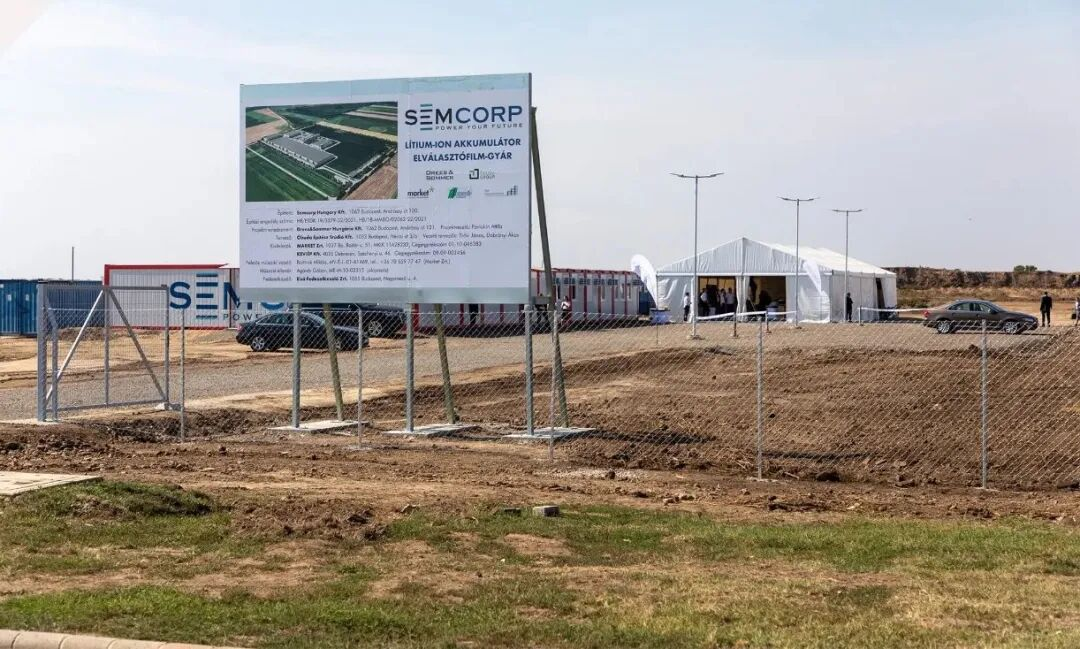
💡Critical regulatory shifts in Hungary threaten the stability of major Chinese EV battery supply chains in Europe.
⚡ 30-Second TL;DR
What Changed
Hungary's new government is prioritizing environmental protection over industrial expansion.
Why It Matters
The shift in Hungarian policy threatens the stability of the European EV battery supply chain, potentially forcing manufacturers to increase compliance costs or relocate operations.
What To Do Next
Review supply chain resilience and environmental compliance audits for all European-based manufacturing facilities.
Key Points
- •Hungary's new government is prioritizing environmental protection over industrial expansion.
- •Semcorp's factory in Debrecen was suspended due to severe heavy metal contamination in groundwater.
- •Major Chinese battery investments, including CATL and EVE Energy, face increased political and regulatory risk.
🧠 Deep Insight
AI-generated analysis for this event — not the original article.
🔑 Enhanced Key Takeaways
- •The Hungarian government has introduced a 'Green Industrial Compliance Act' (2026) which mandates real-time groundwater monitoring sensors linked directly to the Ministry of Environment for all battery manufacturing facilities.
- •Local opposition groups in Debrecen and Göd have formed a coalition, 'Clean Water Hungary,' which successfully lobbied for the revocation of water usage permits for several industrial zones.
- •Semcorp's suspension is specifically linked to the detection of N-Methyl-2-pyrrolidone (NMP) levels exceeding EU safety thresholds by 400% in local monitoring wells.
- •The European Commission has launched a formal inquiry into whether Hungary's new environmental enforcement selectively targets non-EU firms, potentially violating the EU-China Comprehensive Agreement on Investment principles.
- •Energy costs for Chinese battery firms in Hungary have risen by 25% following the removal of preferential industrial electricity subsidies previously granted by the former administration.
🛠️ Technical Deep Dive
- Battery separator manufacturing (Semcorp) utilizes N-Methyl-2-pyrrolidone (NMP) as a solvent in the coating process for lithium-ion battery separators.
- The contamination issue stems from the failure of closed-loop solvent recovery systems, leading to leakage into the local aquifer.
- New regulatory requirements mandate the installation of automated shut-off valves and secondary containment liners for all chemical storage tanks exceeding 50 cubic meters.
- Groundwater remediation protocols now require the implementation of advanced oxidation processes (AOP) to neutralize organic solvent residues before discharge.
🔮 Future ImplicationsAI analysis grounded in cited sources
⏳ Timeline
Weekly AI Recap
Read this week's curated digest of top AI events →
👉Related Updates

AI-curated news aggregator. All content rights belong to original publishers.
Original source: 虎嗅 ↗
This is a summary, not the original. Read the source, or get the weekly briefing.
Weekly AI briefing
One email a week. Unsubscribe anytime.