Hunan’s AI Pivot to Escape Industrial Divergence
💡Hunan is turning engineering machinery into a physical-AI testbed—an important clue for industrial AI builders.
⚡ 30-Second TL;DR
What Changed
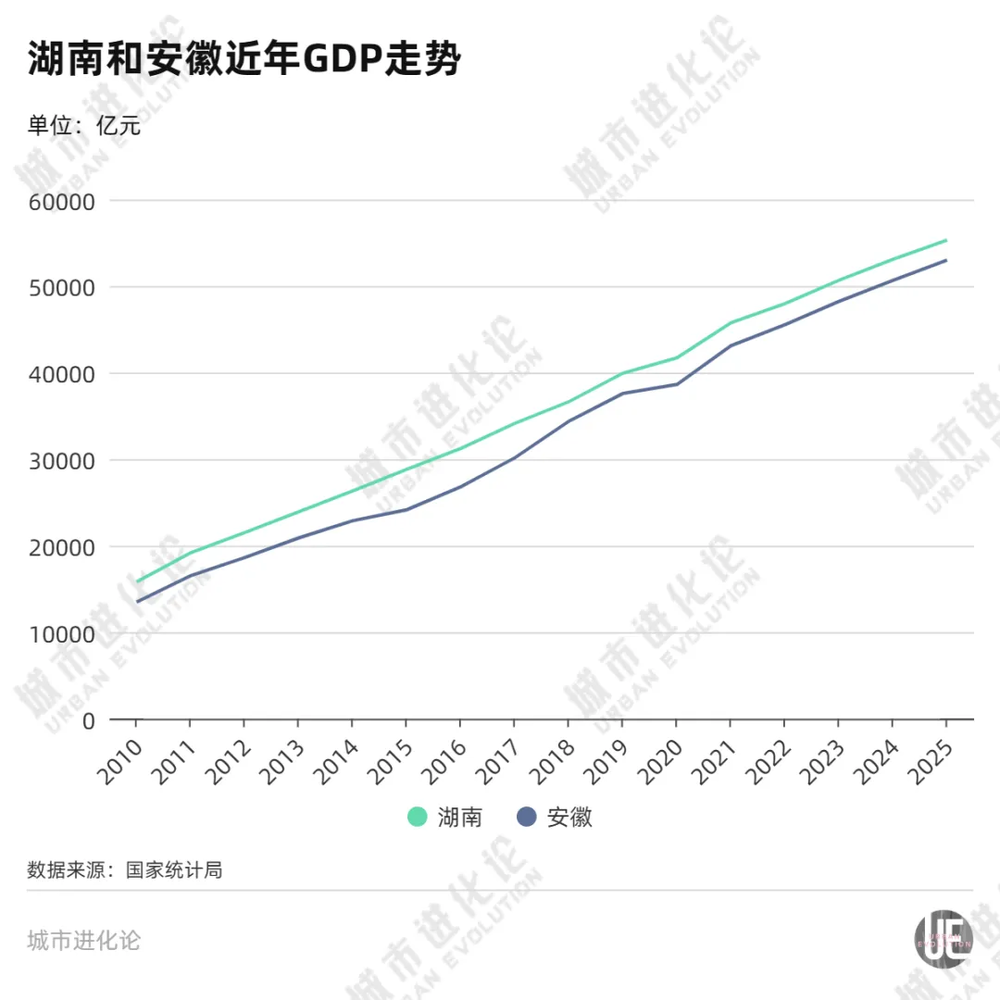
Anhui overtook Hunan in GDP after its high-tech manufacturing growth reached 12.4%, while Hunan’s regulated industrial growth was only 2.6%.
Why It Matters
For AI builders, Hunan represents a potential regional testbed for embodied AI and intelligent manufacturing. The opportunity is substantial, but adoption will depend on integrating AI into incumbent industrial supply chains rather than launching disconnected experimental projects.
What To Do Next
Identify one engineering-equipment workflow and prototype a physical-AI pilot using autonomous inspection, predictive maintenance, or robot-assisted operations.
Key Points
- •Anhui overtook Hunan in GDP after its high-tech manufacturing growth reached 12.4%, while Hunan’s regulated industrial growth was only 2.6%.
- •Hunan plans to combine engineering machinery with AI, robotics, energy storage equipment, and other second-curve markets.
- •Changsha is positioning physical AI and AI-plus-manufacturing as core tracks, with local leaders urging stronger industrial cluster collaboration.
- •Hunan has strong universities and R&D intensity, but lacks the commercialization bridge from laboratories to production lines.
🧠 Deep Insight
AI-generated analysis for this event.
🔑 Enhanced Key Takeaways
- •Hunan has established the 'Hunan AI Industry Development Action Plan (2025-2027)', which specifically targets the integration of large-scale models into the province's dominant construction machinery sector to reduce operational downtime.
- •The province is leveraging the 'Xiangjiang Laboratory' as a primary nexus for bridging academic research from Central South University and Hunan University with industrial applications in embodied intelligence.
- •Hunan's strategic pivot includes the development of a 'Computing Power Network' to support local AI training, aiming to reduce reliance on external cloud infrastructure for its manufacturing enterprises.
- •Local government initiatives have introduced 'AI+ Manufacturing' subsidies specifically for small-to-medium enterprises (SMEs) to adopt digital twin technologies, addressing the historical gap in commercialization.
- •The provincial government is actively promoting the 'Changsha-Zhuzhou-Xiangtan' (CZT) city cluster as a unified pilot zone for autonomous driving and smart logistics, aiming to create a cohesive testing ground for embodied AI hardware.
🛠️ Technical Deep Dive
- Implementation of edge computing nodes within heavy machinery to facilitate real-time data processing for predictive maintenance models.
- Utilization of multimodal large models to interpret sensor data from hydraulic systems, enabling autonomous fault diagnosis.
- Integration of ROS 2 (Robot Operating System) frameworks in local robotics development to standardize communication between AI controllers and mechanical actuators.
- Deployment of private 5G networks in industrial parks to ensure low-latency connectivity for remote-operated heavy equipment and autonomous transport vehicles.
🔮 Future ImplicationsAI analysis grounded in cited sources
⏳ Timeline
Weekly AI Recap
Read this week's curated digest of top AI events →
👉Related Updates



AI-curated news aggregator. All content rights belong to original publishers.
Original source: 虎嗅 ↗