SourceThe Guardian Technology•Stalecollected in 6h
Humanoid Robots Trial as Airport Baggage Handlers
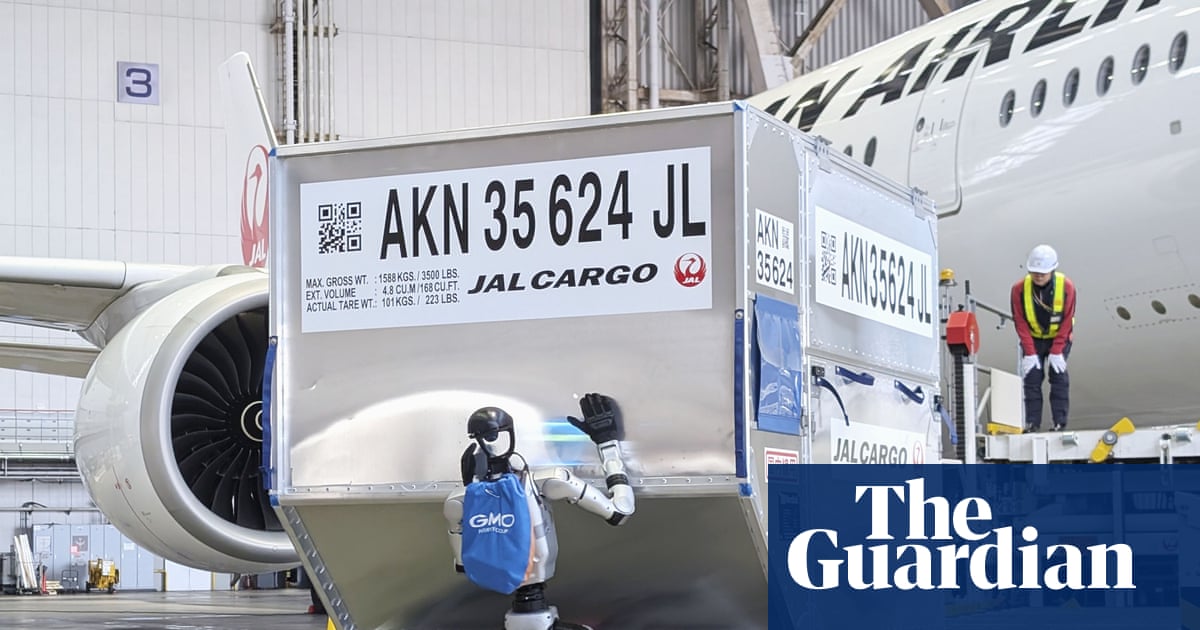
💡First humanoid robot trial in real airport baggage ops amid labor crisis
⚡ 30-Second TL;DR
What Changed
Trial begins early May at Haneda airport.
Why It Matters
Paves way for embodied AI in logistics, offering scalable solutions to global labor challenges in aviation.
What To Do Next
Assess humanoid robot APIs from providers like Figure for logistics automation pilots.
Who should care:Enterprise & Security Teams
Key Points
- •Trial begins early May at Haneda airport.
- •Targets chronic labor shortages and tourism boom.
- •Robots complement human staff with recharging needs.
🧠 Deep Insight
AI-generated analysis for this event — not the original article.
🔑 Enhanced Key Takeaways
- •The trial utilizes the 'J-KID' humanoid robot platform, developed through a partnership between Japan Airlines (JAL) and robotics startup Telexistence Inc.
- •The robots are equipped with advanced haptic feedback sensors, allowing remote operators to 'feel' the weight and texture of luggage during teleoperation mode, reducing damage risks.
- •This initiative is part of a broader Japanese government-backed 'Society 5.0' strategy to integrate AI and robotics into critical infrastructure to mitigate the country's shrinking workforce.
📊 Competitor Analysis▸ Show
| Feature | JAL/Telexistence (J-KID) | ANA/Avatar-in (newme) |
|---|---|---|
| Primary Use | Heavy lifting/Baggage | Customer service/Guidance |
| Control Mode | Hybrid (Autonomous/Teleop) | Primarily Telepresence |
| Deployment | Industrial/Back-end | Public-facing/Front-end |
🛠️ Technical Deep Dive
- Architecture: Utilizes a proprietary 'Augmented Workforce' platform that allows for seamless switching between autonomous pathfinding and human-in-the-loop teleoperation.
- Actuation: Employs high-torque electric actuators designed for repetitive lifting tasks up to 20kg.
- Vision System: Integrated LiDAR and depth-sensing cameras for real-time obstacle avoidance in dynamic airport environments.
- Power Management: Lithium-ion battery system optimized for 4-hour operational cycles with automated docking for inductive charging.
🔮 Future ImplicationsAI analysis grounded in cited sources
Airport ground handling costs will decrease by 15% within three years.
The reduction in human overtime pay and injury-related insurance claims is projected to offset the initial capital expenditure of robot deployment.
Humanoid robots will become a standard requirement for major international airport tenders by 2030.
As labor shortages persist globally, airports will prioritize automation-ready infrastructure to maintain operational continuity.
⏳ Timeline
2023-09
Japan Airlines announces strategic partnership with Telexistence to explore robotic automation for ground operations.
2024-11
Successful proof-of-concept testing of J-KID prototypes in a controlled warehouse environment at Haneda.
2026-02
Final safety certification granted by Japanese aviation authorities for limited-area deployment.
📰
Weekly AI Recap
Read this week's curated digest of top AI events →
👉Related Updates

AI-curated news aggregator. All content rights belong to original publishers.
Original source: The Guardian Technology ↗
This is a summary, not the original. Read the source, or get the weekly briefing.
The weekly digest
One email a week. Unsubscribe anytime.