Humanoid Robots: From Performance Art to Industrial Reality
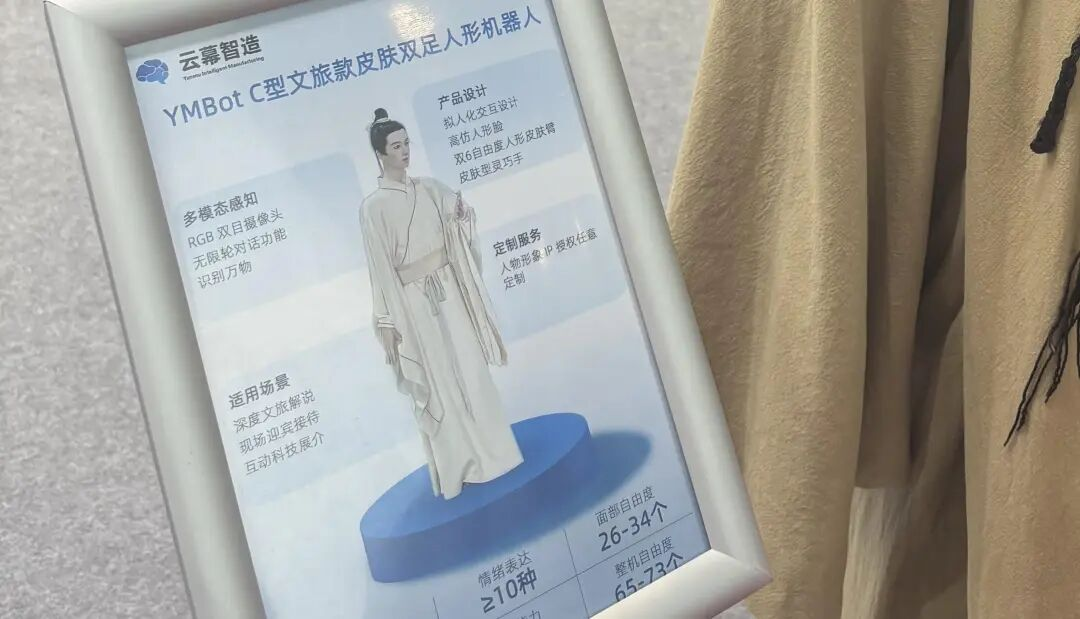
💡Understand why logistics is the first 'killer app' for humanoid robots and how the supply chain is scaling for 2025.
⚡ 30-Second TL;DR
What Changed
Logistics and tourism are currently the most successful deployment scenarios for embodied AI.
Why It Matters
The shift from 'toy-like' demos to functional industrial robots will drive massive demand for specialized hardware components and robust embodied AI models. Companies that solve the 'autonomous navigation in unstructured environments' problem will likely dominate the market.
What To Do Next
Evaluate your robotics stack's reliance on remote teleoperation vs. autonomous models and prioritize integrating vision-based navigation for unstructured environments.
Key Points
- •Logistics and tourism are currently the most successful deployment scenarios for embodied AI.
- •Industrial adoption is hindered by the need for autonomous navigation and real-time physical world understanding.
- •Upstream supply chain manufacturers are seeing significant growth in demand for lightweight, high-precision components.
- •The industry is currently split between harmonic and planetary gear technical routes.
🧠 Deep Insight
Web-grounded analysis with 22 cited sources.
🔑 Enhanced Key Takeaways
- •Humanoid robots are increasingly being deployed in logistics to address the 'flexible picking' gap, handling small-batch, multi-SKU operations and frequent changeovers that traditional fixed automation systems struggle with.
- •The humanoid robot market is projected for substantial growth, with some analysts forecasting a market size of approximately $9 trillion by 2050, primarily driven by the need to mitigate labor shortages across various global sectors.
- •Beyond hardware sales, a significant portion of the humanoid robot market's future value is anticipated to come from software and services, potentially adding an additional $3 trillion through 'app store ecosystems' for specialized capabilities.
- •Widespread industrial adoption of humanoid robots is currently hindered by technical challenges such as limited battery life (typically 1-4 hours of active use) and the absence of established ISO safety standards for dynamically balancing bipedal robots, which creates regulatory uncertainty.
- •The manufacturing of humanoid robots relies heavily on precision components made from advanced, lightweight yet durable materials like titanium, aluminum alloys, and carbon fiber, requiring specialized processes such as CNC machining, sheet metal fabrication, and die casting for structural parts, actuators, and sensor housings.
📊 Competitor Analysis▸ Show
| Company | Robot Model | Primary Focus / Key Strengths | Commercial Status / Notable Deployments |
|---|---|---|---|
| Agility Robotics | Digit | Logistics, warehouse (tote handling), bipedal locomotion, designed for existing human spaces. | Deployed at GXO Logistics, Mercado Libre. |
| Figure AI | Figure 03 | Labor-intensive tasks in warehousing, logistics, manufacturing; human-level dexterity. | Pilot deployments with BMW. |
| Tesla | Optimus Gen 2 | General-purpose, industrial & domestic tasks; leverages automotive manufacturing and AI. | Targeting 50,000 units in 2026, Gen 3 production underway. |
| UBTECH Robotics | Walker S2 | Industrial humanoids, addressing labor shortages; autonomous battery swap. | Claims world's first mass delivery of industrial humanoids in 2025. |
| Apptronik | Apollo | Industrial and commercial use, collaborative tasks, dexterity, heavy-lifting. | Aimed at industrial and commercial use. |
| NEURA Robotics | 4NE-1 | Cognitive robotics, human-robot collaboration, industrial applications. | Priced at €98,000 for industrial applications. |
🛠️ Technical Deep Dive
- Real-time Physical World Understanding (Physical AI): This refers to AI systems that enable robots to autonomously perceive, understand, reason about, and interact with the physical world in real time, moving beyond learning from static datasets. Key challenges include safely translating learned behaviors from simulation to the physical world, ensuring robustness in unpredictable environments (e.g., dust, uneven terrain, variable lighting), and achieving energy efficiency for extended operation.
- Gear Technologies (Harmonic vs. Planetary):
- Harmonic Drives (Strain Wave Gearing): Characterized by zero-backlash, high precision, and high reduction ratios within a compact, lightweight design. They are ideal for applications demanding exact positional accuracy, such as robotic arms in surgical or semiconductor manufacturing. However, they are generally more expensive and less tolerant to sudden shock loads.
- Planetary Gears: Known for their robustness, efficiency in power transmission, and superior load capacity. They are more cost-effective and highly rigid, making them suitable for heavy-duty industrial automation. They may, however, exhibit slight backlash compared to harmonic drives.
- Component Manufacturing: The production of humanoid robots necessitates precision manufacturing processes like CNC machining for joints, gears, and actuator interfaces; sheet metal fabrication for frames and enclosures; die casting for aluminum housings; and injection molding for plastic shells. These processes utilize advanced materials such as titanium, aluminum alloys, and carbon fiber to create lightweight yet durable structural and skeletal components.
🔮 Future ImplicationsAI analysis grounded in cited sources
⏳ Timeline
📎 Sources (22)
Factual claims are grounded in the sources below. Forward-looking analysis is AI-generated interpretation.
- Google Search Source
- Google Search Source
- Google Search Source
- Google Search Source
- Google Search Source
- Google Search Source
- Google Search Source
- Google Search Source
- Google Search Source
- Google Search Source
- Google Search Source
- Google Search Source
- Google Search Source
- Google Search Source
- Google Search Source
- Google Search Source
- Google Search Source
- Google Search Source
- Google Search Source
- Google Search Source
- Google Search Source
- Google Search Source
Weekly AI Recap
Read this week's curated digest of top AI events →
👉Related Updates



AI-curated news aggregator. All content rights belong to original publishers.
Original source: 虎嗅 ↗