Humanoid Robots Face a Battery Anxiety Crisis
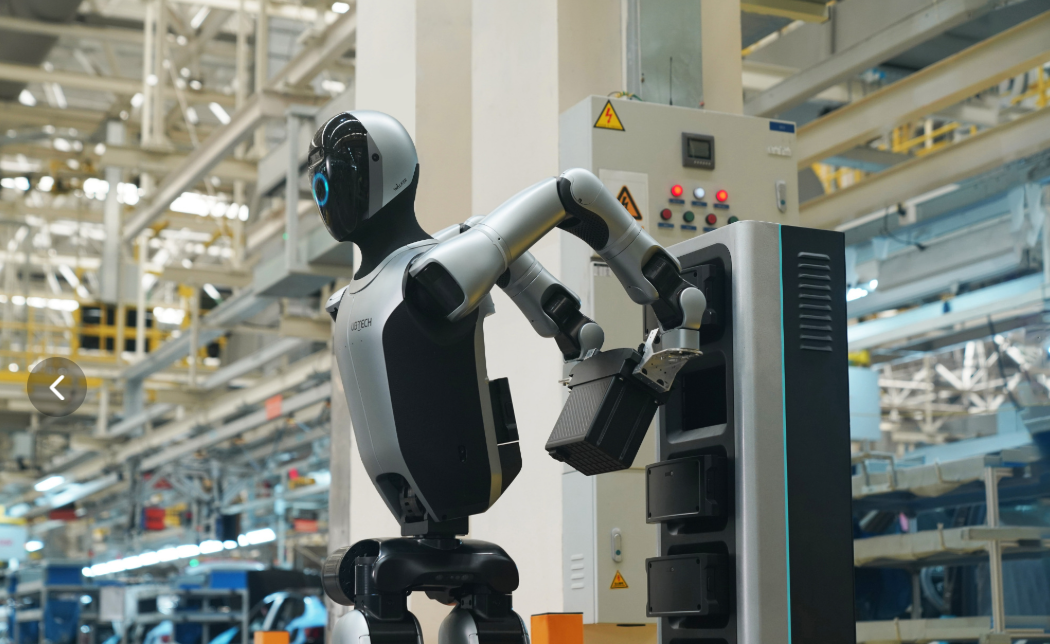
💡Humanoid AI may stall on power limits before model quality becomes the bottleneck.
⚡ 30-Second TL;DR
What Changed
Humanoid robots face a central challenge around battery life and available operating power.
Why It Matters
Battery constraints can limit the practical usefulness and deployment economics of embodied AI systems. Developers and founders may need to treat energy consumption as a first-class design metric alongside model accuracy and task success.
What To Do Next
Add battery energy per task and operating-hours-per-charge to your humanoid-robot evaluation dashboard before optimizing model performance.
Key Points
- •Humanoid robots face a central challenge around battery life and available operating power.
- •The issue is framed as a structural obstacle for a rapidly expanding robotics market.
- •Improving energy efficiency could affect robot autonomy, operating time, and commercial deployment.
- •The article raises the topic without providing a specific battery technology or product solution.
🧠 Deep Insight
AI-generated analysis for this event.
🔑 Enhanced Key Takeaways
- •Current humanoid platforms typically rely on high-discharge lithium-ion battery packs, often requiring 200V-400V architectures to minimize resistive heat loss during high-torque movements.
- •Energy density limitations currently restrict most commercial humanoid robots to 1.5 to 3 hours of active operation, significantly below the 8-hour shift requirement for industrial labor.
- •Thermal management systems for batteries in humanoid robots consume up to 10-15% of total power, creating a parasitic load that exacerbates battery anxiety.
- •Industry leaders are shifting focus toward 'active energy recovery' systems, where regenerative braking in actuators is used to feed energy back into the battery during deceleration phases.
- •Solid-state battery integration is being explored as the primary path to increasing energy density by 30-50% while simultaneously improving safety profiles for robots operating near humans.
📊 Competitor Analysis▸ Show
| Feature | Tesla Optimus Gen 2 | Figure AI (Figure 02) | Unitree G1 |
|---|---|---|---|
| Battery Architecture | 400V High-Voltage | Optimized 48V/High-Voltage Hybrid | Integrated High-Density Li-ion |
| Est. Runtime | ~2-4 Hours | ~2-5 Hours | ~2 Hours |
| Focus Area | Mass Production/Cost | Industrial/Logistics | Low-Cost/Research |
🛠️ Technical Deep Dive
- Actuator Efficiency: Transitioning from traditional harmonic drives to high-efficiency planetary roller screws to reduce friction-based energy loss.
- Power Distribution: Implementation of GaN (Gallium Nitride) based power electronics to increase switching frequency and reduce heat dissipation in onboard power management units.
- Energy Management: Use of AI-driven gait optimization algorithms that calculate the most energy-efficient trajectory for limb movement in real-time.
- Battery Chemistry: Research into Silicon-Anode lithium-ion cells to achieve higher volumetric energy density compared to standard graphite anodes.
🔮 Future ImplicationsAI analysis grounded in cited sources
⏳ Timeline
Weekly AI Recap
Read this week's curated digest of top AI events →
👉Related Updates



AI-curated news aggregator. All content rights belong to original publishers.
Original source: 钛媒体 ↗