Huawei to debut Atlas 950 and AI agent phone
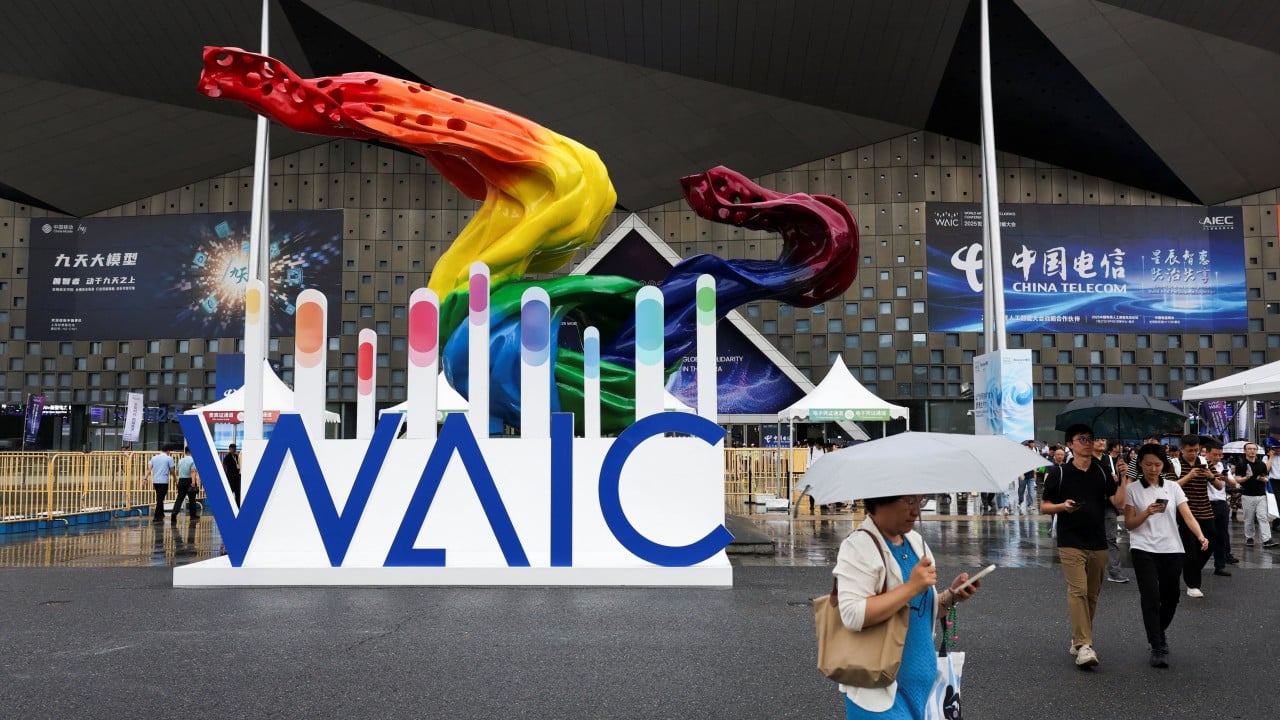
💡Huawei's new AI agent phone and Atlas 950 cluster signal a major shift in China's AI hardware and mobile strategy.
⚡ 30-Second TL;DR
What Changed
Huawei will showcase the Atlas 950 SuperPoD computing cluster at WAIC 2024.
Why It Matters
The introduction of the Atlas 950 suggests a significant step in mitigating the impact of GPU export restrictions by scaling domestic compute clusters. Meanwhile, the AI agent phone signals a shift in mobile UX from app-based interaction to intent-based autonomous agents.
What To Do Next
Monitor the technical specifications of the Atlas 950 to evaluate its suitability for training large-scale models within the Chinese ecosystem.
Key Points
- •Huawei will showcase the Atlas 950 SuperPoD computing cluster at WAIC 2024.
- •The event will feature the debut of the world's first smartphone integrated with AI agent capabilities.
- •The announcements reflect China's strategic focus on scaling domestic AI compute and hardware innovation.
🧠 Deep Insight
AI-generated analysis for this event — not the original article.
🔑 Enhanced Key Takeaways
- •The Atlas 950 SuperPoD is designed to address the compute bottleneck caused by US export restrictions on high-end NVIDIA GPUs, utilizing Huawei's proprietary Ascend AI processor architecture.
- •The AI agent-powered smartphone is expected to leverage the HarmonyOS NEXT ecosystem, which has been stripped of Android compatibility to focus on native AI-driven task automation.
- •Industry analysts suggest the Atlas 950 utilizes a high-speed interconnect technology similar to InfiniBand to enable massive parallel processing across thousands of nodes.
- •Huawei's AI agent phone aims to shift the mobile paradigm from app-centric interfaces to intent-centric interactions, where the agent autonomously navigates third-party applications.
- •The development of these technologies is part of a broader 'All Intelligence' strategy announced by Huawei to integrate AI across its cloud, network, and edge computing portfolios.
📊 Competitor Analysis▸ Show
| Feature | Huawei Atlas 950 / AI Phone | NVIDIA / Global Smartphone OEMs | Apple / Google AI |
|---|---|---|---|
| Compute Architecture | Ascend (Proprietary) | Blackwell/Hopper (GPU) | Custom Silicon (NPU) |
| Ecosystem | HarmonyOS NEXT | CUDA / Android / iOS | iOS / Android |
| AI Strategy | Full-stack (Chip to Agent) | Hardware/Infrastructure focus | Software/Service integration |
🛠️ Technical Deep Dive
- Atlas 950 SuperPoD: Utilizes the Ascend 910 series processors, optimized for large-scale training of LLMs with high-bandwidth memory (HBM) integration.
- Interconnect: Employs Huawei's proprietary RoCE (RDMA over Converged Ethernet) based cluster networking to minimize latency in distributed training environments.
- AI Agent Architecture: The smartphone agent utilizes an on-device lightweight LLM (Small Language Model) combined with a cloud-based orchestration layer to execute multi-step user requests.
- HarmonyOS NEXT: Features a microkernel architecture designed to provide low-latency access to system APIs for AI agents, bypassing traditional app sandboxing limitations.
🔮 Future ImplicationsAI analysis grounded in cited sources
⏳ Timeline
Weekly AI Recap
Read this week's curated digest of top AI events →
👉Related Updates
AI-curated news aggregator. All content rights belong to original publishers.
Original source: SCMP Technology ↗
This is a summary, not the original. Read the source, or get the weekly briefing.
The weekly digest
One email a week. Unsubscribe anytime.