Huawei Launches AI Clusters to Challenge Nvidia
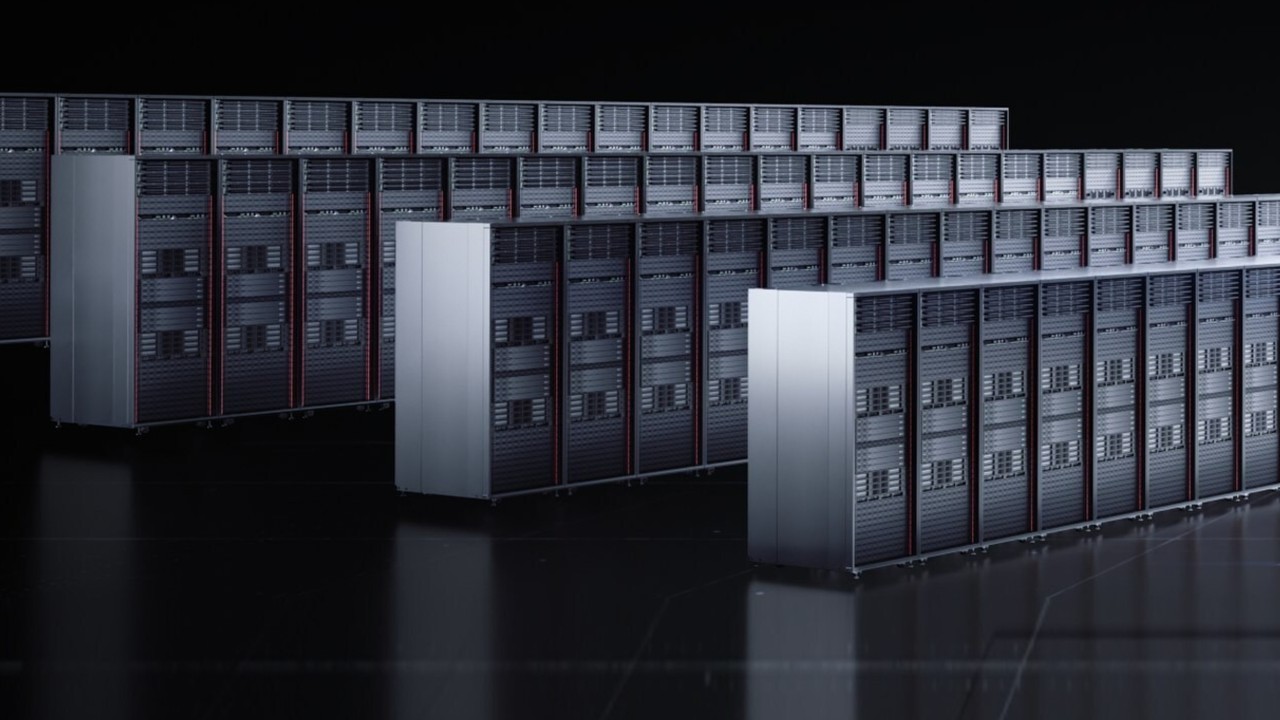
💡Huawei's 8k-NPU cluster challenges Nvidia dominance—vital for diversified AI infra.
⚡ 30-Second TL;DR
What Changed
Huawei debuts Atlas 950 SuperPoD with 8,192 NPU cards at MWC Barcelona
Why It Matters
Huawei's entry intensifies competition in AI infrastructure, offering non-Nvidia options for enterprises facing US export curbs. This could diversify supply chains and lower costs for large-scale AI training. Global adopters gain leverage in hardware negotiations.
What To Do Next
Demo Huawei's Atlas 950 SuperPoD at MWC Barcelona for AI cluster benchmarks.
Key Points
- •Huawei debuts Atlas 950 SuperPoD with 8,192 NPU cards at MWC Barcelona
- •TaiShan 950 SuperPoD launched as general-purpose AI compute cluster
- •Targets global markets to rival Nvidia's AI systems
- •Shenzhen-based firm expands beyond China amid US restrictions
🧠 Deep Insight
Background and context from public sources — not the original article. 6 sources cited.
🔑 Enhanced Key Takeaways
- •Atlas 950 SuperPoD delivers 8 EFLOPS in FP8 and 16 EFLOPS in FP4, with 16 PB/s interconnect bandwidth and over 1 PB of memory.[1][2][3]
- •Atlas 960 SuperPoD doubles the performance with 30 EFLOPS FP8, 60 EFLOPS FP4, 4,460 TB memory, and 34 PB/s bandwidth.[1][2]
- •Atlas 950 SuperCluster scales to 64 supernodes with over 520,000 Ascend 950DT chips, providing 524 EFLOPS FP8, launching Q4 2026.[2][5]
- •Products announced earlier at Huawei Connect 2025, featuring innovations like all-optical interconnect and cableless electrical interconnection.[1][4]
📊 Competitor Analysis▸ Show
| Feature | Huawei Atlas 950 SuperPoD | Nvidia NVL144 (planned) | Nvidia NVL576 (planned 2027) |
|---|---|---|---|
| Scale | 8,192 NPUs (56.8x larger) | Baseline | Larger than NVL144 |
| Compute Power | 6.7x higher | Baseline | Less than Atlas 950 |
| Memory Capacity | 15x higher (1152TB) | Baseline | Less than Atlas 950 |
| Interconnect BW | 62x higher (16.3 PB/s) | Baseline | Less than Atlas 950 |
🛠️ Technical Deep Dive
- •Ascend 950DT chip: 1 PFLOPS FP8, 2 PFLOPS FP4, 2 TB/s interconnect bandwidth (2.5x higher than Ascend 910C).[1]
- •Atlas 950 SuperPoD: 160 cabinets (128 compute, 32 communications) in 1,000 m², all-optical interconnect, 16 PB/s bandwidth.[1]
- •UnifiedBus interconnect enables ultra-high bandwidth, ultra-low latency, unified memory addressing as single logical machine.[4][6]
- •Orthogonal architecture with floating blind-mate liquid-cooling connector for zero leaks and double reliability.[4]
- •Compared to prior Atlas 900, training performance improved 17x to 4.91M TPS, inference up to 26.5x to 19.6M TPS with FP4.[2]
🔮 Future ImplicationsAI analysis grounded in cited sources
⏳ Timeline
📎 Sources (6)
Factual claims are grounded in the sources below. Forward-looking analysis is AI-generated interpretation.
- huawei.com — Hc Xu Keynote Speech
- convequity.substack.com — Huawei Ascend AI Chip Roadmap and
- techradar.com — Huawei Atlas 950 Superpod vs Nvidia Dgx Superpod vs Amd Instinct Mega Pod How Do They Compare
- huawei.com — Hc Superpod Innovation
- huawei.com — Hc Lingqu AI Superpod
- prnewswire.com — Huaweis Superpod Portfolio Creates New Option for Global Computing at Mwc Barcelona 2026 302700245
Weekly AI Recap
Read this week's curated digest of top AI events →
👉Related Updates
AI-curated news aggregator. All content rights belong to original publishers.
Original source: SCMP Technology ↗
This is a summary, not the original. Read the source, or get the weekly briefing.
Weekly AI briefing
One email a week. Unsubscribe anytime.