Huawei Cloud Shifts Focus from Token Volume to Industrial Utility
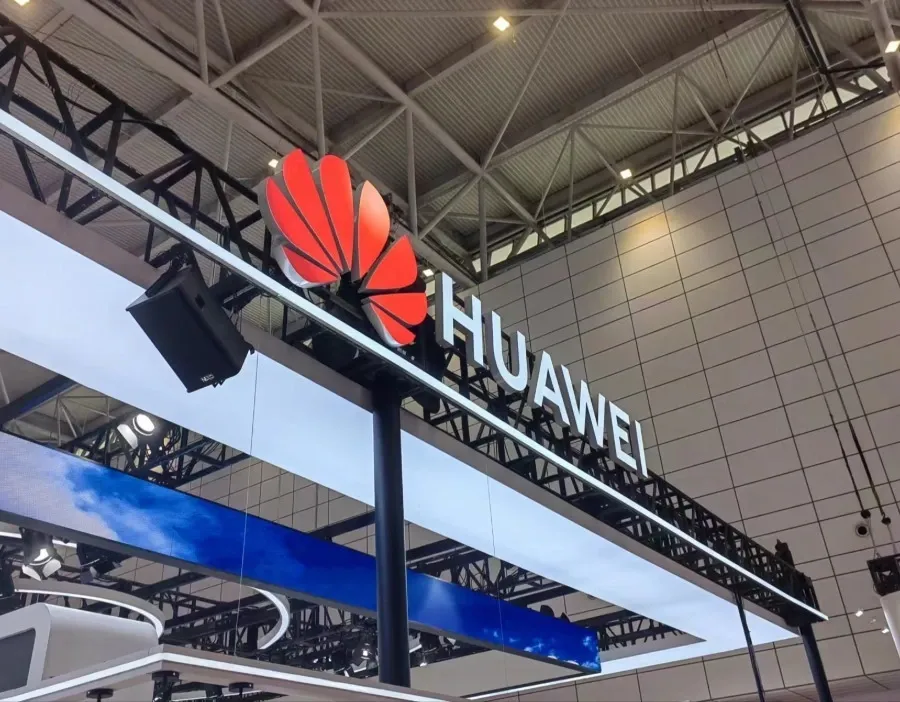
💡Huawei Cloud is redefining AI success by prioritizing industrial utility over raw token volume metrics.
⚡ 30-Second TL;DR
What Changed
Introduced the 'Token Factory' concept to serve specific national-priority industries.
Why It Matters
This strategy reflects a broader industry trend where enterprise AI focus shifts from raw model performance to measurable ROI in specialized industrial sectors.
What To Do Next
Evaluate your AI project's success metrics by focusing on domain-specific utility rather than just total token consumption.
Key Points
- •Introduced the 'Token Factory' concept to serve specific national-priority industries.
- •Explicitly deprioritizes total token volume as a success metric for AI models.
- •Focuses on deep integration of AI into industrial workflows rather than generic LLM scaling.
🧠 Deep Insight
Background and context from public sources — not the original article. 11 sources cited.
🔑 Enhanced Key Takeaways
- •Huawei Cloud's new strategy, dubbed 'Agentic Infra,' shifts the AI cloud competition from token throughput to the effective operation of intelligent agents within enterprises, supported by a fully domestic computing stack (Ascend, Kunpeng).
- •The 'Token Factory' concept is realized through products like the AICS Lingqu computing cluster, designed to achieve high throughput (5 million Tokens/second per thousand cards) and low latency (under 10 milliseconds) for industrial AI applications.
- •Huawei Cloud has established four new 'Industry AI Dream Factories' focusing on Smart Healthcare, Embodied Intelligence, Intelligent Manufacturing, and Scientific Computing, exemplified by a smart medical zone developed with Shanghai Ruijin Hospital.
- •The underlying Pangu Models 5.5, a 718-billion parameter platform, employs a Mixture-of-Experts (MoE) architecture with 256 specialists, which reportedly delivers an eightfold improvement in model inference efficiency for industrial scenarios.
- •Huawei Cloud is also emphasizing on-premise AI infrastructure for sensitive data, introducing solutions like the Context Memory Storage (CMS) platform to significantly reduce time-to-first-token latency by 90% for ultra-scale inference clusters.
🛠️ Technical Deep Dive
- Agentic Infra Paradigm: A new framework shifting AI cloud competition focus from token throughput to enabling agents to operate effectively within enterprises.
- Four-piece suite of Agentic Infra:
- AICS Lingqu computing cluster: An efficient 'Token Factory' supporting a cluster scale of up to 100,000 cards with a total computing power of 200 EFLOPS, aiming for <10ms token generation latency and 5 million Tokens/second/thousand cards throughput.
- AMS Agentic Memory Storage: For continuous learning and memory.
- CCE Volcano Next Unified Intelligence and Computing Scheduling Engine: For integrated scheduling of training and inference.
- AgentSphere Secure Autonomous Runtime Foundation: For secure autonomous operation.
- Pangu Models 5.5:
- Parameter Count: 718-billion parameters.
- Architecture: Mixture-of-Experts (MoE) architecture with 256 specialists, enabling adaptive fast and slow thinking integration.
- Efficiency: Claims an eightfold improvement in model inference efficiency compared to previous versions.
- Data Types: Handles five data types: natural language processing, computer vision, multi-modal processing, prediction, and scientific computing.
- Domestic Computing Stack: Relies entirely on a domestic R&D system (Ascend, Kunpeng, CANN, Euler).
- Context Memory Storage (CMS) platform: Designed for ultra-scale inference clusters, capable of reducing time-to-first-token latency by 90%.
- ModelArts Next: Reimagines MaaS experience with model routing strategies (cost-optimized, performance-optimized, balanced) and integrates over 15 SOTA models, achieving over 95% scheduling accuracy and reducing average invocation costs by 20%.
- Huawei Cloud Foundation (HCF): Next-generation hybrid cloud platform for public sector and enterprise users, focusing on openness, simplicity, and resilience.
- CodeArts: AI-powered coding agent platform for software development lifecycle, offering AI-powered code generation, R&D knowledge chats, unit test case generation, and integrations with open-source models like GLM-5 and DeepSeek-V3.
- AgentArts: One-stop enterprise-level intelligent agent development platform, also available as an open-source version (openJiuwen).
🔮 Future ImplicationsAI analysis grounded in cited sources
⏳ Timeline
📎 Sources (11)
Factual claims are grounded in the sources below. Forward-looking analysis is AI-generated interpretation.
Weekly AI Recap
Read this week's curated digest of top AI events →
👉Related Updates

AI-curated news aggregator. All content rights belong to original publishers.
Original source: Pandaily ↗
This is a summary, not the original. Read the source, or get the weekly briefing.
The weekly digest
One email a week. Unsubscribe anytime.