💰钛媒体•Recentcollected in 17m
Huang: Electrons Must Become Tokens
💡Nvidia CEO predicts electrons-to-tokens shift reshaping AI infra
⚡ 30-Second TL;DR
What Changed
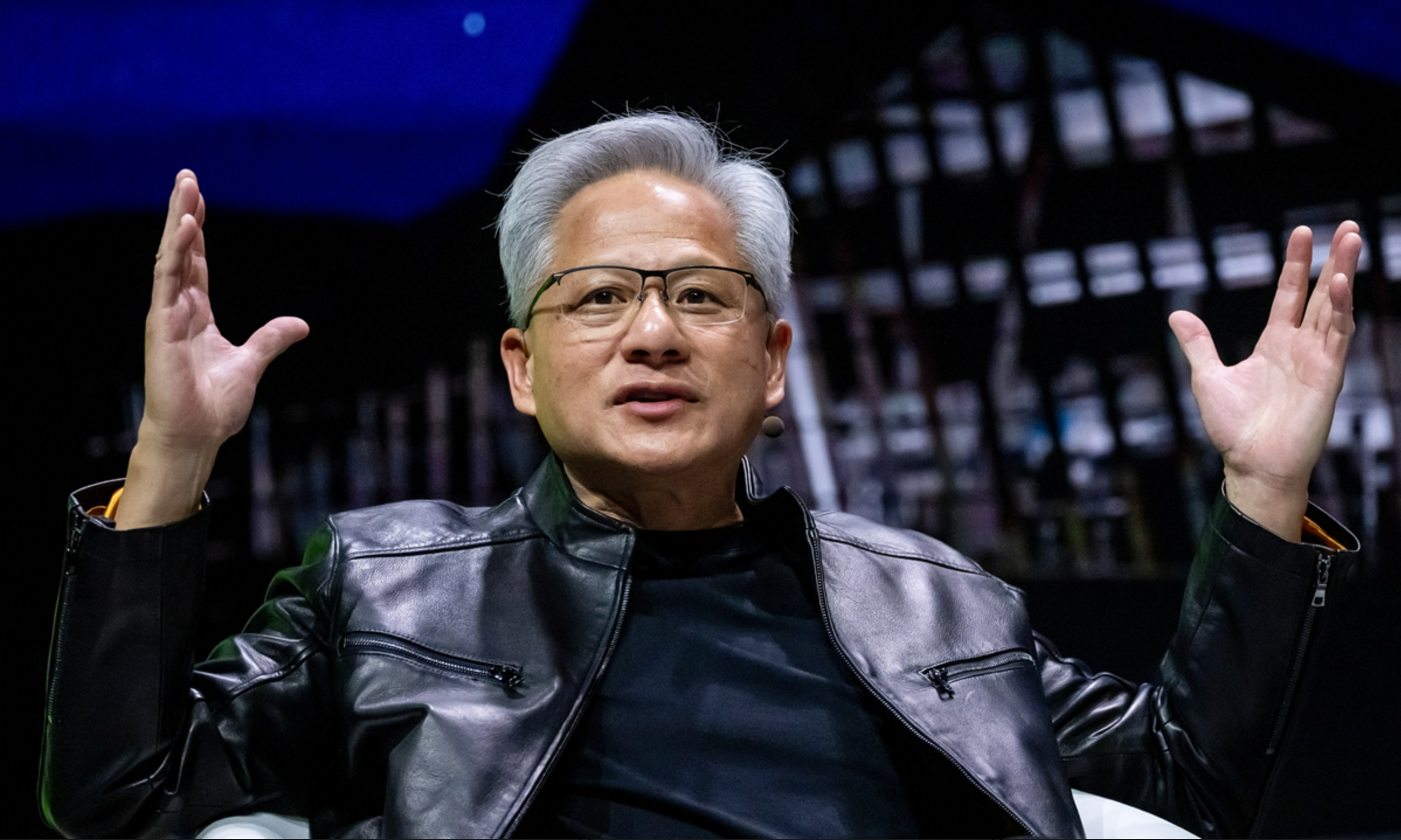
Jensen Huang emphasizes turning electrons into tokens as inevitable for AI
Why It Matters
Nvidia's token vision could redefine compute paradigms, urging infrastructure investments. It signals potential labor shifts in AI deployment, affecting scaling strategies.
What To Do Next
Review Jensen Huang's full interview transcript for insights on token-based AI hardware.
Who should care:Founders & Product Leaders
🧠 Deep Insight
AI-generated analysis for this event.
🔑 Enhanced Key Takeaways
- •The 'electrons to tokens' paradigm shift refers to the massive energy-to-compute conversion ratio, where Nvidia's Blackwell architecture is specifically optimized to maximize token throughput per watt to mitigate the physical constraints of data center power delivery.
- •The electrician shortage is identified as a primary bottleneck for AI scaling, as the current electrical grid infrastructure in major tech hubs cannot support the rapid deployment of high-density GPU clusters without significant retrofitting of power distribution systems.
- •Nvidia is shifting its strategic focus from selling standalone GPUs to providing integrated 'AI Factories,' where the company manages the entire energy-to-compute stack, including liquid cooling and power management, to address the physical limitations of AI scaling.
🛠️ Technical Deep Dive
- •Blackwell architecture utilizes a second-generation Transformer Engine that supports FP4 precision, effectively doubling the token generation throughput compared to Hopper (FP8) while maintaining accuracy for inference tasks.
- •Implementation of NVLink Switch System allows for 1.8TB/s bidirectional throughput, essential for scaling token generation across massive multi-node clusters without bottlenecking the GPU's compute capacity.
- •Integration of advanced liquid cooling solutions is now a mandatory technical requirement for Blackwell-based racks, as power density per rack has exceeded the thermal dissipation capabilities of traditional air-cooled data centers.
🔮 Future ImplicationsAI analysis grounded in cited sources
Data center power capacity will become the primary valuation metric for AI companies.
As compute becomes commoditized, the ability to secure and power high-density GPU clusters will dictate the actual token generation capacity of an enterprise.
Nvidia will transition into a full-stack energy infrastructure provider.
The physical constraints of power delivery necessitate that Nvidia controls the power distribution and cooling ecosystem to ensure their hardware operates at peak efficiency.
⏳ Timeline
2020-05
Nvidia acquires Mellanox, establishing the foundation for high-speed data center networking.
2022-03
Nvidia announces the Hopper architecture, marking the shift toward specialized AI inference and training hardware.
2024-03
Nvidia unveils the Blackwell platform, designed specifically to handle the massive energy requirements of trillion-parameter models.
2025-09
Nvidia begins large-scale deployment of liquid-cooled AI factory reference designs to address thermal and power density challenges.
📰
Weekly AI Recap
Read this week's curated digest of top AI events →
👉Related Updates
AI-curated news aggregator. All content rights belong to original publishers.
Original source: 钛媒体 ↗