Huang Bursts 3-Year LLM Bubble
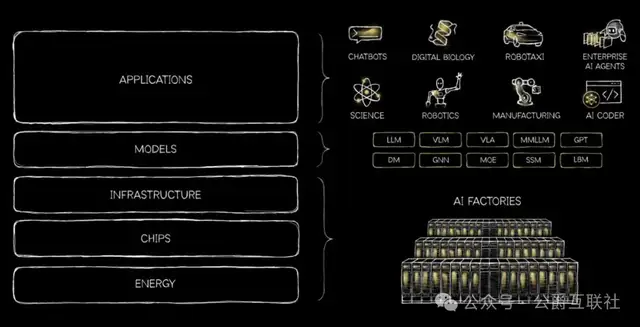
💡Nvidia CEO debunks 3-year LLM hype – real AI endgame revealed.
⚡ 30-Second TL;DR
What Changed
3 years of fierce 'involution' in LLM development
Why It Matters
Challenges overhyped LLM investments, redirecting focus to sustainable AI strategies amid cooling enthusiasm.
What To Do Next
Read Huang's full article to reassess your LLM scaling priorities.
Key Points
- •3 years of fierce 'involution' in LLM development
- •Jensen Huang's single statement exposes hype bubble
- •Long article clarifies AI's realistic future trajectory
- •Urges end to AI-induced anxiety and misinformation
🧠 Deep Insight
Background and context from public sources — not the original article. 7 sources cited.
🔑 Enhanced Key Takeaways
- •Jensen Huang claimed in a February 2026 CNBC interview that generative AI is 'no longer hallucinating,' a statement criticized as factually incorrect and oversimplified given ongoing structural issues in LLM probability-based architectures[1].
- •Huang highlighted 2025 as a pivotal year where LLMs evolved into 'agentic AI systems' capable of research, step-by-step reasoning, and planning, reducing early hallucinations through techniques like reinforcement learning and chain-of-thought[2][3].
- •At CES 2026, Huang emphasized synthetic data generation grounded in physics and ground truth as key to training reliable AI, exemplified in applications like autonomous driving with human and Cosmos-generated data[3][5].
- •Huang forecasted massive compute scaling with models growing by 10x annually, driving demand for Nvidia's Vera Rubin GPU architecture and Spectrum X AI Ethernet networking[6].
🛠️ Technical Deep Dive
- •Agentic AI evolution incorporates reinforcement learning, chain-of-thought prompting, search, planning, and all-reduce computation layers for synchronized multi-GPU training[3][5].
- •Synthetic data generation is conditioned by laws of physics and ground truth, coupled with human-trained data for applications like robotics and autonomous vehicles[3][5].
- •Spectrum X AI Ethernet handles low-latency, high-surge traffic in megawatt-scale data centers, with power smoothing to avoid 25% overprovisioning during AI workload spikes[6].
🔮 Future ImplicationsAI analysis grounded in cited sources
⏳ Timeline
📎 Sources (7)
Factual claims are grounded in the sources below. Forward-looking analysis is AI-generated interpretation.
- the-decoder.com — Nvidia CEO Jensen Huang Claims AI No Longer Hallucinates Apparently Hallucinating Himself
- weforum.org — Conversation with Jensen Huang President and CEO of Nvidia 5dd06ee82e
- youtube.com — Watch
- tomsguide.com — Nvidia Gtc 2026 the Biggest Reveals We Expect to See
- youtube.com — Watch
- youtube.com — Watch
- investor.nvidia.com — Default
Weekly AI Recap
Read this week's curated digest of top AI events →
👉Related Updates

AI-curated news aggregator. All content rights belong to original publishers.
Original source: 钛媒体 ↗
This is a summary, not the original. Read the source, or get the weekly briefing.
Weekly AI briefing
One email a week. Unsubscribe anytime.