How AI Search Treats Your Brand in 2026
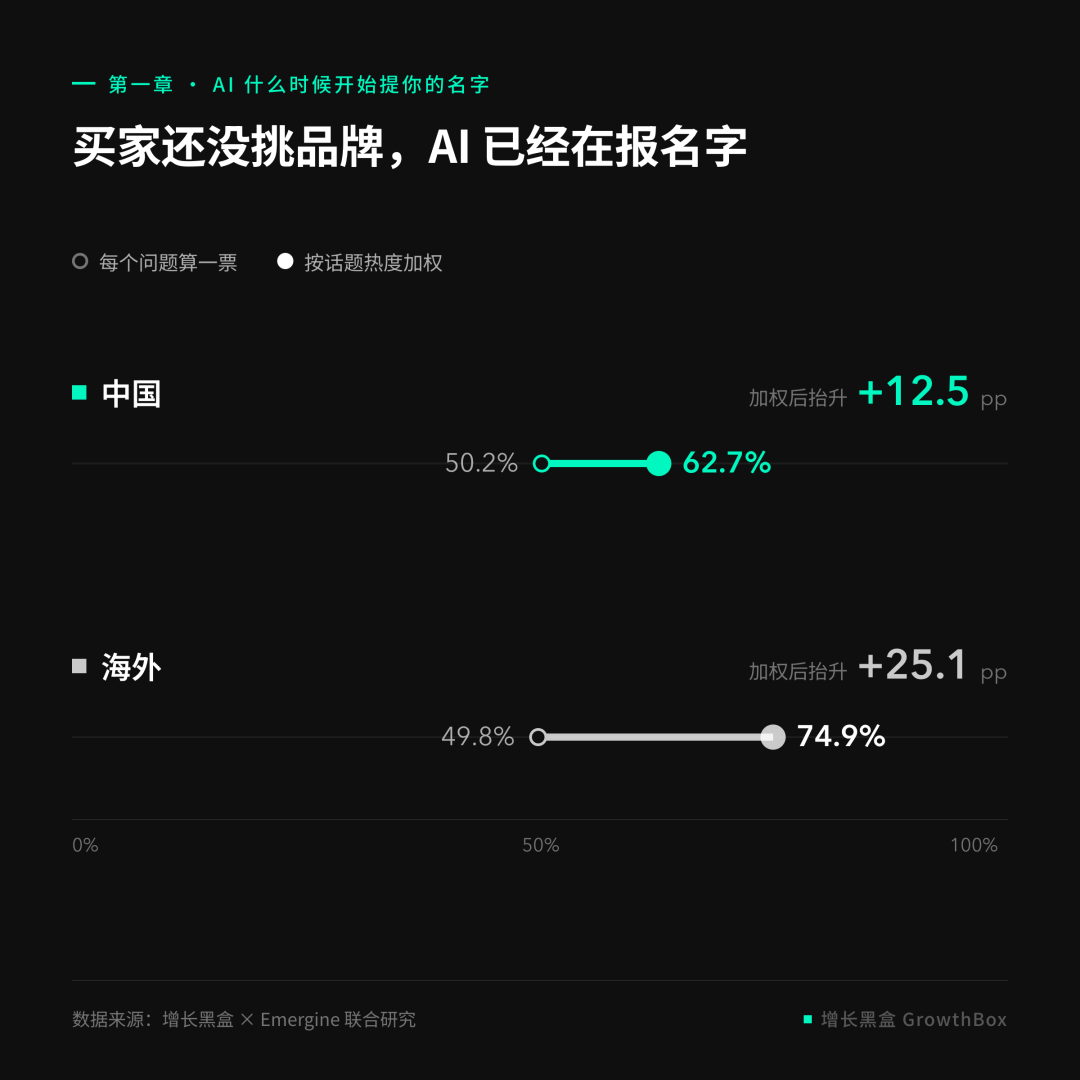
AI search is changing brand discovery—learn why GEO visibility may become the next competitive advantage.
30-Second TL;DR
What Changed
AI search brand mentions are becoming a measurable visibility factor.
Why It Matters
Brands may need to optimize not only for traditional search rankings but also for how AI systems discover, evaluate, and mention them. This creates a new measurement and content strategy challenge for marketers and AI product teams.
What To Do Next
Run a baseline audit across major AI search tools to record how often and in what context they mention your brand.
Key Points
- •AI search brand mentions are becoming a measurable visibility factor.
- •GEO optimization is positioned as a strategic priority for brands.
- •Brand references may vary across different stages of AI search development.
- •The analysis focuses on global GEO data and emerging brand-visibility trends.
Deep Insight
AI-generated analysis for this event — not the original article.
Enhanced Key Takeaways
- •Generative Engine Optimization (GEO) has shifted from traditional keyword stuffing to 'entity-based authority,' where AI models prioritize brands that demonstrate high topical relevance across verified knowledge graphs.
- •AI search algorithms in 2026 increasingly utilize 'citation sentiment analysis,' penalizing brands that appear frequently in negative contexts or unverified user-generated content within LLM training data.
- •The integration of real-time RAG (Retrieval-Augmented Generation) pipelines means brand visibility is now volatile, with rankings fluctuating based on the most recent 24-hour news cycle rather than static SEO rankings.
- •Major AI search providers have introduced 'Brand Trust Scores' as a proprietary metric, which influences whether a brand is cited as a primary source or merely mentioned in a summary list.
- •Cross-platform consistency—specifically the alignment between a brand's official website schema and its presence on social media—is now a primary weight factor for AI model confidence in brand identity.
Competitor Analysis
- Traditional SEO (Google Search)
- Backlinks/Domain Authority
- AI-Native Search (Perplexity/SearchGPT)
- Entity Authority/Citation Quality
- GEO-Optimized Platforms
- Brand Sentiment/Trust Score
- Traditional SEO (Google Search)
- Static Indexing
- AI-Native Search (Perplexity/SearchGPT)
- Dynamic RAG Synthesis
- GEO-Optimized Platforms
- Knowledge Graph Integration
- Traditional SEO (Google Search)
- Ad-based/Organic
- AI-Native Search (Perplexity/SearchGPT)
- Subscription/API-based
- GEO-Optimized Platforms
- SaaS Analytics/Consulting
| Feature | Traditional SEO (Google Search) | AI-Native Search (Perplexity/SearchGPT) | GEO-Optimized Platforms |
|---|---|---|---|
| Primary Metric | Backlinks/Domain Authority | Entity Authority/Citation Quality | Brand Sentiment/Trust Score |
| Ranking Logic | Static Indexing | Dynamic RAG Synthesis | Knowledge Graph Integration |
| Pricing Model | Ad-based/Organic | Subscription/API-based | SaaS Analytics/Consulting |
Technical Deep Dive
- Implementation of Entity-Linking (EL) protocols allows AI models to disambiguate brand mentions by mapping them to unique identifiers in global knowledge bases.
- Utilization of Vector Databases to store brand-related semantic embeddings, enabling the model to retrieve 'brand context' rather than just keyword matches.
- Deployment of Reinforcement Learning from Human Feedback (RLHF) specifically tuned to prioritize 'authoritative' sources in commercial queries to reduce hallucinations.
- Use of Graph Neural Networks (GNNs) to map relationships between brands, products, and user intent, facilitating more accurate citation generation.
Future ImplicationsAI analysis grounded in cited sources
Timeline
- 2023-02Introduction of early RAG-based search prototypes by major AI labs.
- 2024-05Emergence of the term 'Generative Engine Optimization' (GEO) in industry research papers.
- 2025-01Major search engines begin integrating LLM-generated summaries as the default search experience.
- 2026-03Standardization of brand-entity schema markup for AI crawlers.
Weekly AI Recap
Read this week's curated digest of top AI events →
AI-curated news aggregator. All content rights belong to original publishers.
Original source: 钛媒体 ↗
This is a summary, not the original. Read the source, or get the weekly briefing.
The weekly digest
One email a week. Unsubscribe anytime.