How AI Made an AIGC Story Film
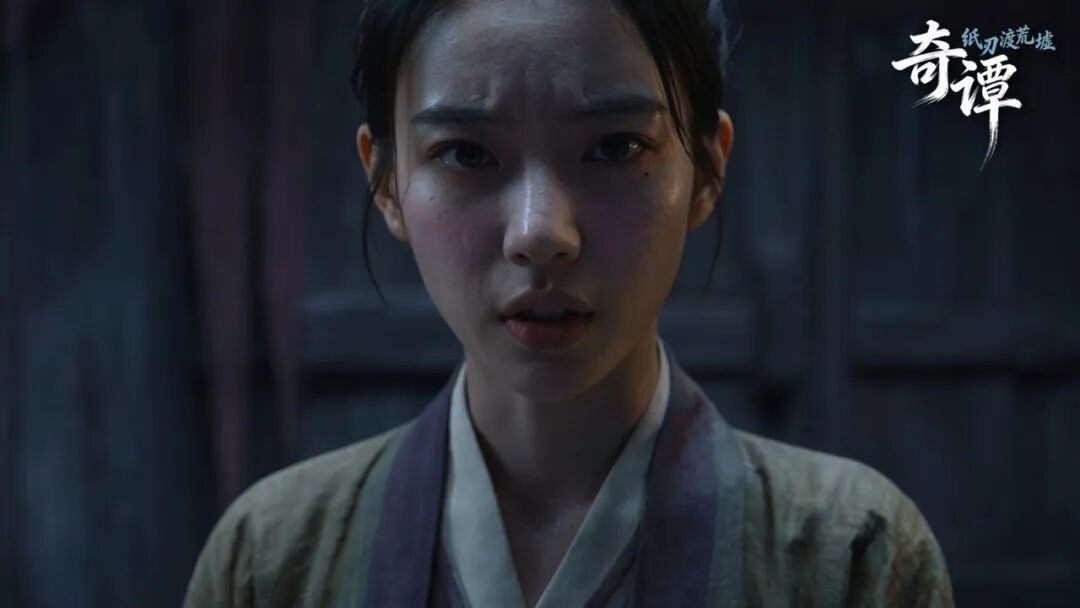
Learn how human creativity and AI can jointly redesign the film-production pipeline.
30-Second TL;DR
What Changed
The film combines human creative direction with AI-assisted production capabilities.
Why It Matters
The project may provide a practical reference for studios and creators testing AI-native production pipelines. It also highlights that creative supervision, workflow design, and monetization remain essential alongside generation quality.
What To Do Next
Prototype a storyboard-to-shot pipeline with a video-generation API, and measure shot consistency, revision time, and human review effort before scaling production.
Key Points
- •The film combines human creative direction with AI-assisted production capabilities.
- •Its workflow covers both content production and commercialization considerations.
- •The project frames AI as a redefinition of filmmaking rather than a direct replacement for traditional crews.
Deep Insight
AI-generated analysis for this event — not the original article.
Enhanced Key Takeaways
- •The film '奇譚' (Qitan) utilized a multi-modal AI pipeline integrating Midjourney for visual asset generation, Runway Gen-2/Gen-3 for motion synthesis, and Suno/Udio for AI-composed soundtracks.
- •Production costs for the project were reportedly reduced by approximately 70-80% compared to traditional live-action short film production of similar length and visual complexity.
- •The workflow implemented a 'human-in-the-loop' consistency control system, using ControlNet and IP-Adapter to maintain character and environmental fidelity across disparate AI-generated frames.
- •The project faced significant challenges in temporal consistency and lip-syncing, requiring post-production integration of specialized AI tools like LivePortrait and HeyGen to bridge the gap between static generation and narrative flow.
- •The commercialization strategy focused on 'AI-native' distribution channels, leveraging short-video platforms (Douyin/TikTok) to monetize through high-engagement metrics rather than traditional theatrical or streaming licensing models.
Competitor Analysis
- 奇譚 (Qitan)
- Low (AI-Native)
- Sora-based Shorts
- Medium (Compute Heavy)
- Traditional Indie Film
- High (Labor Intensive)
- 奇譚 (Qitan)
- Moderate (Manual Fixes)
- Sora-based Shorts
- High (Model Native)
- Traditional Indie Film
- Perfect (Physical)
- 奇譚 (Qitan)
- Days/Weeks
- Sora-based Shorts
- Hours/Days
- Traditional Indie Film
- Months/Years
- 奇譚 (Qitan)
- Viral/Short-Form
- Sora-based Shorts
- Experimental/Platform
- Traditional Indie Film
- Licensing/Box Office
| Feature | 奇譚 (Qitan) | Sora-based Shorts | Traditional Indie Film |
|---|---|---|---|
| Production Cost | Low (AI-Native) | Medium (Compute Heavy) | High (Labor Intensive) |
| Visual Consistency | Moderate (Manual Fixes) | High (Model Native) | Perfect (Physical) |
| Turnaround Time | Days/Weeks | Hours/Days | Months/Years |
| Commercial Model | Viral/Short-Form | Experimental/Platform | Licensing/Box Office |
Technical Deep Dive
- Architecture: Utilized a hybrid pipeline combining latent diffusion models for image generation and temporal video models for motion.
- Consistency Layer: Employed ControlNet for structural guidance and IP-Adapter for style/character reference preservation across shots.
- Audio Integration: Synchronized AI-generated audio tracks using frame-level timestamping to align visual beats with musical cues.
- Upscaling: Implemented Topaz Video AI for temporal stability and resolution enhancement of AI-generated frames to 4K standards.
Future ImplicationsAI analysis grounded in cited sources
Timeline
- 2024-03Initial concept development and AI tool selection phase for the Qitan project.
- 2024-06Completion of the first AI-generated narrative short film prototype.
- 2024-09Public release and industry analysis of the Qitan workflow on 钛媒体.
Weekly AI Recap
Read this week's curated digest of top AI events →
AI-curated news aggregator. All content rights belong to original publishers.
Original source: 钛媒体 ↗
This is a summary, not the original. Read the source, or get the weekly briefing.
The weekly digest
One email a week. Unsubscribe anytime.