HoverAir Versa Becomes a Self-Flying Drone
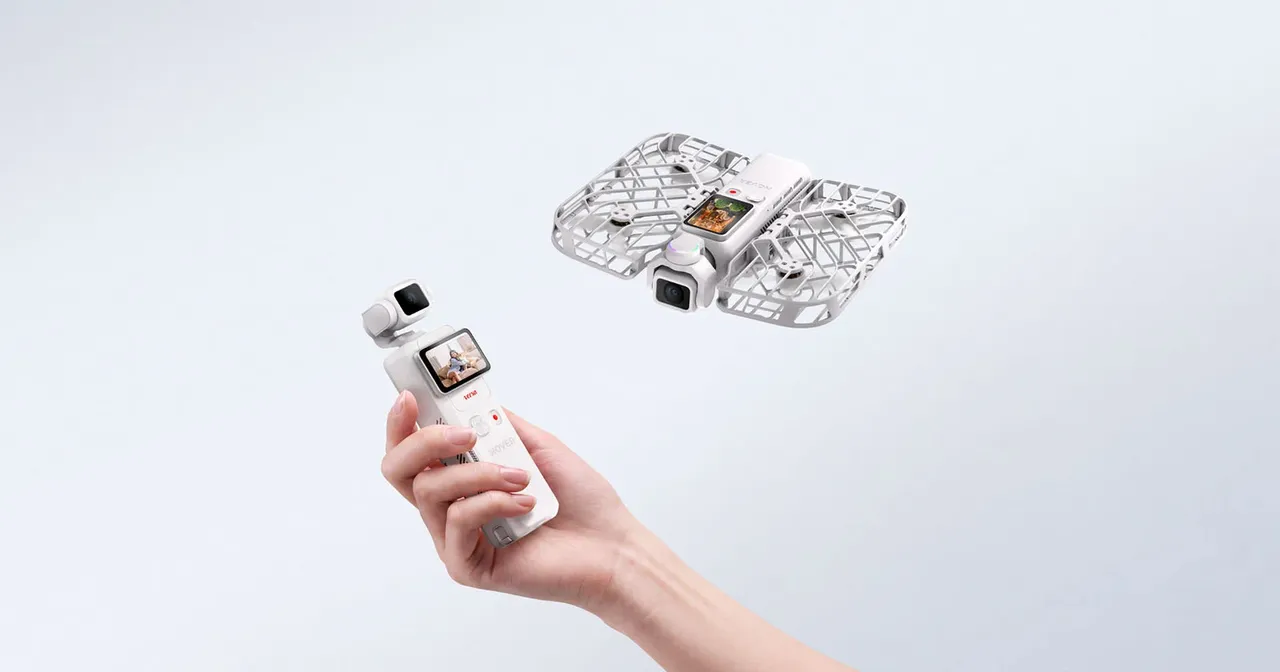
A pocket gimbal that snaps into an AI-tracking drone could simplify autonomous video capture.
30-Second TL;DR
What Changed
The device combines a pocket gimbal camera and a self-flying drone in one modular body.
Why It Matters
Versa could lower the friction of collecting dynamic first-person and follow-camera footage for creators. Its autonomous tracking also highlights how embodied AI is moving into compact consumer robotics.
What To Do Next
Evaluate HoverAir Versa as a capture device for testing autonomous-camera workflows in creator or robotics applications.
Key Points
- •The device combines a pocket gimbal camera and a self-flying drone in one modular body.
- •Magnetic assembly enables quick transformation and palm launching.
- •AI-powered tracking allows the drone to follow and film subjects autonomously.
Deep Insight
AI-generated analysis for this event — not the original article.
Enhanced Key Takeaways
- •The HoverAir Versa utilizes a proprietary 'Mag-Lock' modular interface that allows the camera module to transition between handheld gimbal and drone flight modes in under three seconds.
- •The drone component features a ducted propeller design, which HoverAir markets as a safety-first approach for close-proximity indoor and outdoor filming.
- •The device integrates a custom-developed 'Hover-OS' that synchronizes stabilization data between the gimbal's mechanical motors and the drone's flight controller for seamless footage transitions.
- •The Versa includes a swappable battery system that supports rapid charging, addressing a common pain point in previous ultra-portable drone models.
- •The AI tracking suite has been upgraded to include 'Predictive Pathing,' which uses onboard neural processing to anticipate subject movement rather than just reacting to visual displacement.
Competitor Analysis
- HoverAir Versa
- Modular Gimbal/Drone
- DJI Neo
- Fixed Drone
- Skydio 2+
- Fixed Drone
- HoverAir Versa
- ~240g
- DJI Neo
- ~135g
- Skydio 2+
- ~800g
- HoverAir Versa
- Hybrid Content Creation
- DJI Neo
- Entry-level Vlogging
- Skydio 2+
- Professional Tracking
- HoverAir Versa
- $599 (Estimated)
- DJI Neo
- $199
- Skydio 2+
- $1,099+
| Feature | HoverAir Versa | DJI Neo | Skydio 2+ |
|---|---|---|---|
| Form Factor | Modular Gimbal/Drone | Fixed Drone | Fixed Drone |
| Weight | ~240g | ~135g | ~800g |
| Primary Use | Hybrid Content Creation | Entry-level Vlogging | Professional Tracking |
| Pricing | $599 (Estimated) | $199 | $1,099+ |
Technical Deep Dive
- Sensor: 1/1.3-inch CMOS sensor capable of 4K/60fps video recording.
- Stabilization: Hybrid 3-axis mechanical gimbal combined with Electronic Image Stabilization (EIS).
- Connectivity: Dual-band Wi-Fi 6 for low-latency transmission to mobile devices.
- Processing: Integrated NPU (Neural Processing Unit) dedicated to real-time subject recognition and obstacle avoidance.
- Flight Time: Approximately 12-15 minutes per battery module depending on flight mode and wind conditions.
Future ImplicationsAI analysis grounded in cited sources
Timeline
- 2023-06HoverAir launches the X1, establishing the 'self-flying camera' category.
- 2024-05HoverAir releases the X1 Pro, introducing higher resolution and improved tracking algorithms.
- 2026-08HoverAir officially unveils the Versa, expanding the product line into modular hybrid hardware.
Weekly AI Recap
Read this week's curated digest of top AI events →
AI-curated news aggregator. All content rights belong to original publishers.
Original source: Tom's Hardware ↗
This is a summary, not the original. Read the source, or get the weekly briefing.
The weekly digest
One email a week. Unsubscribe anytime.