Household robots and the future of domestic labor
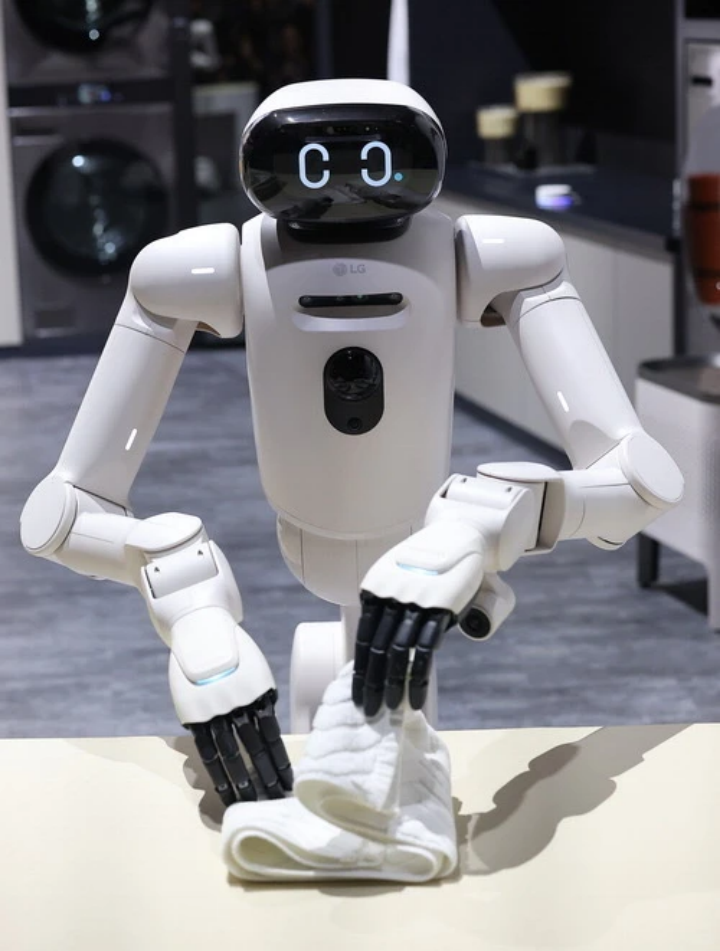
💡Explore the intersection of robotics and domestic labor, and the reality of current consumer-grade AI hardware.
⚡ 30-Second TL;DR
What Changed
Household robots are being marketed as replacements for domestic labor.
Why It Matters
Reflects the growing trend of embodied AI entering the consumer space, though adoption remains limited by technical constraints.
What To Do Next
If building for consumer robotics, focus on specific, high-frequency tasks rather than general-purpose automation.
Key Points
- •Household robots are being marketed as replacements for domestic labor.
- •The economic value of domestic work is being re-evaluated through the lens of automation.
- •There is a gap between current robotic capabilities and the complexity of household tasks.
🧠 Deep Insight
AI-generated analysis for this event — not the original article.
🔑 Enhanced Key Takeaways
- •The integration of Large Multimodal Models (LMMs) into household robotics has shifted the focus from pre-programmed task execution to semantic understanding of unstructured home environments.
- •Current industry data indicates that 'edge cases'—such as cleaning around fragile objects or navigating cluttered, non-standardized floor plans—remain the primary bottleneck for commercial adoption, with failure rates exceeding 30% in real-world home testing.
- •The 'Molyneux Problem' in robotics research is being actively addressed by developing tactile-sensing skins that allow robots to manipulate objects without visual confirmation, a key requirement for laundry and dishwashing tasks.
- •Economic analysis suggests that the 'cost-per-chore' for current humanoid or advanced multi-purpose robots remains significantly higher than the market rate for human domestic labor in most global economies, limiting adoption to the ultra-luxury segment.
- •Regulatory bodies are increasingly focusing on data privacy standards for household robots, specifically regarding the continuous mapping and video recording of private living spaces by cloud-connected devices.
📊 Competitor Analysis▸ Show
| Feature | Tesla Optimus Gen 3 | Figure AI (Figure 02) | Dyson (Project O) |
|---|---|---|---|
| Primary Focus | General Purpose/Industrial | Humanoid Interaction | Specialized Home Automation |
| Navigation | FSD-derived Vision | Neural Network/VLM | Proprietary Mapping |
| Pricing | Est. $20k-$30k (Target) | High (Enterprise Focus) | N/A (R&D Stage) |
| Benchmark | High Dexterity/Speed | High Human-like Motion | High Precision Cleaning |
🛠️ Technical Deep Dive
- End-to-End Imitation Learning: Modern household robots are moving away from hard-coded logic toward transformer-based architectures that predict motor torques directly from visual inputs.
- Sim-to-Real Transfer: Utilization of NVIDIA Isaac Sim and similar platforms to train agents in photorealistic environments before deploying to physical hardware to mitigate safety risks.
- Tactile Feedback Loops: Implementation of high-frequency (1kHz+) force-torque sensors in end-effectors to enable delicate object handling.
- SLAM (Simultaneous Localization and Mapping): Transitioning from 2D LiDAR-based navigation to 3D semantic SLAM, allowing robots to identify and categorize objects (e.g., 'chair' vs 'obstacle') rather than just detecting geometry.
🔮 Future ImplicationsAI analysis grounded in cited sources
⏳ Timeline
Weekly AI Recap
Read this week's curated digest of top AI events →
👉Related Updates

AI-curated news aggregator. All content rights belong to original publishers.
Original source: 钛媒体 ↗
This is a summary, not the original. Read the source, or get the weekly briefing.
Weekly AI briefing
One email a week. Unsubscribe anytime.