Source钛媒体•Stalecollected in 14m
Horizon's Triple Launch Targets Vehicle AI Era
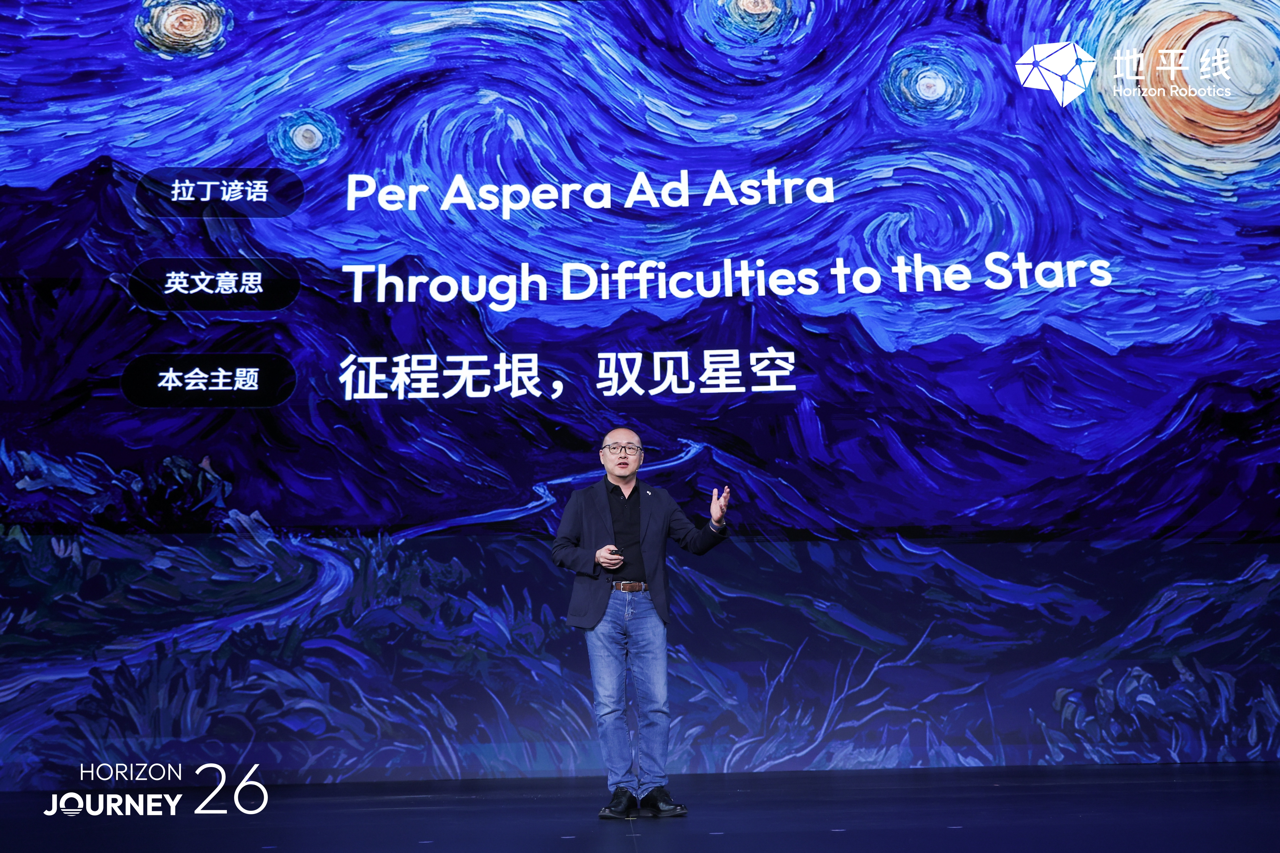
💡Horizon's 3-pronged push redefines auto AI from driving to full agents
⚡ 30-Second TL;DR
What Changed
Horizon deploys 'three arrows' for strategic positioning
Why It Matters
Bolsters Horizon's dominance in automotive AI, accelerating agentic systems adoption across vehicle ecosystems.
What To Do Next
Benchmark Horizon's new vehicle AI chips against competitors for edge deployment.
Who should care:Enterprise & Security Teams
Key Points
- •Horizon deploys 'three arrows' for strategic positioning
- •Focuses on whole vehicle intelligent agent systems
- •Industry pivot from 'who does ADAS' to full-system integration
🧠 Deep Insight
AI-generated analysis for this event — not the original article.
🔑 Enhanced Key Takeaways
- •Horizon Robotics' 'three arrows' strategy centers on the integration of the 'Horizon SuperDrive' platform, the 'Horizon Matrix' hardware ecosystem, and a new 'Horizon OS' middleware layer designed to unify cockpit and driving domains.
- •The company is shifting its business model from providing standalone ADAS chips to offering a full-stack 'Intelligent Vehicle Agent' architecture that leverages large-scale end-to-end foundation models for real-time decision-making.
- •This strategic pivot is a direct response to the industry-wide transition toward 'Centralized Computing Architectures,' where Horizon aims to capture higher value-add by controlling the software-defined vehicle's central nervous system.
📊 Competitor Analysis▸ Show
| Feature | Horizon Robotics (Horizon 6/SuperDrive) | NVIDIA (DRIVE Thor) | Qualcomm (Snapdragon Ride Flex) |
|---|---|---|---|
| Architecture | Integrated SoC + Middleware | Centralized Compute (SoC) | Integrated Cockpit + ADAS SoC |
| Focus | Full-stack Agent/Middleware | High-performance AI Compute | Scalable Cockpit/Driving Fusion |
| Market Position | China-centric, high integration | Global leader, high performance | Global leader, cockpit-first integration |
🛠️ Technical Deep Dive
- •Horizon 6 Series utilizes a proprietary BPU (Brain Processing Unit) architecture optimized for Transformer-based foundation models.
- •The 'SuperDrive' platform supports multi-modal sensor fusion (LiDAR, Radar, 8MP+ Cameras) with a unified perception-planning-control pipeline.
- •Implementation of 'Horizon OS' utilizes a microkernel architecture to ensure functional safety (ISO 26262) while allowing for OTA updates of AI model weights across the entire vehicle domain.
- •The system architecture moves away from domain-specific controllers (DCU) toward a Zonal Controller topology, reducing wiring harness complexity and latency.
🔮 Future ImplicationsAI analysis grounded in cited sources
Horizon Robotics will capture a larger share of the Tier 1.5 supplier market.
By providing a unified middleware layer, they reduce the integration burden for OEMs, making them a more attractive partner than traditional hardware-only vendors.
The company will face increased margin pressure in the short term.
Developing and maintaining a full-stack intelligent agent system requires significantly higher R&D expenditure compared to selling discrete AI chips.
⏳ Timeline
2015-07
Horizon Robotics founded by Dr. Yu Kai.
2017-12
Launch of first-generation AI processors, Journey 1 and Sunrise 1.
2021-07
Mass production of Journey 5, targeting high-level autonomous driving.
2024-04
Official release of the Journey 6 series, enabling full-scenario intelligent driving.
2024-10
Horizon Robotics completes IPO on the Hong Kong Stock Exchange.
📰
Weekly AI Recap
Read this week's curated digest of top AI events →
👉Related Updates



AI-curated news aggregator. All content rights belong to original publishers.
Original source: 钛媒体 ↗
This is a summary, not the original. Read the source, or get the weekly briefing.
The weekly digest
One email a week. Unsubscribe anytime.