Horizon Robotics Hits $546M 2025 Revenue
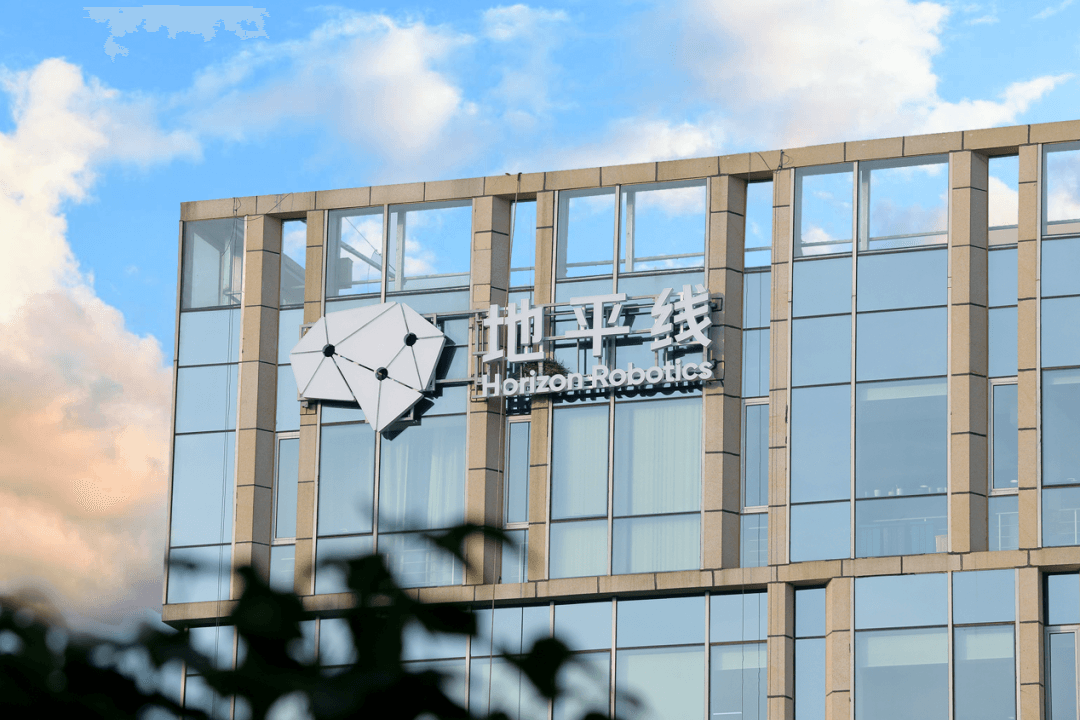
💡$546M rev proves ADAS chips exploding – key for AV builders scaling production
⚡ 30-Second TL;DR
What Changed
$546 million revenue achieved in 2025
Why It Matters
Demonstrates booming ADAS market, validating AI chips for autonomous driving scalability and mass adoption.
What To Do Next
Benchmark Horizon Robotics ADAS chips against competitors for your AV stack.
Key Points
- •$546 million revenue achieved in 2025
- •Growth driven by rising ADAS chip demand
- •Focus on mass-market advanced driving tech
🧠 Deep Insight
Background and context from public sources — not the original article. 8 sources cited.
🔑 Enhanced Key Takeaways
- •The 2025 revenue surge was primarily driven by a 144.2% year-on-year increase in the 'Product and Solution' segment, which now accounts for 43% of total revenue, signaling a successful transition from technology licensing to large-scale hardware commercialization.
- •Horizon Robotics achieved a dominant 44.2% market share in the competitive sub-200,000 RMB (approx. $28,000) vehicle segment for advanced Navigate on Autopilot (NOA) solutions in China, effectively commoditizing high-level autonomous driving features.
- •The company's 'CARIZON' joint venture with Volkswagen's CARIAD reached a critical milestone in late 2025 by initiating the independent development of a custom 500-700 TOPS System-on-Chip (SoC) specifically optimized for the Chinese market.
- •Cumulative shipments of the Journey series hardware surpassed 10 million units by August 2025, making Horizon the first Chinese smart driving technology company to reach this scale and establishing a massive data flywheel for algorithm training.
📊 Competitor Analysis▸ Show
| Feature | Horizon Journey 6P | NVIDIA DRIVE Orin | Mobileye EyeQ6H |
|---|---|---|---|
| Max Compute | 560 TOPS | 254 TOPS | 34 TOPS (Int8) |
| Architecture | BPU Nash (4th Gen) | Ampere GPU | Multicore Vision |
| Market Focus | Mass-market to Premium (China) | Global Premium / L4 | Global Mass-market ADAS |
| Key Advantage | Transformer optimization; Cost | Software ecosystem (CUDA) | Power efficiency; Turnkey |
🛠️ Technical Deep Dive
- BPU Nash Architecture: The 4th generation Brain Processing Unit (BPU) features a 32x32 multiplication-addition unit (upgraded from 16x16) and a sparse tensor engine to support Sparse4D algorithms.
- Transformer Acceleration: Specifically designed to accelerate Vision Transformers (ViT), the architecture achieves 27x faster reasoning performance compared to previous generations, with a full-scene reasoning latency of under 50ms.
- Journey 6 Series Gradient: A unified hardware-software platform ranging from the 6B (18 TOPS for entry-level ADAS) to the 6P (560 TOPS for high-end urban NOA).
- Horizon SuperDrive (HSD): An end-to-end Vision-Language-Action (VLA) architecture that integrates perception, planning, and control into a single neural network for human-like driving behavior.
🔮 Future ImplicationsAI analysis grounded in cited sources
⏳ Timeline
📎 Sources (8)
Factual claims are grounded in the sources below. Forward-looking analysis is AI-generated interpretation.
Weekly AI Recap
Read this week's curated digest of top AI events →
👉Related Updates

AI-curated news aggregator. All content rights belong to original publishers.
Original source: Pandaily ↗
This is a summary, not the original. Read the source, or get the weekly briefing.
Weekly AI briefing
One email a week. Unsubscribe anytime.