High-speed maglev tech for ultra-fast transit
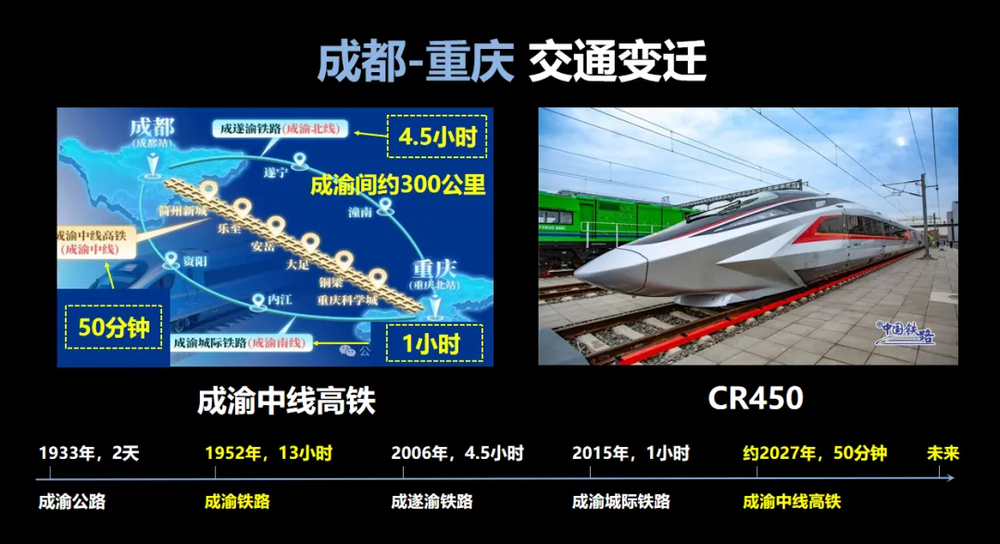
💡Could reduce Chengdu-Chongqing travel to 10 minutes using liquid nitrogen-cooled superconducting maglev.
⚡ 30-Second TL;DR
What Changed
High-temperature superconducting maglev (pinning maglev) uses liquid nitrogen cooling (196°C) for cost-effective operation.
Why It Matters
If successfully scaled, this technology could revolutionize regional transit, turning megacity clusters into 10-minute commute zones and challenging traditional wheel-rail high-speed rail.
What To Do Next
Monitor the engineering progress of U-shaped track beam designs for safety-critical maglev infrastructure.
Key Points
- •High-temperature superconducting maglev (pinning maglev) uses liquid nitrogen cooling (196°C) for cost-effective operation.
- •The system is self-stabilizing, requires no complex control systems, and features integrated suspension and guidance.
- •The technology enables high speeds with low energy consumption and zero magnetic radiation, potentially utilizing existing rail infrastructure.
🧠 Deep Insight
AI-generated analysis for this event.
🔑 Enhanced Key Takeaways
- •Southwest Jiaotong University successfully tested a 140-meter high-temperature superconducting (HTS) maglev test line in 2021, marking a critical step toward commercialization.
- •The system utilizes YBCO (Yttrium Barium Copper Oxide) bulk superconductors, which exhibit the Meissner effect and flux pinning to achieve passive stability.
- •Researchers are targeting operational speeds of 600-800 km/h, positioning the technology to bridge the gap between high-speed rail and commercial aviation.
- •The project is part of China's broader '1,000-km/h ultra-high-speed rail' research initiative, which includes vacuum tube integration studies to minimize aerodynamic drag.
- •The technology is designed to be compatible with 'low-vacuum' tube environments, which is essential for reaching the theoretical speed limits of maglev transit.
📊 Competitor Analysis▸ Show
| Feature | Southwest Jiaotong HTS Maglev | SCMaglev (Japan) | Transrapid (Germany) |
|---|---|---|---|
| Suspension Type | Passive (Flux Pinning) | Electrodynamic (EDS) | Electromagnetic (EMS) |
| Cooling | Liquid Nitrogen (77K) | Liquid Helium (4K) | None (Active Control) |
| Stability | Self-stabilizing | Active control required | Active control required |
| Energy Efficiency | High (Passive) | Moderate | Lower (Active power) |
🛠️ Technical Deep Dive
- Suspension Mechanism: Utilizes flux pinning effect where the superconductor locks into the magnetic field of the permanent magnet track, providing inherent stability without active electronic feedback.
- Track Configuration: Permanent magnet guideway (PMG) uses rare-earth magnets arranged in a Halbach array to maximize magnetic field strength on the track side while minimizing it elsewhere.
- Cooling System: On-board cryostats containing liquid nitrogen maintain the superconducting state of the YBCO bulks, with vacuum insulation layers to extend hold times.
- Propulsion: Employs a long-stator linear synchronous motor (LSM) integrated into the guideway, allowing for precise speed control and regenerative braking capabilities.
🔮 Future ImplicationsAI analysis grounded in cited sources
⏳ Timeline
Weekly AI Recap
Read this week's curated digest of top AI events →
👉Related Updates

AI-curated news aggregator. All content rights belong to original publishers.
Original source: 虎嗅 ↗