Hesai Adds Color to Lidar for AVs
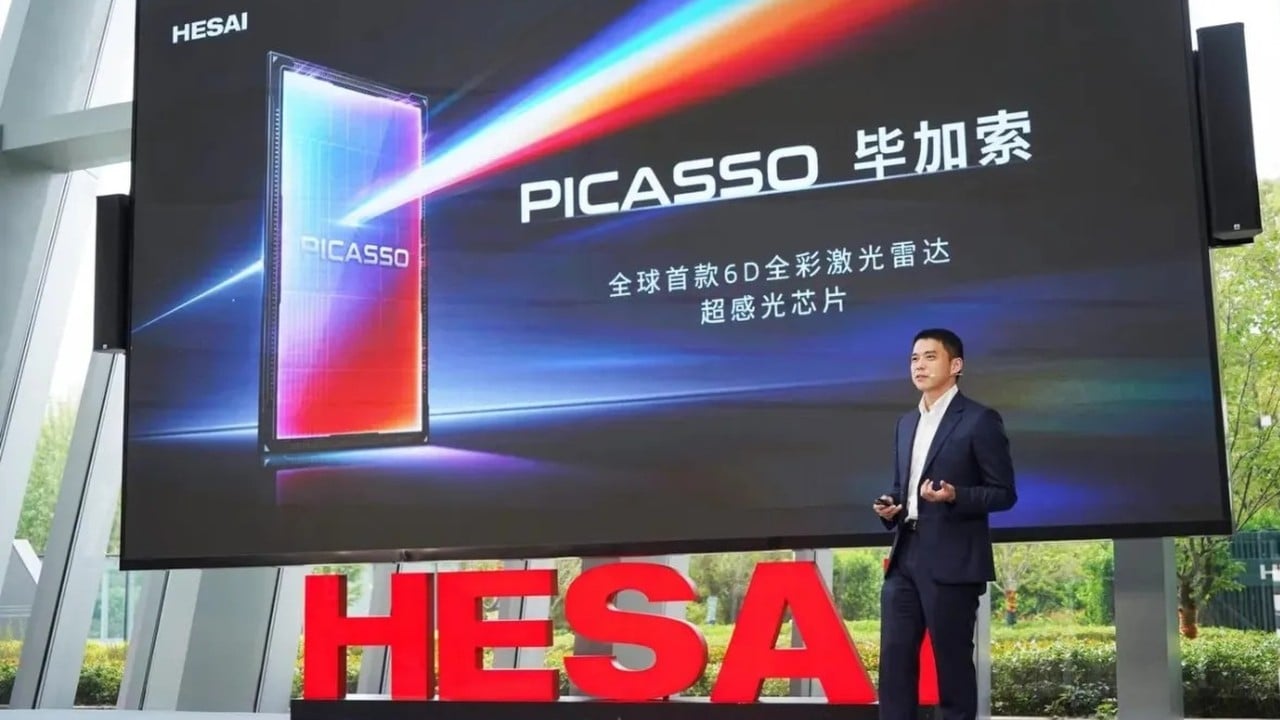
💡Color lidar advances AV object detection – vital for perception AI stacks
⚡ 30-Second TL;DR
What Changed
Hesai launches 6D full-colour lidar platform
Why It Matters
This lidar upgrade could improve AV perception accuracy, accelerating Level 3+ autonomy deployment. AI practitioners in robotics benefit from better sensor data for ML models.
What To Do Next
Request Hesai 6D lidar demos to integrate color data into your AV perception models.
Key Points
- •Hesai launches 6D full-colour lidar platform
- •Adds color detection for superior object ID
- •Enhances ranging and small-target identification
- •Targets autonomous driving amid EV competition
🧠 Deep Insight
AI-generated analysis for this event — not the original article.
🔑 Enhanced Key Takeaways
- •The 6D platform utilizes a proprietary multi-wavelength laser architecture that enables the simultaneous capture of spatial coordinates (3D) and spectral intensity data (color) without requiring external camera fusion.
- •Hesai is positioning this technology to solve 'edge case' failures in current AV systems, specifically identifying traffic signs, lane markings, and emergency vehicle lights that are often misclassified by standard monochromatic lidar.
- •The platform integrates a new generation of custom-designed ASIC chips that process the spectral data in real-time, maintaining the low latency required for high-speed autonomous operation.
📊 Competitor Analysis▸ Show
| Feature | Hesai 6D Lidar | Luminar Iris+ | Velodyne/Ouster (Combined) |
|---|---|---|---|
| Color/Spectral Sensing | Native (Multi-wavelength) | No (Monochromatic) | No (Monochromatic) |
| Primary Focus | High-res semantic mapping | Long-range detection | Industrial/General purpose |
| Market Strategy | Vertical integration (ASIC) | Software-defined lidar | Cost-optimized hardware |
🛠️ Technical Deep Dive
- Spectral Resolution: Utilizes multiple laser wavelengths to differentiate materials based on their reflective spectral signatures, effectively creating a 'color' map.
- Data Fusion: Eliminates the need for traditional camera-to-lidar extrinsic calibration, reducing system complexity and potential failure points in sensor fusion pipelines.
- ASIC Architecture: Employs a dedicated 7nm-class processing unit to handle the increased data throughput generated by the multi-wavelength return signals.
- Point Cloud Density: Maintains high-density point clouds while overlaying spectral data, allowing for sub-centimeter object classification accuracy.
🔮 Future ImplicationsAI analysis grounded in cited sources
⏳ Timeline
Weekly AI Recap
Read this week's curated digest of top AI events →
👉Related Updates

AI-curated news aggregator. All content rights belong to original publishers.
Original source: SCMP Technology ↗
This is a summary, not the original. Read the source, or get the weekly briefing.
The weekly digest
One email a week. Unsubscribe anytime.