Hema and Meituan Escalate Hard Discount Retail War
💡Understand how AI-driven supply chain efficiency is becoming the core competitive edge in China's retail sector.
⚡ 30-Second TL;DR
What Changed
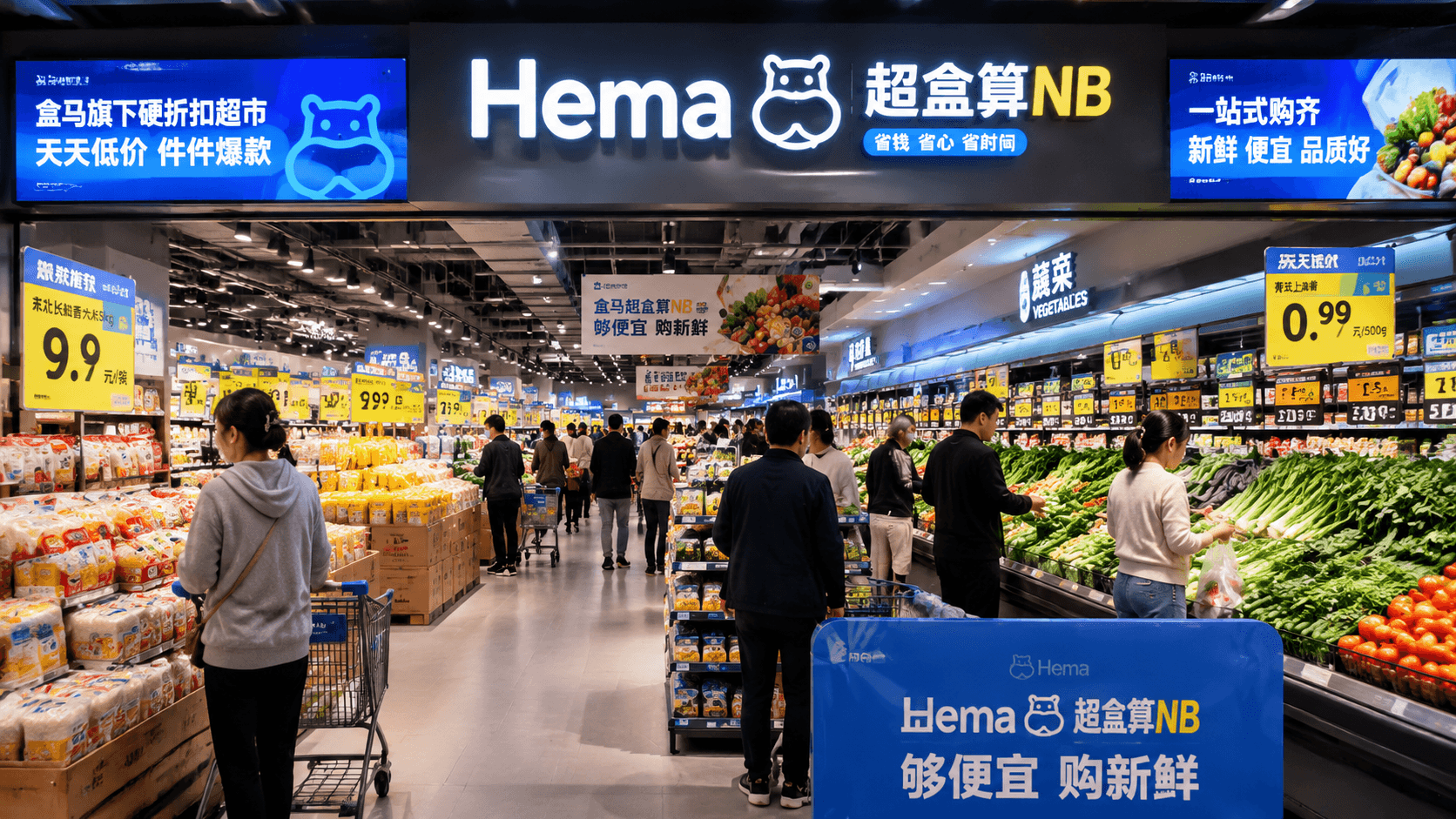
Hema SuperheSuan NB launched 6 stores in Beijing simultaneously.
Why It Matters
The retail war forces rapid digital transformation and AI-driven supply chain optimization to maintain thin margins in the discount sector.
What To Do Next
Analyze how these retailers integrate AI-driven demand forecasting to optimize their supply chain efficiency in high-volume, low-margin environments.
Key Points
- •Hema SuperheSuan NB launched 6 stores in Beijing simultaneously.
- •Meituan's Happy Monkey responded with 7 new store openings.
- •Intensifying competition in the hard discount retail market segment.
🧠 Deep Insight
AI-generated analysis for this event — not the original article.
🔑 Enhanced Key Takeaways
- •The 'hard discount' model in China focuses on high-frequency, low-SKU inventory strategies, typically stocking fewer than 2,000 items to maximize supply chain efficiency and bargaining power.
- •Hema's 'NB' (Neighborhood) format is specifically designed to compete with traditional wet markets and community grocery stores by offering private-label products at significantly lower price points.
- •Meituan's 'Happy Monkey' (Kuai Le Xiao Hou) utilizes the company's existing instant retail logistics network, allowing for rapid inventory turnover and reduced warehousing costs compared to traditional brick-and-mortar retailers.
- •This retail war is driven by a broader shift in Chinese consumer behavior, where price-sensitivity has increased, leading to a decline in premium supermarket performance and a surge in discount-oriented formats.
- •Both Hema and Meituan are leveraging AI-driven demand forecasting to optimize store-level inventory, aiming to reduce food waste and operational overhead in their respective discount store networks.
📊 Competitor Analysis▸ Show
| Feature | Hema SuperheSuan NB | Meituan Happy Monkey | Traditional Supermarkets |
|---|---|---|---|
| Pricing Strategy | Deep discount / Private label | Aggressive low-price / Flash sales | Premium / Mid-range |
| SKU Count | Low (1,000-2,000) | Very Low (<1,000) | High (10,000+) |
| Logistics | Centralized warehouse + Store | Instant delivery integration | Distributed supply chain |
| Target Market | Community / Neighborhood | Urban / High-density residential | General public |
🛠️ Technical Deep Dive
- Inventory Management: Both platforms utilize real-time dynamic pricing algorithms that adjust based on local competitor pricing and remaining shelf life of perishable goods.
- Supply Chain Integration: Hema employs a 'Direct-to-Farm' model to bypass intermediaries, while Meituan integrates its 'Flash Retail' (Meituan Instashopping) data to predict neighborhood-specific demand spikes.
- Store Operations: Implementation of automated replenishment systems that trigger restocking orders based on IoT-enabled shelf sensors and POS transaction data.
🔮 Future ImplicationsAI analysis grounded in cited sources
⏳ Timeline
Weekly AI Recap
Read this week's curated digest of top AI events →
👉Related Updates

AI-curated news aggregator. All content rights belong to original publishers.
Original source: Pandaily ↗
This is a summary, not the original. Read the source, or get the weekly briefing.
Weekly AI briefing
One email a week. Unsubscribe anytime.