💰钛媒体•Freshcollected in 2h
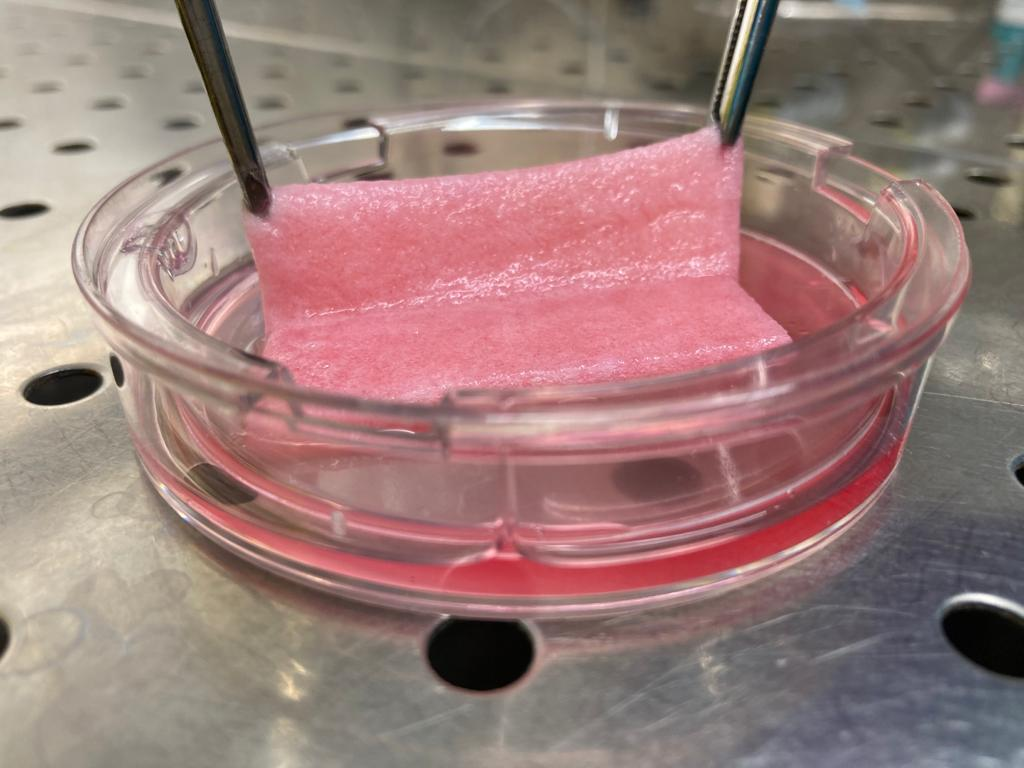
HekeTiss Develops Stem Cell Patch for Chronic Ulcers
💡Breakthrough in regenerative medicine; relevant for AI-driven drug discovery and personalized healthcare research.
⚡ 30-Second TL;DR
What Changed
Utilizes adipose-derived stem cells for tissue regeneration.
Why It Matters
This innovation could significantly improve recovery outcomes for patients with chronic wounds, potentially reducing long-term healthcare costs.
What To Do Next
Monitor clinical trial results for potential applications of regenerative medicine in AI-driven personalized treatment planning.
Who should care:Researchers & Academics
Key Points
- •Utilizes adipose-derived stem cells for tissue regeneration.
- •Targeting treatment for chronic, hard-to-heal ulcers.
- •Successfully moved into the first human clinical trial phase.
🧠 Deep Insight
AI-generated analysis for this event.
🔑 Enhanced Key Takeaways
- •HekeTiss is a spin-off company originating from the University of Zurich, leveraging proprietary research in regenerative medicine.
- •The patch technology utilizes a scaffold-free approach, relying on the self-assembling properties of stem cells to form a cohesive tissue layer.
- •The clinical trial is specifically focused on patients suffering from diabetic foot ulcers, a condition with high unmet medical need and significant recurrence rates.
- •The company has secured strategic partnerships with Swiss medical device manufacturers to ensure the scalability of the patch production process.
- •Regulatory approval for the current clinical trial was granted by Swissmedic, following extensive preclinical safety and efficacy data in porcine models.
📊 Competitor Analysis▸ Show
| Competitor | Technology Approach | Clinical Status | Key Advantage |
|---|---|---|---|
| Organogenesis | Bioengineered living cell therapy (Apligraf) | FDA Approved | Established market presence |
| MiMedx | Amniotic tissue-based allografts | FDA Approved | Broad clinical application |
| HekeTiss | Adipose-derived stem cell patch | Phase I | Scaffold-free regeneration |
🛠️ Technical Deep Dive
- The patch employs a proprietary cell-sheet engineering technique that eliminates the need for synthetic scaffolds, reducing the risk of immune rejection.
- Adipose-derived stem cells (ASCs) are harvested and cultured to enhance the secretion of paracrine factors, specifically VEGF and HGF, which promote angiogenesis.
- The manufacturing process utilizes a bioreactor system that maintains physiological oxygen levels to preserve stem cell potency and viability during the patch formation phase.
- The final product is designed for topical application, allowing for direct integration with the wound bed to accelerate epithelialization.
🔮 Future ImplicationsAI analysis grounded in cited sources
HekeTiss will seek CE Mark certification by 2028.
Successful completion of Phase I/II trials will likely trigger the regulatory pathway for European market entry.
The scaffold-free technology will be adapted for internal surgical applications.
The inherent structural integrity of the cell sheets allows for potential use in internal tissue repair beyond external ulcers.
⏳ Timeline
2023-05
HekeTiss officially incorporates as a University of Zurich spin-off.
2024-11
Completion of successful preclinical porcine wound healing studies.
2026-06
Swissmedic grants authorization for the first-in-human clinical trial.
📰
Weekly AI Recap
Read this week's curated digest of top AI events →
👉Related Updates
AI-curated news aggregator. All content rights belong to original publishers.
Original source: 钛媒体 ↗