HDC 2026: HarmonyOS 7 Showcases Five-Dimensional Upgrades
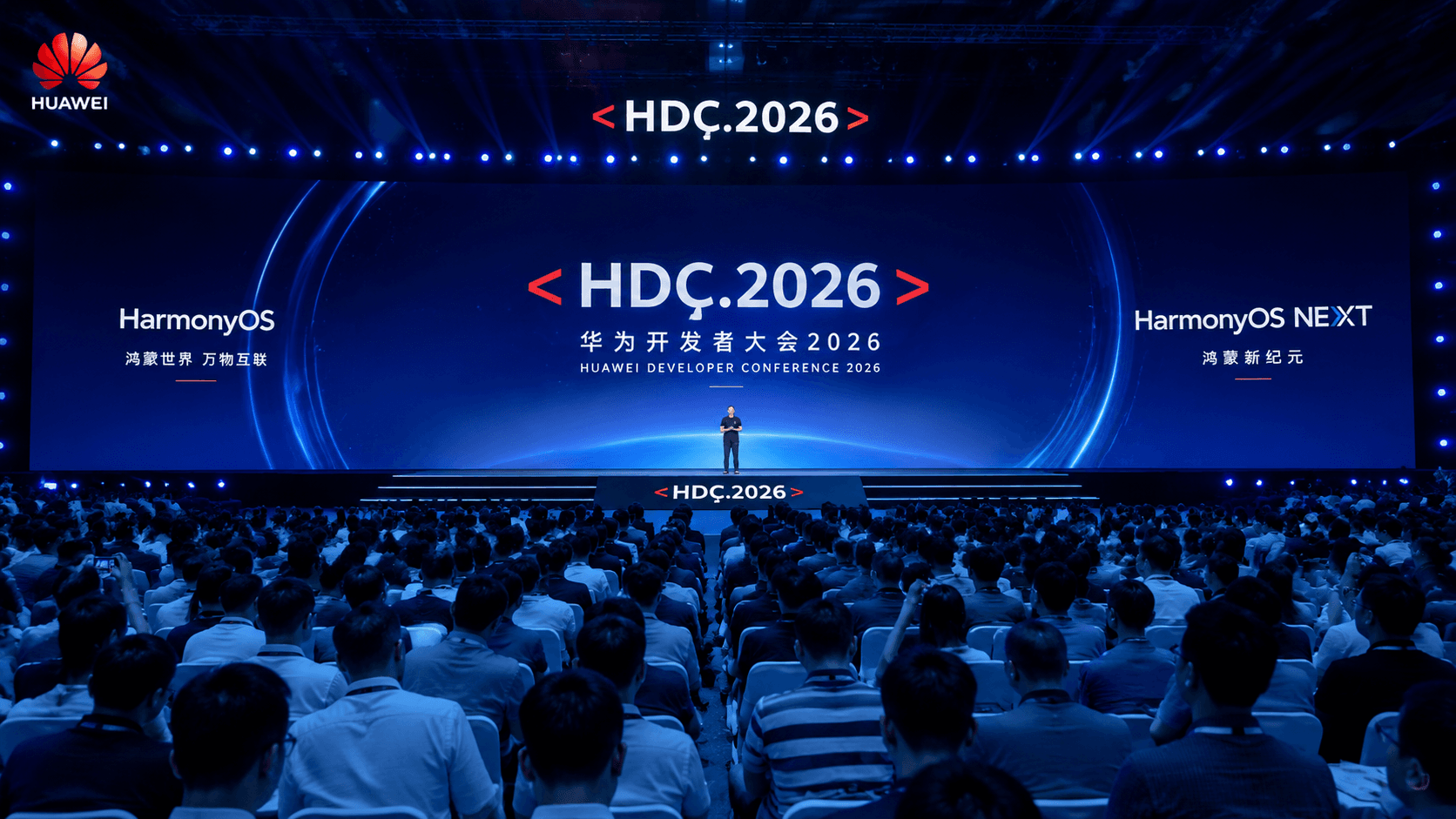
💡Discover how HarmonyOS 7 is integrating spatial computing and AI at the OS level to redefine cross-device experiences.
⚡ 30-Second TL;DR
What Changed
Five-dimensional upgrade: spatial computing, intelligence, security, smoothness, and connectivity
Why It Matters
HarmonyOS 7 strengthens Huawei's position in the OS market by integrating AI deeper into the hardware layer. This forces competitors to accelerate their own cross-device AI integration strategies.
What To Do Next
Review the new HarmonyOS 7 SDK documentation to optimize your app's performance for spatial computing and cross-device connectivity.
Key Points
- •Five-dimensional upgrade: spatial computing, intelligence, security, smoothness, and connectivity
- •Focus on ecosystem-wide innovation and partner integration
- •Enhanced system-level AI capabilities for cross-device performance
🧠 Deep Insight
Background and context from public sources — not the original article. 16 sources cited.
🔑 Enhanced Key Takeaways
- •HarmonyOS 7 introduces a "3D spatial design language" with interactive lock screens, responsive menus, and immersive light effects that react to user touch, drawing visual comparisons to Apple's "Liquid Glass" aesthetic in iOS 26/27.
- •The operating system transitions to an "AI-centric architecture" with an "Agentic AI" approach, featuring an upgraded Celia assistant powered by the "Intelligent Agent Framework 2.0" that can execute complex, multi-step actions across applications with over 90% success rate and connect with more than 2,000 specialized AI agents.
- •Enhanced security features include a new "anti-fraud platform" capable of identifying suspicious QR codes, detecting fraudulent web pages, flagging app impersonation attempts, recognizing spoofed international phone numbers, and offering AI-driven voice scam detection.
- •Performance improvements deliver up to a 15% speed increase compared to previous HarmonyOS versions, with Huawei claiming 30-40% better performance and lower memory consumption than rival operating systems.
- •The HarmonyOS ecosystem now spans over 1.3 billion active connected devices, including smartphones, tablets, PCs, smart home appliances, and in-car systems, and has surpassed iOS in China's smartphone market share, reaching 19% in Q1 2026.
🛠️ Technical Deep Dive
- Spatial Design Language: Utilizes software-based rendering techniques to create three-dimensional effects across the system, including interactive lock screens and dynamic lighting effects on UI elements like buttons and sliders.
- Agentic AI Architecture: Features the "Intelligent Agent Framework 2.0" which enables the Celia assistant to act as a system-level intelligence hub, understanding user intent, performing multi-step actions, and interacting deeply with applications.
- Intention as Service: A new paradigm where system-level AI, through the Agent Framework 2.0, gains GUI (Graphical User Interface) control capabilities to read on-screen information, simulate clicks, and invoke accessibility services, allowing autonomous control over applications even without explicit API integration.
- Distributed Capabilities: Leverages core technologies such as the Distributed Soft Bus for seamless communication and resource sharing across diverse devices, enabling hardware mutual assistance and unified connectivity.
- Native Kernel: HarmonyOS 5 (formerly HarmonyOS NEXT) and subsequent versions, including HarmonyOS 7, are built on Huawei's proprietary HongMeng Kernel, completely removing the Android Open Source Project (AOSP) codebase.
- Nearlink Technology: Incorporates advanced Nearlink technology for ultra-precise, short-range communication, enhancing device location, faster pairing, smoother handoffs, and more stable connections within the ecosystem.
- ArkUI Framework: Provides tools for developers to integrate components into the spatial design language, supporting seamless ecosystem integration and efficient, stable, and visually appealing application development.
🔮 Future ImplicationsAI analysis grounded in cited sources
⏳ Timeline
📎 Sources (16)
Factual claims are grounded in the sources below. Forward-looking analysis is AI-generated interpretation.
Weekly AI Recap
Read this week's curated digest of top AI events →
👉Related Updates
AI-curated news aggregator. All content rights belong to original publishers.
Original source: Pandaily ↗
This is a summary, not the original. Read the source, or get the weekly briefing.
The weekly digest
One email a week. Unsubscribe anytime.