HBM Father: AI Power Shifts from GPU to Memory
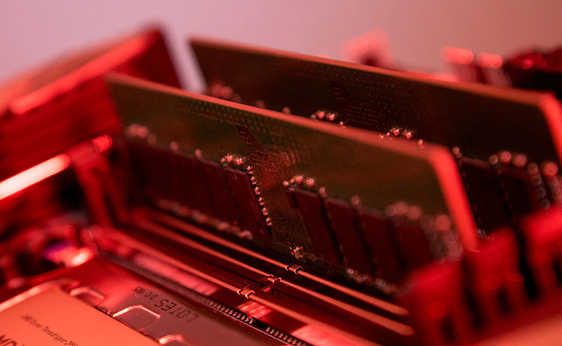
💡Memory overtaking GPUs as AI bottleneck—redesign your infra now.
⚡ 30-Second TL;DR
What Changed
AI leadership accelerating from GPU to memory dominance
Why It Matters
Prioritizes memory innovation in AI hardware design, urging investments in HBM and beyond. Could reshape GPU-memory architectures for future agentic systems. Impacts data center scaling for multimodal AI.
What To Do Next
Benchmark HBM memory on Nvidia H200 for agentic AI prototypes.
Key Points
- •AI leadership accelerating from GPU to memory dominance
- •Agentic AI era amplifies memory as key bottleneck
- •Context engineering demands massive multimodal data handling
🧠 Deep Insight
AI-generated analysis for this event — not the original article.
🔑 Enhanced Key Takeaways
- •Kim Jeong-ho emphasizes that the 'Memory Wall' is being exacerbated by the transition from static LLMs to agentic AI, which requires continuous, high-speed access to massive, dynamic context windows rather than just static model weights.
- •The shift is driving a move toward 'Processing-in-Memory' (PIM) and 'Near-Memory Computing' architectures, where logic is integrated directly into the HBM stack to reduce data movement energy costs, which currently account for a significant portion of AI power consumption.
- •Industry trends indicate that HBM4 and subsequent generations are evolving to include specialized logic layers specifically designed to handle the massive parallelization required for multimodal context retrieval, effectively turning memory modules into active compute components.
🛠️ Technical Deep Dive
- •HBM (High Bandwidth Memory) utilizes a 3D-stacked architecture using TSVs (Through-Silicon Vias) to connect DRAM dies, significantly increasing bandwidth compared to traditional GDDR or DDR memory.
- •The bottleneck in agentic AI arises from the 'Memory Wall' where the latency and energy cost of moving data between the GPU compute units and the off-chip memory exceed the compute time itself.
- •Next-generation HBM designs are incorporating logic dies at the base of the stack to support PIM (Processing-in-Memory) capabilities, allowing for operations like vector addition or data filtering to occur within the memory subsystem.
- •Context engineering for multimodal agents requires massive, low-latency access to KV (Key-Value) caches, which are increasingly being offloaded to high-capacity, high-bandwidth memory tiers to prevent GPU stalling.
🔮 Future ImplicationsAI analysis grounded in cited sources
⏳ Timeline
Weekly AI Recap
Read this week's curated digest of top AI events →
👉Related Updates


AI-curated news aggregator. All content rights belong to original publishers.
Original source: cnBeta (Full RSS) ↗
This is a summary, not the original. Read the source, or get the weekly briefing.
Weekly AI briefing
One email a week. Unsubscribe anytime.