Hassabis Biography Unveils DeepMind Breakthroughs
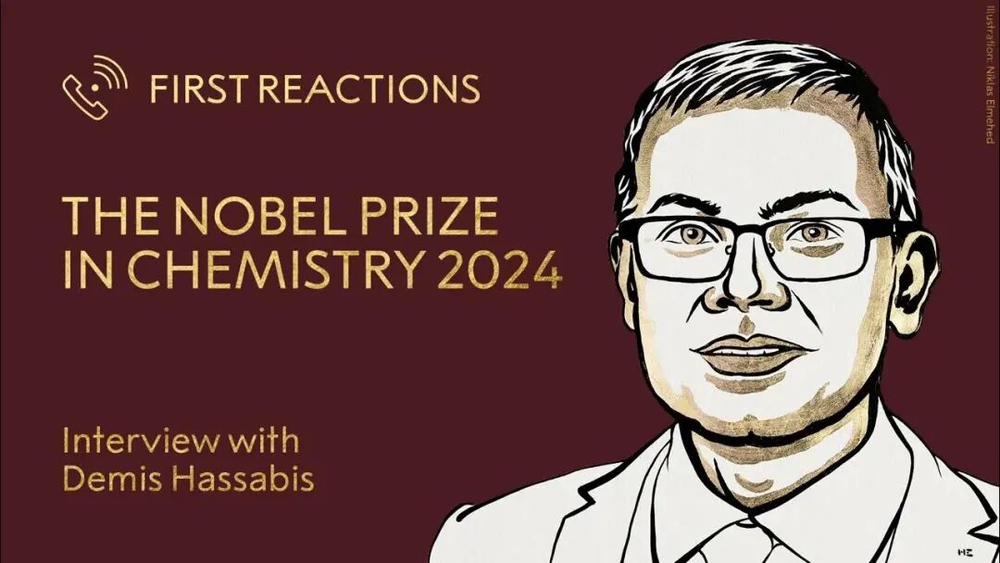
💡DeepMind secrets: How Hassabis cracked Go & proteins, lessons for AGI builders
⚡ 30-Second TL;DR
What Changed
Hassabis led AlphaGo to 3-0 victory over Ke Jie, shattering human superiority beliefs
Why It Matters
Reveals DeepMind's bold leadership style, influencing AI team management and inspiring pursuit of ambitious scientific goals in the AGI race.
What To Do Next
Study AlphaFold's Transformer pivot in the book to rethink stalled AI research projects.
Key Points
- •Hassabis led AlphaGo to 3-0 victory over Ke Jie, shattering human superiority beliefs
- •Pushed AlphaFold team to switch to Transformer architecture despite score drop from 60 to 20
- •Earned Nobel Chemistry Prize for solving 50-year protein folding problem
- •Aims for AGI as ultimate tool for scientific discovery
🧠 Deep Insight
Background and context from public sources — not the original article. 7 sources cited.
🔑 Enhanced Key Takeaways
- •Hassabis was awarded the 2024 Nobel Prize in Chemistry jointly with John M. Jumper for AI contributions to protein structure prediction, with the prize shared equally between them[1][3]
- •DeepMind merged with Google Brain in April 2023 under Hassabis's leadership to form Google DeepMind, positioning it as a 'nuclear power plant' providing AI capabilities across Google's products including Search and YouTube[2][5]
- •AlphaFold has been adopted by over 3 million researchers worldwide and has predicted the 3D structure of over 200 million proteins, solving a 50-year-old scientific challenge[5]
- •Hassabis founded Elixir Studios (1998-2005) producing award-winning AI-based video games before pivoting to neuroscience research, earning a Ph.D. in cognitive neuroscience from UCL in 2009 to understand how the brain manages imagination and memory[1]
- •Google acquired DeepMind in 2014 for over $650 million in what was Google's largest European acquisition at that time, with Hassabis remaining as CEO[1][2]
🛠️ Technical Deep Dive
Alpha Fold_ Architecture
- •AlphaFold solved the protein folding problem by predicting 3D protein structures from amino acid sequences[5]
- •The system demonstrated breakthrough performance at CASP13 (Critical Assessment of Techniques for Protein Structure Prediction) in December 2018, successfully predicting the most accurate structure for 25 out of 43 proteins[4]
- •DeepMind's research combines insights from systems neuroscience with machine learning and computing hardware to develop general-purpose learning algorithms[3]
Deep Mind_ Core_ Methods
- •Deep Q-Network (DQN): Pioneered deep reinforcement learning by training algorithms to play Atari games at superhuman level using only raw pixel inputs, achieving mastery of Space Invaders within 30 minutes of introduction[1][3]
- •Deep reinforcement learning: Combines deep learning with reinforcement learning methodologies[3]
- •Evolutionary methods: DeepMind is building LLMs with evolutionary approaches like AlphaEvolve to discover new knowledge beyond existing methods[6]
🔮 Future ImplicationsAI analysis grounded in cited sources
⏳ Timeline
📎 Sources (7)
Factual claims are grounded in the sources below. Forward-looking analysis is AI-generated interpretation.
- britannica.com — Demis Hassabis
- achievement.org — Demis Hassabis Ph D
- en.wikipedia.org — Demis Hassabis
- vinfutureprize.org — Professor Pamela Christine Ronald 2
- fortune.com — Demis Hassabis Nobel Google Deepmind Predicts AI Renaissance Radical Abundance
- bigtechnology.com — Google Deepmind CEO Demis Hassabis 946
- thriftbooks.com — 54084468
Weekly AI Recap
Read this week's curated digest of top AI events →
👉Related Updates
AI-curated news aggregator. All content rights belong to original publishers.
Original source: 虎嗅 ↗
This is a summary, not the original. Read the source, or get the weekly briefing.
Weekly AI briefing
One email a week. Unsubscribe anytime.