Harness VLA Advances Model-System Collaboration
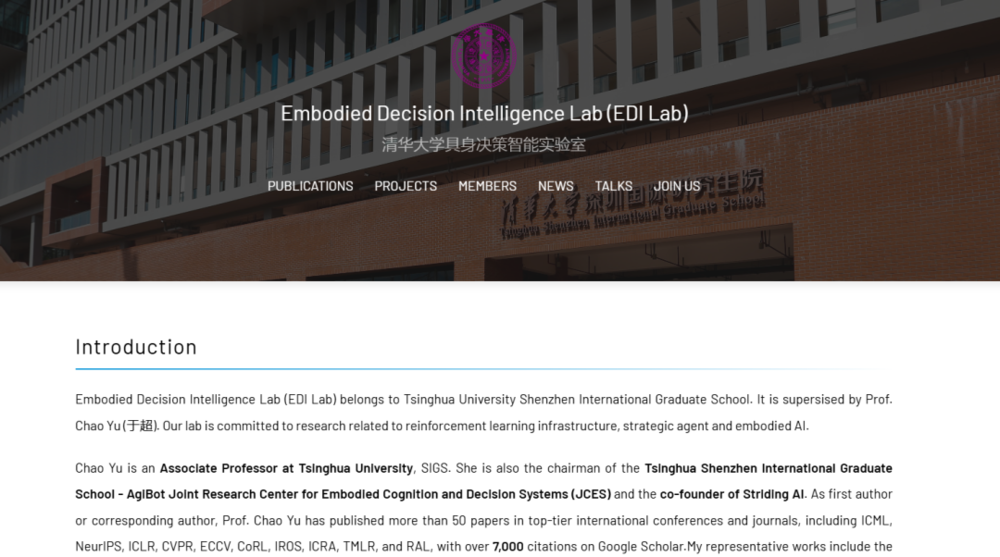
Harness VLA shows how task orchestration can make embodied models more reliable than pure end-to-end control.
30-Second TL;DR
What Changed
Harness VLA separates fine-grained manipulation from long-horizon planning, navigation, target search, and failure recovery.
Why It Matters
If effective, the model-plus-system paradigm could improve reliability on multi-step robotic workflows without requiring a single massive end-to-end policy. It also suggests that embodied-AI progress will depend on scalable real-world data collection and orchestration infrastructure, not only larger foundation models.
What To Do Next
Prototype a two-level robot policy by pairing your VLA model with a code-based task planner and log separate metrics for manipulation, navigation, and recovery.
Key Points
- •Harness VLA separates fine-grained manipulation from long-horizon planning, navigation, target search, and failure recovery.
- •A Harness Layer and code policy agent allow the system to learn how to allocate subtasks instead of forcing one VLA model to handle everything.
- •Yu Chao views reinforcement learning primarily as a way to generate interaction data and learn gravity, friction, mass, and other physical properties.
- •Her proposed embodied-AI scaling law includes scaling the number of robot embodiments alongside model and data scale.
- •The RLinf framework and MAPPO algorithm are highlighted as prior contributions to embodied and multi-agent reinforcement learning.
Deep Insight
AI-generated analysis for this event — not the original article.
Enhanced Key Takeaways
- •Harness VLA addresses the 'catastrophic forgetting' and 'data inefficiency' common in monolithic end-to-end VLA models by modularizing the decision-making process.
- •The system utilizes a hierarchical structure where the code policy agent acts as a high-level controller, translating natural language instructions into executable Python code snippets for the robot.
- •Yu Chao's research group emphasizes the 'Embodied Scaling Law,' which posits that performance gains in robotics are non-linear when scaling the diversity of robot morphologies (embodiments) in addition to parameter count.
- •The Harness Layer functions as a middleware that bridges the gap between high-level semantic planning and low-level motor control, specifically designed to handle real-time sensorimotor feedback loops.
- •The framework incorporates a 'Self-Correction Mechanism' where the system can detect execution failures through visual feedback and trigger a re-planning phase without human intervention.
Competitor Analysis
- Harness VLA
- Modular (Code Policy + VLA)
- Google RT-2
- End-to-End VLA
- NVIDIA VIMA
- Multi-modal Prompting
- Harness VLA
- High (Hierarchical)
- Google RT-2
- Moderate
- NVIDIA VIMA
- Moderate
- Harness VLA
- Code Generation
- Google RT-2
- Token Prediction
- NVIDIA VIMA
- Sequence Modeling
- Harness VLA
- RL-based Learning
- Google RT-2
- Data-driven (Imitation)
- NVIDIA VIMA
- Data-driven (Imitation)
| Feature | Harness VLA | Google RT-2 | NVIDIA VIMA |
|---|---|---|---|
| Architecture | Modular (Code Policy + VLA) | End-to-End VLA | Multi-modal Prompting |
| Long-horizon Capability | High (Hierarchical) | Moderate | Moderate |
| Control Method | Code Generation | Token Prediction | Sequence Modeling |
| Physical Dynamics | RL-based Learning | Data-driven (Imitation) | Data-driven (Imitation) |
Technical Deep Dive
- Harness Layer: Acts as an abstraction interface that maps VLA output tokens to specific API calls for robot controllers.
- Code Policy Agent: Implemented as a fine-tuned LLM capable of generating domain-specific language (DSL) for robotic manipulation tasks.
- RLinf Framework: Utilizes a reward-free exploration strategy to learn physical properties like friction and mass before task-specific fine-tuning.
- MAPPO Integration: Employs Multi-Agent Proximal Policy Optimization to coordinate multiple robot arms or sub-systems within the same environment.
- Data Collection: Employs a 'Sim-to-Real' pipeline where RL agents interact with physics engines to generate synthetic interaction data, which is then refined via real-world fine-tuning.
Future ImplicationsAI analysis grounded in cited sources
Timeline
- 2023-05Yu Chao publishes research on RLinf, establishing the foundation for reward-free exploration in embodied AI.
- 2024-02Introduction of advanced MAPPO applications for multi-agent robotic coordination.
- 2025-11Initial conceptualization of the Harness Layer to address long-horizon task failures in VLA models.
- 2026-06Formal proposal of Harness VLA and the embodied-AI scaling law by Yu Chao.
Weekly AI Recap
Read this week's curated digest of top AI events →
AI-curated news aggregator. All content rights belong to original publishers.
Original source: 虎嗅 ↗
This is a summary, not the original. Read the source, or get the weekly briefing.
The weekly digest
One email a week. Unsubscribe anytime.