Hardware OpenClaw: EVA OS Gains Shokay Funding
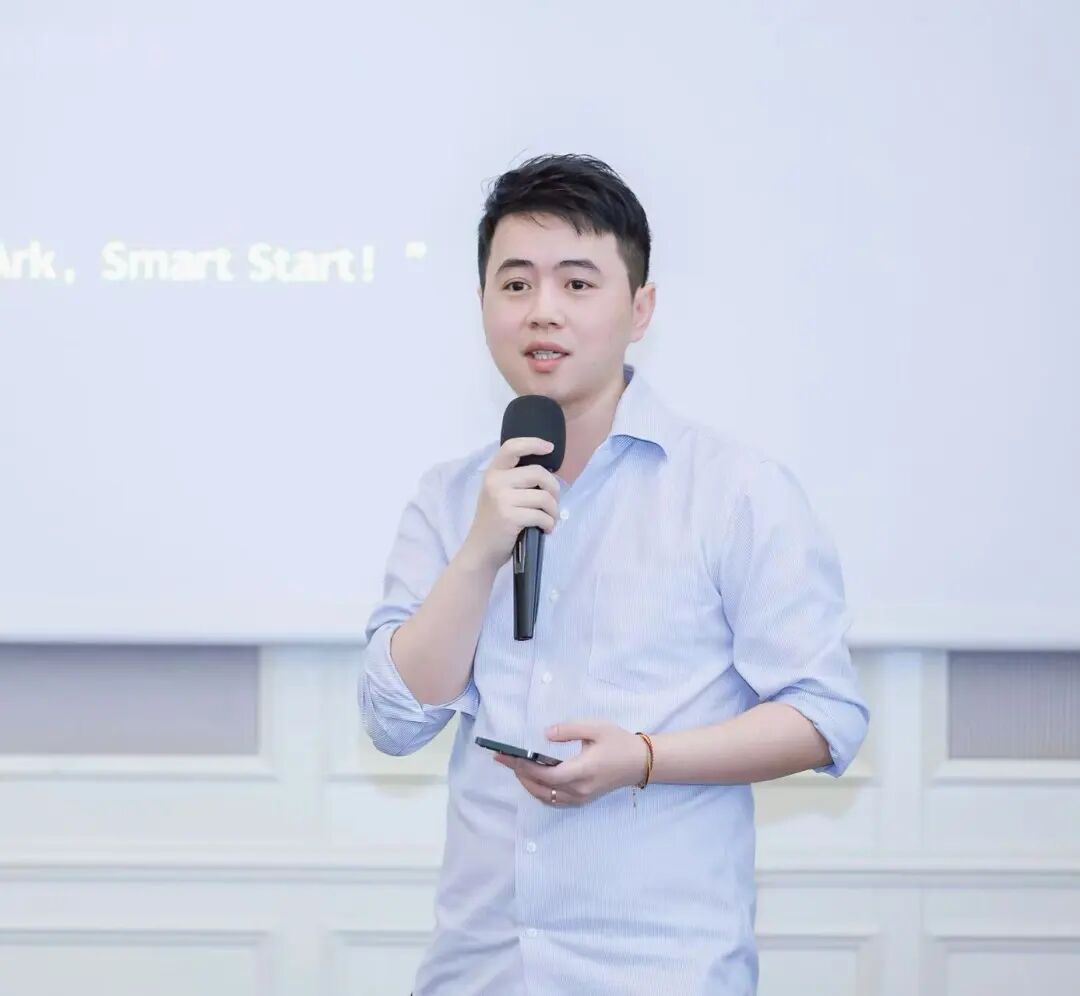
💡Edge AI OS like hardware OpenClaw: 30min dev, self-fixing code, $10M+ funding
⚡ 30-Second TL;DR
What Changed
EVA OS cuts AI hardware app dev from 2-3 months to 30 minutes via natural language.
Why It Matters
EVA OS lowers barriers for edge AI hardware, enabling rapid prototyping in robotics and wearables. Funding accelerates ecosystem growth, challenging traditional OS like ROS with Agent-native paradigms.
What To Do Next
Download EVA OS 1.0 SDK and test natural language app deployment on a Raspberry Pi.
Key Points
- •EVA OS cuts AI hardware app dev from 2-3 months to 30 minutes via natural language.
- •Strong hardware coupling for self-debugging drivers and bug fixes on edge devices.
- •Cloud-edge hybrid: <250ms voice latency, end-to-end multimodal model on CPU <1GB RAM.
- •2500+ adopters in AI wearables, robots; upcoming self-updating EVA Pi.
🧠 Deep Insight
AI-generated analysis for this event — not the original article.
🔑 Enhanced Key Takeaways
- •Boundless Ark (Wujie Fangzhou) focuses on the 'Agent-as-a-Service' model, positioning EVA OS as a middleware layer that abstracts hardware-specific driver complexity for AI developers.
- •The Shokay-led funding round highlights a strategic shift in investor interest toward 'Embodied AI' infrastructure in China, specifically targeting the fragmentation of the AI wearable and robotics hardware ecosystem.
- •EVA OS utilizes a proprietary 'Hardware-Aware' model distillation technique that allows multimodal large models to maintain high inference speeds on low-power ARM-based edge chips without requiring dedicated NPU acceleration.
📊 Competitor Analysis▸ Show
| Feature | EVA OS (Boundless Ark) | NVIDIA Isaac/Jetson | Qualcomm AI Stack |
|---|---|---|---|
| Primary Focus | Natural Language Hardware Dev | Robotics Simulation/Compute | Mobile/Edge Hardware Optimization |
| Abstraction Level | High (Natural Language) | Medium (SDK/API) | Low (Driver/Hardware level) |
| Hardware Coupling | Native Agent Framework | Hardware-Specific (NVIDIA) | Hardware-Specific (Snapdragon) |
| Pricing | Enterprise Licensing | Hardware-bundled/SDK | Hardware-bundled |
🛠️ Technical Deep Dive
- •Architecture: Employs a 'Cloud-Edge-Device' hybrid architecture where the core reasoning engine resides in the cloud, while a lightweight 'Micro-Agent' runtime handles local hardware abstraction.
- •Model Optimization: Uses dynamic quantization to fit multimodal models into <1GB RAM, specifically targeting the memory constraints of consumer-grade smart glasses and wearables.
- •Driver Interaction: Implements a 'Self-Healing' driver layer that uses LLM-based diagnostic agents to interpret hardware error logs and automatically generate/apply patches to peripheral drivers.
- •Latency: Achieves <250ms voice-to-action latency by utilizing a streaming multimodal pipeline that processes audio and visual inputs in parallel rather than sequentially.
🔮 Future ImplicationsAI analysis grounded in cited sources
⏳ Timeline
Weekly AI Recap
Read this week's curated digest of top AI events →
👉Related Updates
AI-curated news aggregator. All content rights belong to original publishers.
Original source: 36氪 ↗
This is a summary, not the original. Read the source, or get the weekly briefing.
The weekly digest
One email a week. Unsubscribe anytime.