Harbin Institute team pivots to logistics AI brain
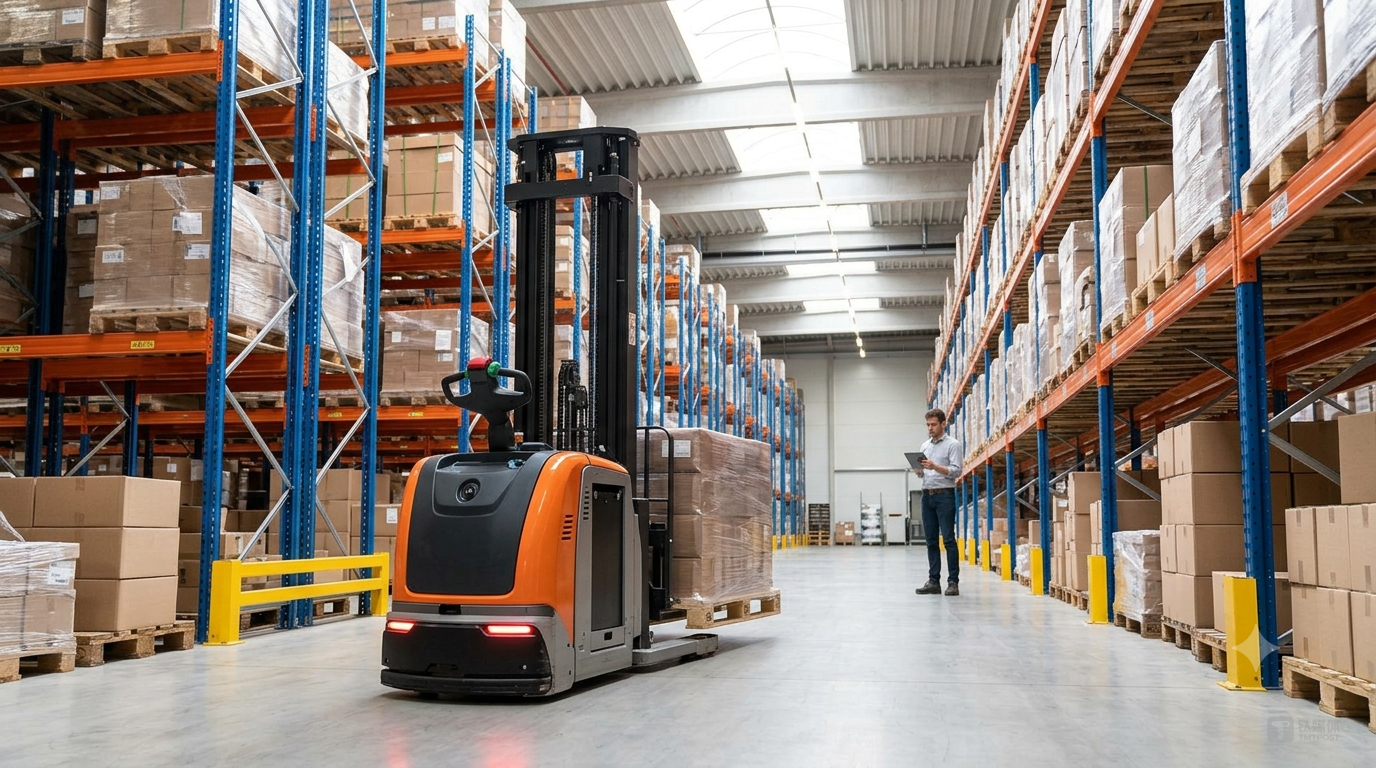
Learn how a specialized AI team successfully monetized their software by avoiding the hardware manufacturing trap.
30-Second TL;DR
What Changed
Shifted focus from autonomous driving to intelligent logistics
Why It Matters
This highlights a growing trend where specialized AI software providers can capture significant value by enabling hardware manufacturers without the overhead of physical production.
What To Do Next
Analyze your current AI stack to see if you can decouple your software 'brain' from specific hardware to scale across multiple vendors.
Key Points
- •Shifted focus from autonomous driving to intelligent logistics
- •Adopted a 'software-first' strategy by providing the system brain
- •Achieved commercial validation with tens of millions in revenue
Deep Insight
AI-generated analysis for this event — not the original article.
Enhanced Key Takeaways
- •The team originated from the Harbin Institute of Technology's Robotics Research Group, leveraging years of academic research in path planning and multi-agent coordination.
- •Their core product, often referred to as a 'Logistics Operating System' (LOS), integrates with existing warehouse hardware like AGVs and AMRs regardless of the manufacturer.
- •The pivot was driven by the high capital expenditure and regulatory hurdles associated with autonomous driving, which contrasted with the faster sales cycles in industrial automation.
- •The company utilizes a proprietary 'Digital Twin' simulation platform that allows clients to stress-test logistics workflows before physical deployment.
- •Key clients include major e-commerce fulfillment centers and cross-border logistics hubs in Northern China, where they have optimized throughput by a reported 20-30%.
Competitor Analysis
- Harbin Institute Team (LOS)
- Yes
- Traditional WMS Providers
- Partial
- Hardware-Integrated AI
- No
- Harbin Institute Team (LOS)
- High (Software-only)
- Traditional WMS Providers
- Moderate
- Hardware-Integrated AI
- Low
- Harbin Institute Team (LOS)
- Multi-agent Orchestration
- Traditional WMS Providers
- Inventory Management
- Hardware-Integrated AI
- Hardware Control
- Harbin Institute Team (LOS)
- Subscription/SaaS
- Traditional WMS Providers
- Licensing/Custom
- Hardware-Integrated AI
- Hardware Bundle
| Feature | Harbin Institute Team (LOS) | Traditional WMS Providers | Hardware-Integrated AI |
|---|---|---|---|
| Hardware Agnostic | Yes | Partial | No |
| Deployment Speed | High (Software-only) | Moderate | Low |
| Primary Focus | Multi-agent Orchestration | Inventory Management | Hardware Control |
| Pricing Model | Subscription/SaaS | Licensing/Custom | Hardware Bundle |
Technical Deep Dive
- Architecture: Employs a decentralized multi-agent reinforcement learning (MARL) framework for real-time path planning.
- Optimization: Uses a proprietary heuristic algorithm for dynamic task allocation to minimize idle time in warehouse robots.
- Integration: Supports standard communication protocols including ROS (Robot Operating System) and MQTT for cross-platform interoperability.
- Simulation: The Digital Twin engine is built on a high-fidelity physics simulation environment that mirrors real-world warehouse constraints.
Future ImplicationsAI analysis grounded in cited sources
Timeline
- 2022-05Initial research team formation at Harbin Institute of Technology focusing on autonomous driving algorithms.
- 2024-03Strategic pivot announced to transition core technology toward industrial logistics and warehouse automation.
- 2025-09Commercial validation achieved with the first major deployment in a regional e-commerce fulfillment center.
- 2026-02Company reports reaching the milestone of tens of millions in annual revenue.
Weekly AI Recap
Read this week's curated digest of top AI events →
AI-curated news aggregator. All content rights belong to original publishers.
Original source: 钛媒体 ↗
This is a summary, not the original. Read the source, or get the weekly briefing.
The weekly digest
One email a week. Unsubscribe anytime.