Tencent reduces Kuaishou stake to fund AI infrastructure
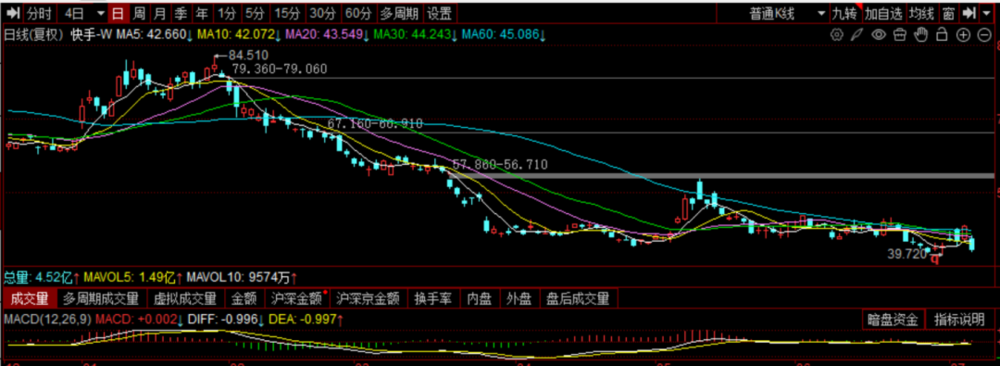
💡Strategic capital shift: How big tech is funding the AI race by divesting from mature social platforms.
⚡ 30-Second TL;DR
What Changed
Tencent sold 272.9 million shares of Kuaishou, cashing out 12.56 billion HKD.
Why It Matters
This divestment signals a broader trend of big tech firms reallocating capital from mature social platforms to capital-intensive AI infrastructure and generative models.
What To Do Next
Monitor the capital expenditure trends of major tech firms as a leading indicator for AI infrastructure investment priorities.
Key Points
- •Tencent sold 272.9 million shares of Kuaishou, cashing out 12.56 billion HKD.
- •Tencent is a lead investor in the $3 billion financing round for Kling AI.
- •Tencent's capital expenditure for AI reached 18 billion RMB in 2025, with plans to double in 2026.
- •Kuaishou is facing a growth slowdown in its core short-video business.
🧠 Deep Insight
AI-generated analysis for this event — not the original article.
🔑 Enhanced Key Takeaways
- •Tencent's divestment follows a broader trend of 'de-risking' its portfolio of non-core internet investments to focus on internal AI-native product development.
- •The capital raised is specifically earmarked for the procurement of high-end H20 and B200 GPU clusters to support the training of Tencent's Hunyuan large multimodal model.
- •Kuaishou's stock price experienced a 4.2% intraday decline following the disclosure of the block trade, reflecting market concerns over the loss of Tencent's strategic backing.
- •Tencent has transitioned from a passive financial investor in Kuaishou to a more selective partner, prioritizing integration with its own WeChat ecosystem over broad equity stakes.
- •The financing round for Kling AI, which Tencent is leading, includes a strategic clause requiring Kling to utilize Tencent Cloud's proprietary AI infrastructure for all future model training.
📊 Competitor Analysis▸ Show
| Feature | Tencent (Hunyuan/Kling) | ByteDance (Doubao/Jimeng) | Alibaba (Qwen/Tongyi) |
|---|---|---|---|
| Core Model | Hunyuan-Large | Doubao-Pro | Qwen-Max |
| Video Gen | Kling AI | Jimeng AI | Animate Anyone |
| Cloud Integration | Tencent Cloud | Volcano Engine | Alibaba Cloud |
| Market Focus | Social/Gaming AI | Short-video/Ads | Enterprise/Cloud AI |
🛠️ Technical Deep Dive
- Kling AI utilizes a 3D Spatio-Temporal Attention mechanism to maintain temporal consistency in video generation, addressing the 'flicker' issue common in earlier diffusion models.
- Tencent's infrastructure upgrade involves the deployment of a proprietary high-speed interconnect fabric (Tencent-Link) designed to reduce latency in distributed training across 10,000+ GPU clusters.
- The Hunyuan model architecture employs a Mixture-of-Experts (MoE) approach, allowing for dynamic parameter activation to optimize inference costs for real-time applications.
🔮 Future ImplicationsAI analysis grounded in cited sources
⏳ Timeline
Weekly AI Recap
Read this week's curated digest of top AI events →
👉Related Updates

AI-curated news aggregator. All content rights belong to original publishers.
Original source: 虎嗅 ↗
This is a summary, not the original. Read the source, or get the weekly briefing.
Weekly AI briefing
One email a week. Unsubscribe anytime.