GPS Jamming Disrupts Middle East Navigation
💡GPS jamming hits nav infra—build jamming-proof AI positioning for drones/robots now.
⚡ 30-Second TL;DR
What Changed
GPS jamming creates navigation hazards in the Gulf.
Why It Matters
Disruptions highlight vulnerabilities in GPS-reliant systems, impacting aviation, shipping, and autonomous tech. Drives innovation in resilient navigation for global ops. AI teams building location-aware apps must adapt.
What To Do Next
Integrate visual-inertial odometry into your AI robotics stack for GPS-denied navigation.
Key Points
- •GPS jamming creates navigation hazards in the Gulf.
- •Part of an invisible warfare in the Middle East.
- •Spurring rapid development of GPS-independent alternatives.
🧠 Deep Insight
Background and context from public sources — not the original article. 6 sources cited.
🔑 Enhanced Key Takeaways
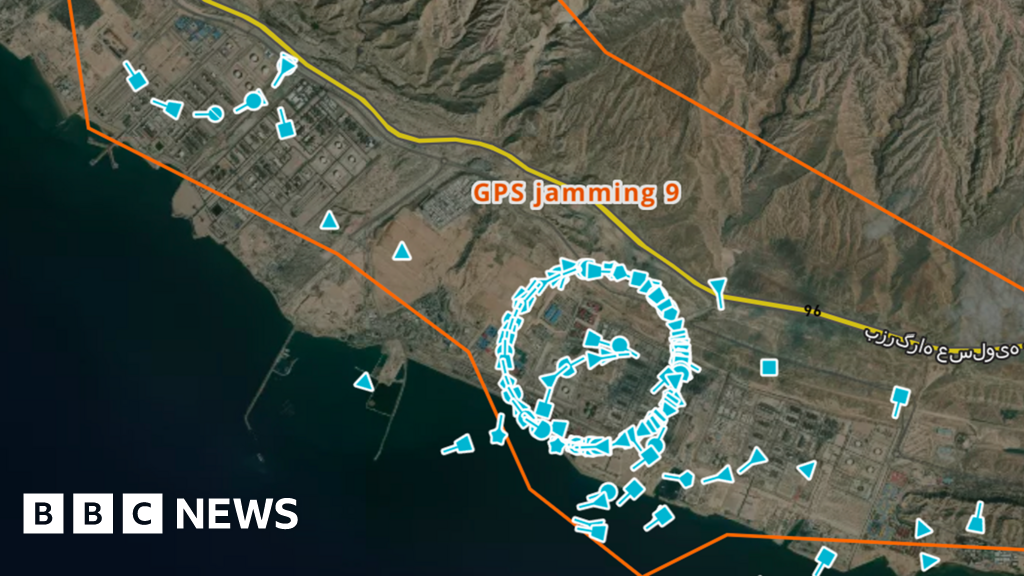
- •GPS jamming incidents in the Middle East Gulf surged 55% in a single week (March 1-7, 2026), affecting over 1,650 vessels, with jamming patterns evolving from simple circular clusters to complex zig-zag trajectories that reposition ships across multiple false locations within 24 hours[2].
- •At least 30 identified jamming clusters span six countries (Saudi Arabia, Kuwait, UAE, Qatar, Oman, Iran) across both land and sea, with concentrated interference at critical energy infrastructure including Ras Tanura refinery, Ras Laffan gas complex, and Fujairah Oil Industry Zone fuel storage facilities[2].
- •Both defensive and offensive electronic warfare tactics are simultaneously active: Gulf states deploy GPS jamming to shield against Iranian drone attacks, while Iran uses jamming to deny Strait of Hormuz access, creating overlapping interference zones that affect roughly 10,000 vessels operating in the region at any given time[3][4].
- •Ships' false positioning extends to aviation hazards, with vessel AIS signals diverted to Al Hamra airport and the Barakah Nuclear Power Plant, triggering false compliance alerts for banks, insurers, and charterers, and disrupting airspace across one of the world's busiest zones[3].
- •Commercial shipping composition shows bulk carriers (117 incidents), product tankers (100), chemical tankers (86), crude tankers (77), and containerships (72) are most affected, with individual vessels experiencing multiple jamming events lasting three to four hours each, totaling 1,735 interference events since February 28[4].
🛠️ Technical Deep Dive
- •GPS signals use frequency bands that have remained relatively unchanged since the early 1990s, making them technically vulnerable to jamming via stronger competing signals on identical frequencies that effectively drown out legitimate GPS transmissions[5].
- •Jamming tactics employ both signal disruption (blocking) and spoofing (false positioning), with spoofing creating false AIS coordinates that place vessels at airports, nuclear facilities, and inland locations up to 50+ kilometers from actual positions[1][3].
- •Automatic Identification System (AIS) interference occurs alongside GPS jamming, with ships' signals falsely appearing across multiple locations within single 24-hour periods, creating navigation and compliance risks for maritime service providers[1][2].
- •Electronic warfare systems transmit stronger signals on GPS frequencies to prevent ships from determining precise location; in extreme cases, vessels lose electronic navigation capability entirely, forcing reliance on radar and visual landmarks for navigation in congested waters[5].
- •Jamming cluster patterns have evolved tactically: initial circular 'crop circle' patterns observed in early conflict stages have transformed into zig-zag trajectories, indicating adaptive electronic warfare techniques[2].
🔮 Future ImplicationsAI analysis grounded in cited sources
⏳ Timeline
📎 Sources (6)
Factual claims are grounded in the sources below. Forward-looking analysis is AI-generated interpretation.
- wfmd.com — Hormuz Erupts Attacks Gps Jamming Houthi Threats Rock Strait Amid US Israeli Strikes
- windward.ai — Gps Jamming Surges in the Middle East Gulf 1650 Ships Hit
- windward.ai — Gps Jamming Disrupts 1100 Ships in the Middle East Gulf
- lloydslist.com — War Zone Gnss Interference Surges Across the Middle East Gulf
- timesofindia.indiatimes.com — 129261956
- thedailystar.net — Why Have 1000 Ships Times Lost Their Gps the Mideast 4123516
Weekly AI Recap
Read this week's curated digest of top AI events →
👉Related Updates
AI-curated news aggregator. All content rights belong to original publishers.
Original source: BBC Technology ↗
This is a summary, not the original. Read the source, or get the weekly briefing.
Weekly AI briefing
One email a week. Unsubscribe anytime.