Google's Top Embodied Brain Powers Human-Like Robot Dog
💡Google's Gemini Robotics makes robots human-like via spatial AI—huge for devs.
⚡ 30-Second TL;DR
What Changed
Gemini Robotics is Google's strongest embodied brain release
Why It Matters
This launch advances embodied AI for robotics, enabling more natural interactions. It positions Google as a leader in spatial AI for physical world applications.
What To Do Next
Test Gemini models' spatial reasoning APIs in your robot simulation environments.
Key Points
- •Gemini Robotics is Google's strongest embodied brain release
- •Third-gen model excels in spatial reasoning
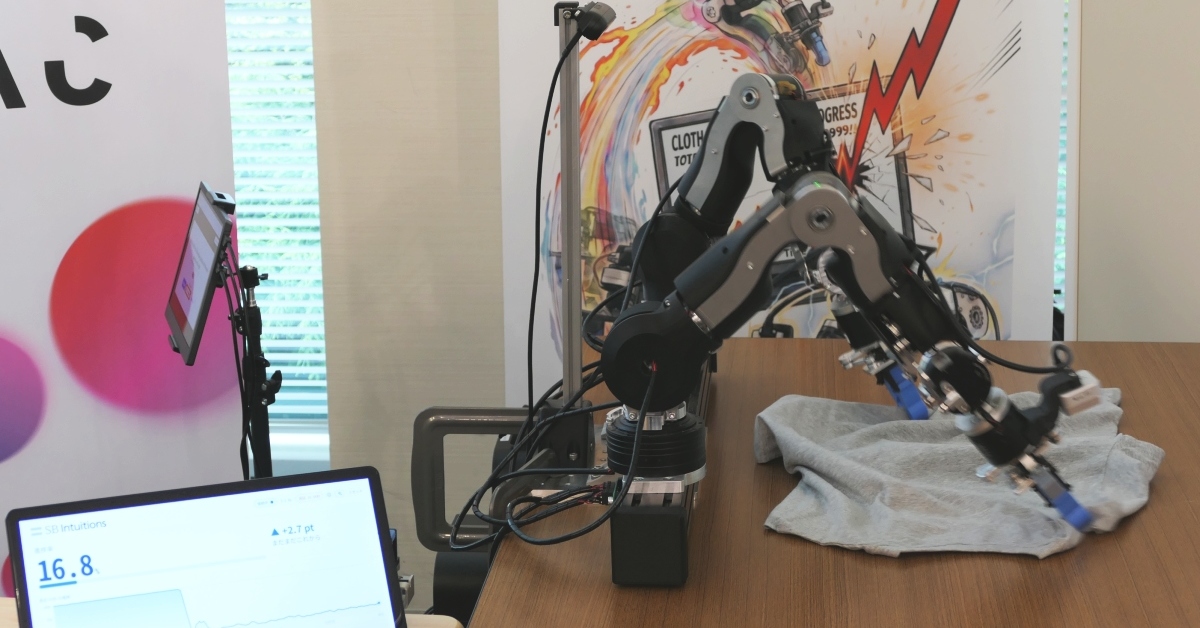
- •Transforms Boston Dynamics robot dog to human-like instantly
- •Targets advanced robotics capabilities
🧠 Deep Insight
AI-generated analysis for this event — not the original article.
🔑 Enhanced Key Takeaways
- •The integration utilizes a novel 'Vision-Language-Action' (VLA) architecture that allows the robot to process high-level natural language commands into low-level motor control sequences without intermediate code generation.
- •Google's collaboration with Boston Dynamics leverages the Spot platform's existing hardware API, focusing on real-time sensor fusion to enable the robot to navigate dynamic, unstructured environments previously inaccessible to pre-programmed paths.
- •The model incorporates a 'world model' component that predicts the physical consequences of movement, significantly reducing the latency between environmental perception and physical reaction compared to previous RT-2 based iterations.
📊 Competitor Analysis▸ Show
| Feature | Google Gemini Robotics | Tesla Optimus Gen 3 | Figure AI (Figure 02) |
|---|---|---|---|
| Primary Focus | Spatial Reasoning/VLA | End-to-End Neural Control | Humanoid General Purpose |
| Hardware | Boston Dynamics (Spot) | Tesla Custom Actuators | Custom Humanoid Platform |
| Deployment | Enterprise/Industrial | Automotive/Manufacturing | Commercial/Logistics |
🛠️ Technical Deep Dive
- Architecture: Utilizes a multimodal VLA (Vision-Language-Action) transformer model trained on a massive dataset of robotic trajectories and internet-scale video data.
- Spatial Reasoning: Employs a 3D-aware tokenization process that maps 2D camera inputs into a volumetric representation, allowing for precise object manipulation and obstacle avoidance.
- Latency Optimization: Implements a 'distillation' technique where the large-scale Gemini model trains a smaller, real-time-capable student model that runs on edge hardware integrated into the robot's chassis.
- Training Methodology: Uses a combination of imitation learning from human-operated teleoperation and reinforcement learning in high-fidelity physics simulations (MuJoCo).
🔮 Future ImplicationsAI analysis grounded in cited sources
⏳ Timeline
📰 Event Coverage
Weekly AI Recap
Read this week's curated digest of top AI events →
👉Related Updates

AI-curated news aggregator. All content rights belong to original publishers.
Original source: 量子位 ↗
This is a summary, not the original. Read the source, or get the weekly briefing.
The weekly digest
One email a week. Unsubscribe anytime.