Google's Natural Language Android Widget Creator
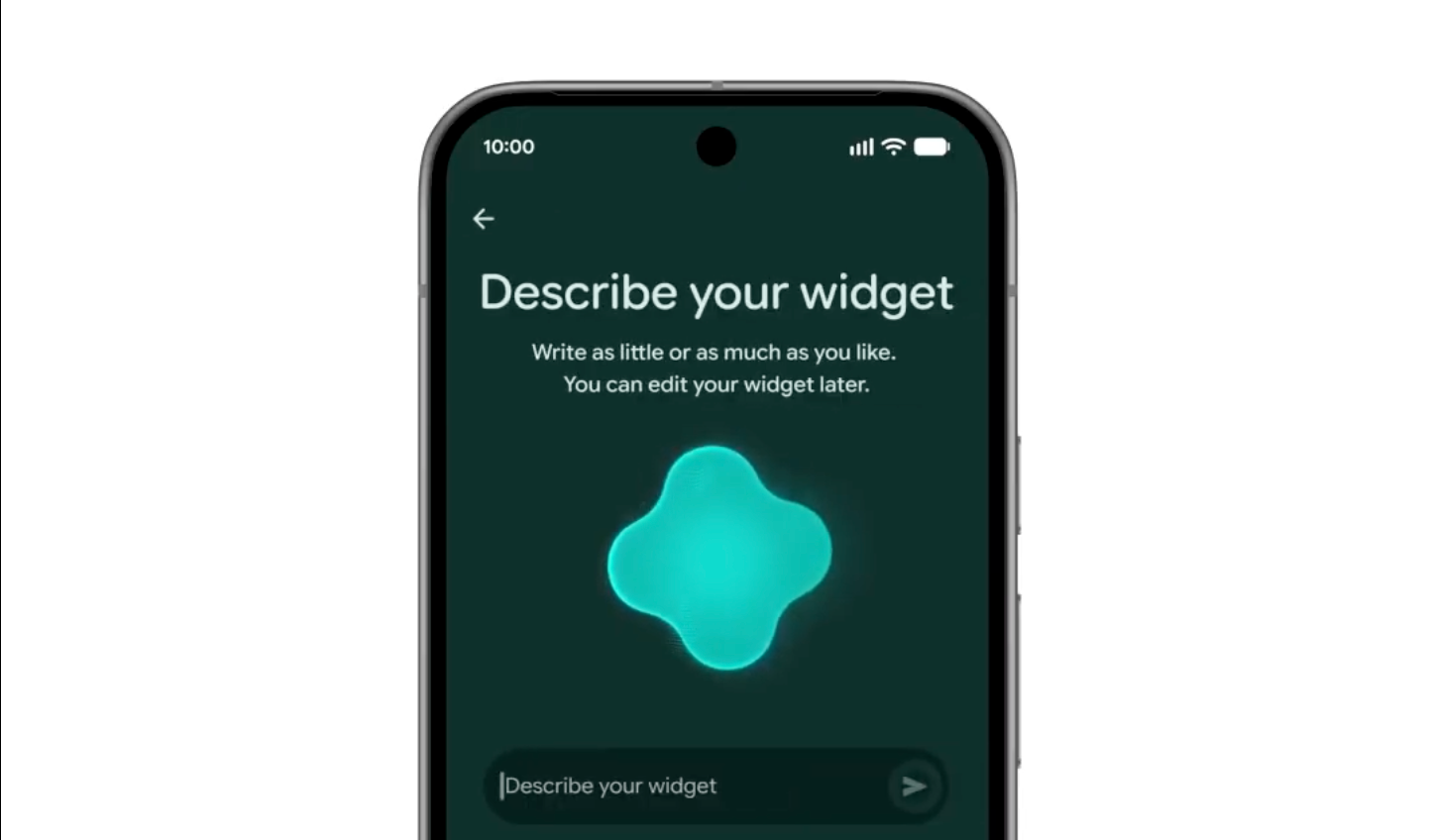
💡Google brings NLG to Android widgets—explore prompt-based UI gen for app ideas
⚡ 30-Second TL;DR
What Changed
Users describe widgets via natural language prompts
Why It Matters
Empowers non-technical users to create custom UIs via AI, potentially inspiring developers to integrate NLG in apps. Boosts Android's competitiveness in personalized experiences against iOS.
What To Do Next
Test natural language prompts in Android 16 beta on Pixel to prototype AI-generated UIs.
Key Points
- •Users describe widgets via natural language prompts
- •System auto-generates personalized home screen widgets
- •Initial rollout this summer on Galaxy and Pixel phones
🧠 Deep Insight
Background and context from public sources — not the original article. 12 sources cited.
🔑 Enhanced Key Takeaways
- •Create My Widget is a core component of the newly announced 'Gemini Intelligence' suite, which aims to automate multi-step tasks across Android apps and services.
- •The feature is positioned by Google as the 'first step in generative UI,' allowing for the creation of functional, resizeable dashboards that can aggregate data from sources like Gmail, Calendar, and weather services.
- •Beyond mobile phones, the technology is being integrated into the newly announced 'Googlebook' laptop category to enable the creation of custom desktop widgets via natural language prompts.
📊 Competitor Analysis▸ Show
| Feature | Google (Gemini Intelligence) | Apple (iOS/Shortcuts) | Samsung (Bixby/Modes & Routines) |
|---|---|---|---|
| Widget Generation | Generative AI (Natural Language) | Manual/Template-based | Manual/Template-based |
| Automation Scope | Cross-app agentic tasks | App-specific shortcuts | Device-level automation |
| UI Customization | Dynamic/Generative | Static/Template | Static/Template |
🛠️ Technical Deep Dive
- Architecture: Built on the Gemini Intelligence framework, utilizing on-device generative AI capabilities (likely leveraging Gemini Nano via AICore).
- Integration: Operates within the Material 3 Expressive design language system to ensure generated UI elements maintain visual consistency.
- API Foundation: Utilizes the ML Kit Prompt API (introduced April 2026) for handling text-based generative model requests, supporting token-limited inference (under 4000 tokens) to manage on-device latency.
- Cross-Platform: Functional across Android mobile devices and Wear OS, with synchronization capabilities for the Googlebook ecosystem.
🔮 Future ImplicationsAI analysis grounded in cited sources
⏳ Timeline
📎 Sources (12)
Factual claims are grounded in the sources below. Forward-looking analysis is AI-generated interpretation.
Weekly AI Recap
Read this week's curated digest of top AI events →
👉Related Updates



AI-curated news aggregator. All content rights belong to original publishers.
Original source: cnBeta (Full RSS) ↗
This is a summary, not the original. Read the source, or get the weekly briefing.
Weekly AI briefing
One email a week. Unsubscribe anytime.