Google's 4-Partner Chips Challenge Nvidia Inference
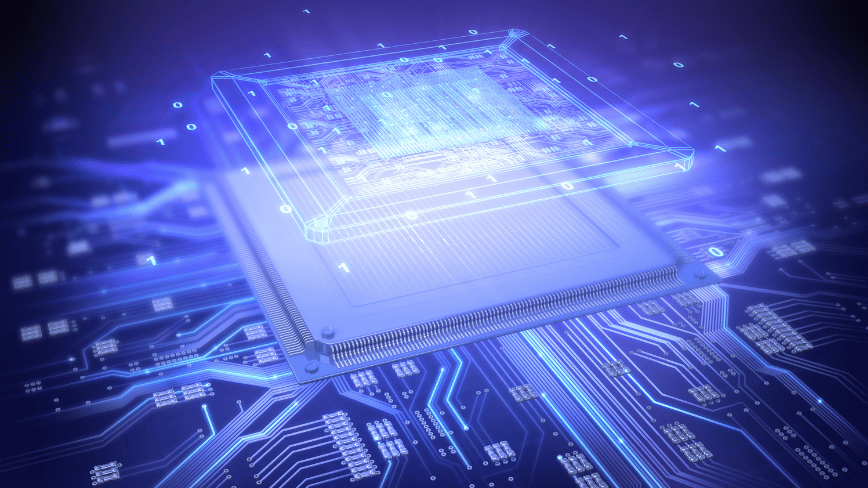
💡Google's multi-vendor TPU push could slash Nvidia dependency for AI inference
⚡ 30-Second TL;DR
What Changed
Four partners: Broadcom, MediaTek, Marvell, Intel
Why It Matters
Diversifies Google's chip production, reducing risks from supply shortages and potentially cutting costs for AI cloud users. Strengthens competition in AI inference market against Nvidia's GPUs.
What To Do Next
Benchmark Google Cloud TPUs against Nvidia A100/H100 for your inference workloads.
Key Points
- •Four partners: Broadcom, MediaTek, Marvell, Intel
- •Ironwood TPU shipping in millions currently
- •TPU v8 planned for TSMC 2nm in late 2027
- •Targets Nvidia dominance in AI inference
🧠 Deep Insight
AI-generated analysis for this event — not the original article.
🔑 Enhanced Key Takeaways
- •Google's shift to a multi-partner foundry model represents a strategic move to mitigate supply chain risks associated with over-reliance on a single vendor, specifically addressing capacity constraints at TSMC.
- •The integration of Intel as a foundry partner marks a significant shift in Google's silicon strategy, leveraging Intel's 18A process node to diversify manufacturing geography beyond Taiwan.
- •The Ironwood TPU architecture emphasizes high-bandwidth memory (HBM3e) integration to specifically reduce latency bottlenecks in large-scale transformer model inference.
📊 Competitor Analysis▸ Show
| Feature | Google Ironwood TPU | Nvidia Blackwell (B200) | AWS Inferentia2 |
|---|---|---|---|
| Primary Focus | Cloud-native Inference | Training & Inference | Cloud-native Inference |
| Process Node | Custom / Mixed | TSMC 4NP | TSMC 7nm |
| Memory | HBM3e | HBM3e | HBM2e |
| Pricing Model | Google Cloud TPU vCPU | GPU Instance Pricing | EC2 Inf2 Instance Pricing |
🛠️ Technical Deep Dive
- Ironwood TPU utilizes a custom interconnect fabric designed for low-latency communication between pods, optimized for MoE (Mixture of Experts) model architectures.
- The architecture incorporates hardware-level support for FP8 and INT8 quantization, specifically tuned for Google's Gemini model family inference.
- TPU v8 is expected to utilize advanced chiplet-based packaging (CoWoS-L) to integrate compute dies with high-density memory stacks on a 2nm process.
🔮 Future ImplicationsAI analysis grounded in cited sources
⏳ Timeline
Weekly AI Recap
Read this week's curated digest of top AI events →
👉Related Updates


AI-curated news aggregator. All content rights belong to original publishers.
Original source: The Next Web (TNW) ↗
This is a summary, not the original. Read the source, or get the weekly briefing.
The weekly digest
One email a week. Unsubscribe anytime.