Google Unifies Gemini Tools in Single API Call
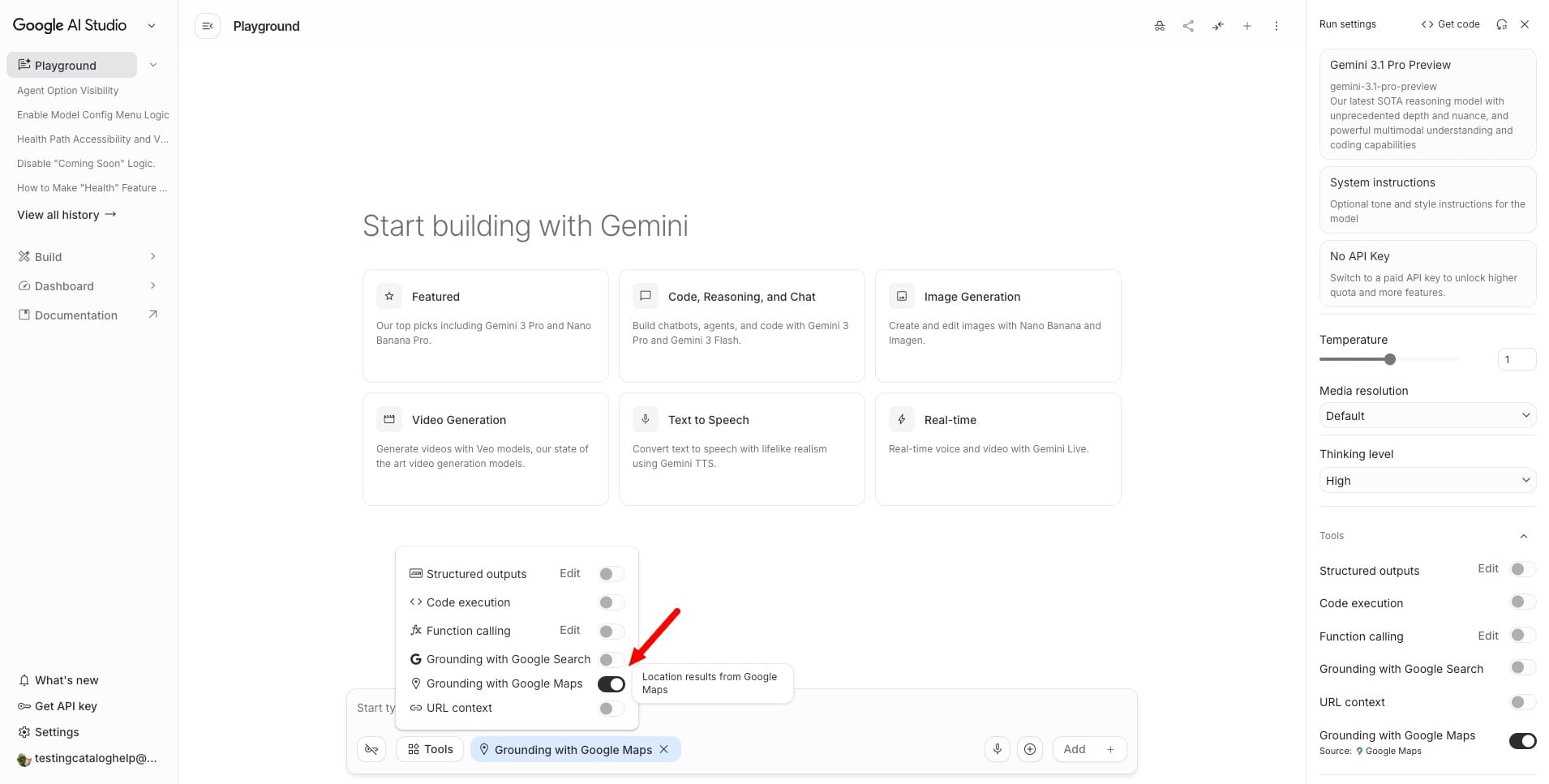
💡Gemini's unified tools simplify agent dev—combine built-ins/custom in 1 call.
⚡ 30-Second TL;DR
What Changed
Joins built-in tools with custom functions in one API call
Why It Matters
This update streamlines complex tool integrations, reducing development friction for AI apps. Developers can build more efficient agents with seamless context sharing.
What To Do Next
Test unified tool calling in the Gemini API developer console.
Key Points
- •Joins built-in tools with custom functions in one API call
- •Enables cross-tool context circulation
- •Introduces unique response IDs for output sharing
🧠 Deep Insight
Background and context from public sources — not the original article. 12 sources cited.
🔑 Enhanced Key Takeaways
- •Google is transitioning developers from the legacy generateContent endpoint to the new Interactions API, which provides native server-side state management and unified reasoning traces for complex workflows.
- •The update officially integrates Google Maps as a first-class built-in tool for the Gemini 3 series, enabling real-time spatial reasoning, business discovery, and commute-time calculations within a single call.
- •A new 'Thought Signatures' feature provides encrypted representations of the model's internal reasoning process, which must be circulated back to the API in subsequent turns to maintain logic consistency and prevent 400 errors.
📊 Competitor Analysis▸ Show
| Feature | Google Gemini 3.1 Pro | OpenAI GPT-5.4 Thinking | Anthropic Claude Opus 4.6 |
|---|---|---|---|
| Pricing (Input/Output per 1M) | $2.00 / $12.00 | $1.75 / $14.00 | $5.00 / $25.00 |
| Context Window | 1M - 2M tokens | 400K - 1M tokens | 1M tokens |
| Tool Integration | Unified (Search, Maps, Code, Custom) | Parallel Function Calling | Tool Use (Computer Use Preview) |
| State Management | Server-side (Interactions API) | Client-side (Threads/Assistants) | Client-side orchestration |
🛠️ Technical Deep Dive
- •Interactions API Schema: Introduces the 'previous_interaction_id' parameter to automate context circulation, removing the requirement for developers to manually manage and append tool outputs to message history.
- •Context Circulation Mechanism: Enables 'Multi-tool Chaining' where the output of a built-in tool (e.g., a Google Search result) is automatically parsed and passed as an input parameter for a subsequent custom function call.
- •Thought Signatures: Responses now include encrypted 'thought' blocks (type: 'thought'); in strict mode, these must be returned in the next request to preserve the model's reasoning state.
- •Unique Call Identifiers: Every tool request is assigned a unique 'id' string, allowing for precise mapping and debugging during asynchronous or parallel tool executions.
🔮 Future ImplicationsAI analysis grounded in cited sources
⏳ Timeline
📎 Sources (12)
Factual claims are grounded in the sources below. Forward-looking analysis is AI-generated interpretation.
Weekly AI Recap
Read this week's curated digest of top AI events →
👉Related Updates
AI-curated news aggregator. All content rights belong to original publishers.
Original source: TestingCatalog ↗
This is a summary, not the original. Read the source, or get the weekly briefing.
The weekly digest
One email a week. Unsubscribe anytime.