Google to add disclosures for AI-generated advertisements
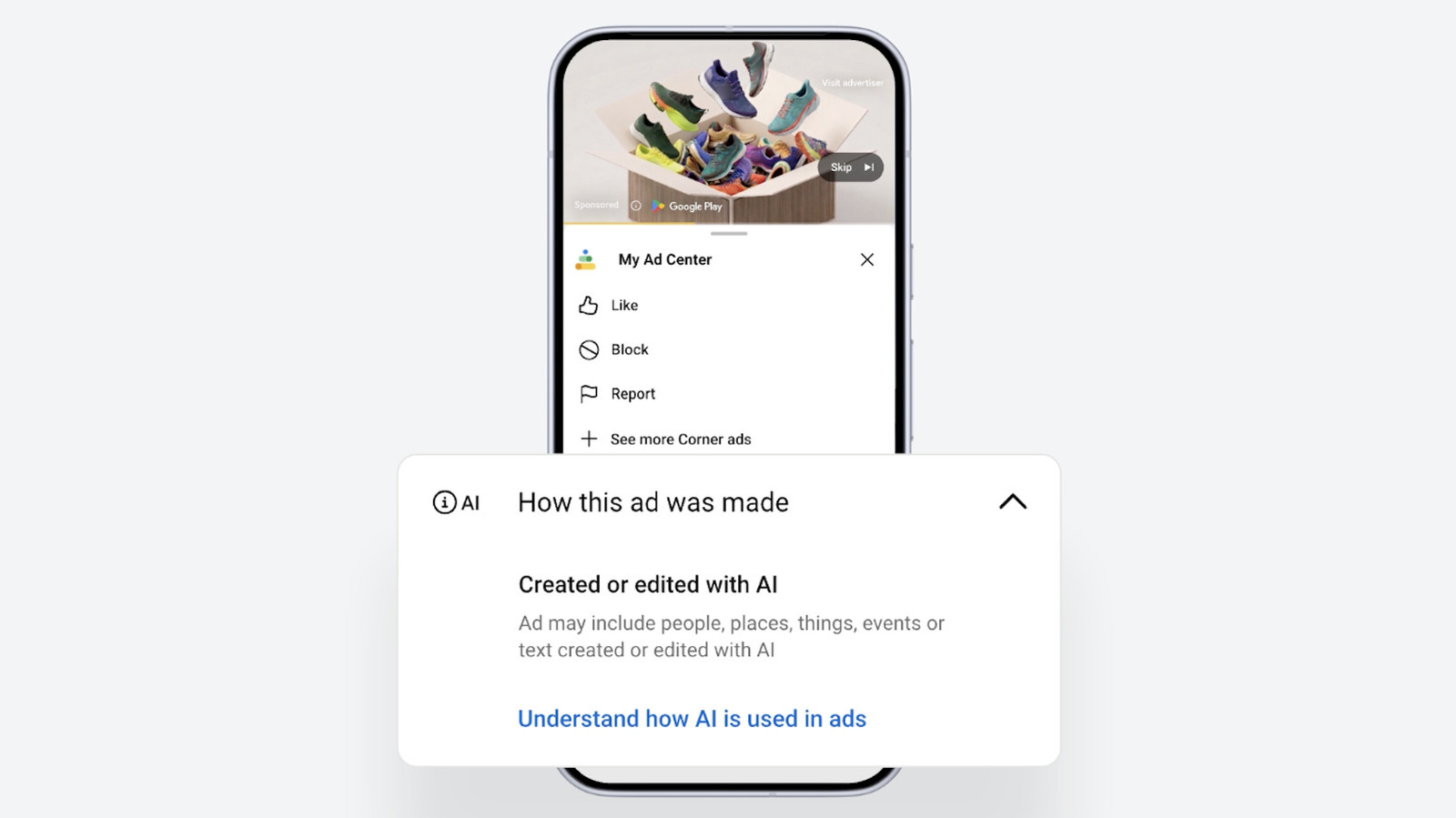
💡Understand how Google's new AI labeling policy will impact your ad transparency and compliance requirements.
⚡ 30-Second TL;DR
What Changed
Google will automatically label AI-generated ads
Why It Matters
This policy shift sets a precedent for major ad platforms to standardize AI content labeling, potentially influencing future regulatory compliance requirements for marketers.
What To Do Next
Review your ad creative workflows to ensure compliance with upcoming automated disclosure requirements in Google Ads.
Key Points
- •Google will automatically label AI-generated ads
- •Disclosures will be integrated into My Ad Center
- •Move aimed at increasing transparency for digital advertising
🧠 Deep Insight
AI-generated analysis for this event — not the original article.
🔑 Enhanced Key Takeaways
- •The initiative aligns with Google's commitment to the Coalition for Content Provenance and Authenticity (C2PA) standards to embed metadata in AI-generated assets.
- •Google is leveraging SynthID technology to digitally watermark AI-generated images and audio within advertisements, making them detectable even if metadata is stripped.
- •Regulatory pressure from the EU's AI Act has accelerated the timeline for these transparency requirements, mandating clear labeling for AI-manipulated content.
- •Advertisers using Google's generative AI tools are now contractually required to maintain these disclosures, with non-compliance potentially leading to ad account suspension.
- •The disclosure system extends beyond visual ads to include AI-generated voiceovers and synthetic audio elements in video ad formats.
📊 Competitor Analysis▸ Show
| Feature | Google (Ads) | Meta (Advantage+) | TikTok (Creative Center) |
|---|---|---|---|
| AI Labeling | Automated (SynthID) | Automated (C2PA/Metadata) | Automated (Labeling) |
| Transparency Hub | My Ad Center | Ad Library | Ad Transparency Center |
| Watermarking | Proprietary (SynthID) | Standard (C2PA) | Standard (C2PA) |
🛠️ Technical Deep Dive
- Implementation utilizes SynthID, a watermarking technology that embeds imperceptible signals directly into the pixel data of images or audio waveforms.
- The system integrates with the Ads API to automatically append 'AI-generated' metadata tags to the creative's manifest file upon generation.
- Detection mechanisms involve a server-side classifier that scans creative assets against a database of known AI-generated fingerprints before ad serving.
- The My Ad Center interface pulls data from the Ad Transparency Center backend, which cross-references the asset's unique ID with the generation logs.
🔮 Future ImplicationsAI analysis grounded in cited sources
⏳ Timeline
📰 Event Coverage
Weekly AI Recap
Read this week's curated digest of top AI events →
👉Related Updates

AI-curated news aggregator. All content rights belong to original publishers.
Original source: Engadget ↗
This is a summary, not the original. Read the source, or get the weekly briefing.
The weekly digest
One email a week. Unsubscribe anytime.