📋TestingCatalog•Stalecollected in 26m
Google Speeds Gemma 4 3x via MTP Drafters
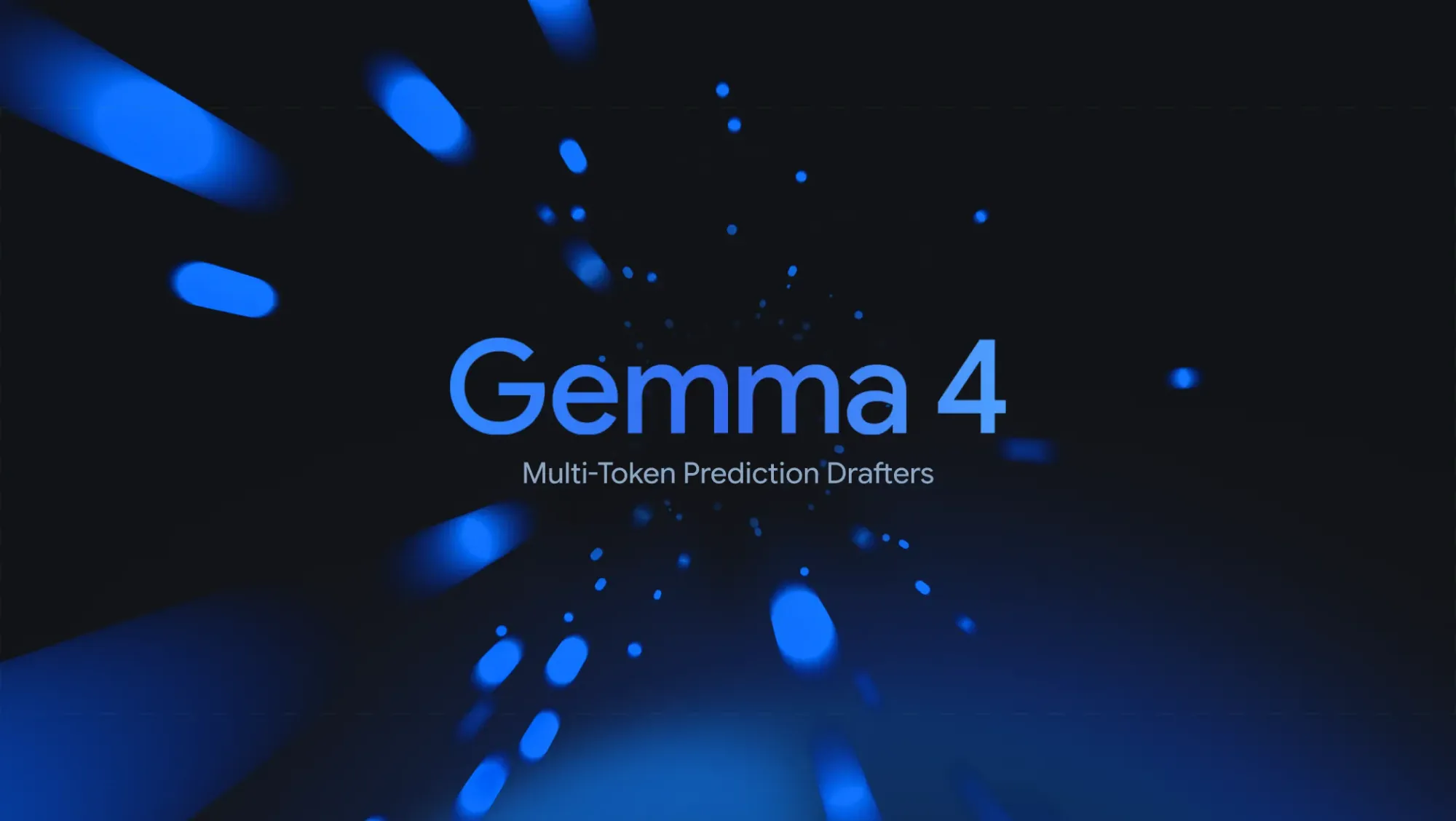
💡3x faster Gemma 4 on consumer GPUs unlocks edge AI for builders
⚡ 30-Second TL;DR
What Changed
Gemma 4 models achieve 3x speed boost
Why It Matters
Faster inference democratizes access to high-performance LLMs on everyday hardware. This could spur more on-device AI apps and reduce cloud dependency for developers.
What To Do Next
Download Gemma 4 with MTP Drafters from Hugging Face and benchmark on your GPU.
Who should care:Developers & AI Engineers
Key Points
- •Gemma 4 models achieve 3x speed boost
- •MTP Drafters enable speculative decoding
- •Optimized for consumer GPUs and edge devices
🧠 Deep Insight
AI-generated analysis for this event.
🔑 Enhanced Key Takeaways
- •MTP (Multi-Token Prediction) Drafters utilize a specialized architecture that predicts multiple future tokens simultaneously rather than the standard single-token autoregressive approach, significantly reducing the number of forward passes required.
- •The implementation leverages Google's JAX-based optimization framework, allowing for seamless integration with existing TPU and GPU inference pipelines while maintaining high cache hit rates during speculative execution.
- •This architectural shift specifically addresses the 'memory wall' bottleneck in LLM inference by offloading the heavy compute requirements of token verification to the main model while the lightweight drafter handles the speculative generation phase.
📊 Competitor Analysis▸ Show
| Feature | Google Gemma 4 (MTP) | Meta Llama 3 (Speculative) | Mistral (Medusa) |
|---|---|---|---|
| Speculative Method | Multi-Token Prediction (MTP) | Standard Speculative Decoding | Medusa (Multi-Head) |
| Hardware Focus | Edge/Consumer GPU | Data Center/Cloud | Edge/Consumer GPU |
| Inference Speed | ~3x Boost | ~2x-2.5x Boost | ~2x-2.2x Boost |
| Open Weights | Yes | Yes | Yes |
🛠️ Technical Deep Dive
- Architecture: Employs a 'Drafter' model that shares the same vocabulary as the main Gemma 4 model but with a significantly reduced parameter count (typically <10% of the main model).
- Mechanism: The Drafter generates a sequence of $n$ tokens in a single forward pass. The main model then verifies these tokens in parallel using a masked attention mechanism.
- Acceptance Criteria: If the main model's logit output matches the Drafter's prediction for a given position, the token is accepted; otherwise, the sequence is truncated at the first mismatch.
- Hardware Optimization: Utilizes custom CUDA kernels for the verification step to minimize latency overhead between the Drafter's output and the main model's validation.
🔮 Future ImplicationsAI analysis grounded in cited sources
On-device LLM performance will reach parity with cloud-based inference for standard chat applications by 2027.
The combination of MTP-based speculative decoding and aggressive model quantization is rapidly closing the latency gap between local and remote inference.
Multi-token prediction will become the industry standard architecture for all future small-to-medium language models.
The efficiency gains demonstrated by MTP in Gemma 4 provide a clear path to reducing the total cost of ownership for inference providers.
⏳ Timeline
2024-02
Google releases the first generation of Gemma open models.
2024-05
Google introduces Gemma 2 with improved architecture and performance.
2025-03
Google announces Gemma 3, focusing on multimodal capabilities.
2026-04
Google releases Gemma 4 with native Multi-Token Prediction support.
📰
Weekly AI Recap
Read this week's curated digest of top AI events →
👉Related Updates
AI-curated news aggregator. All content rights belong to original publishers.
Original source: TestingCatalog ↗