Google reportedly caps Meta's access to Gemini AI
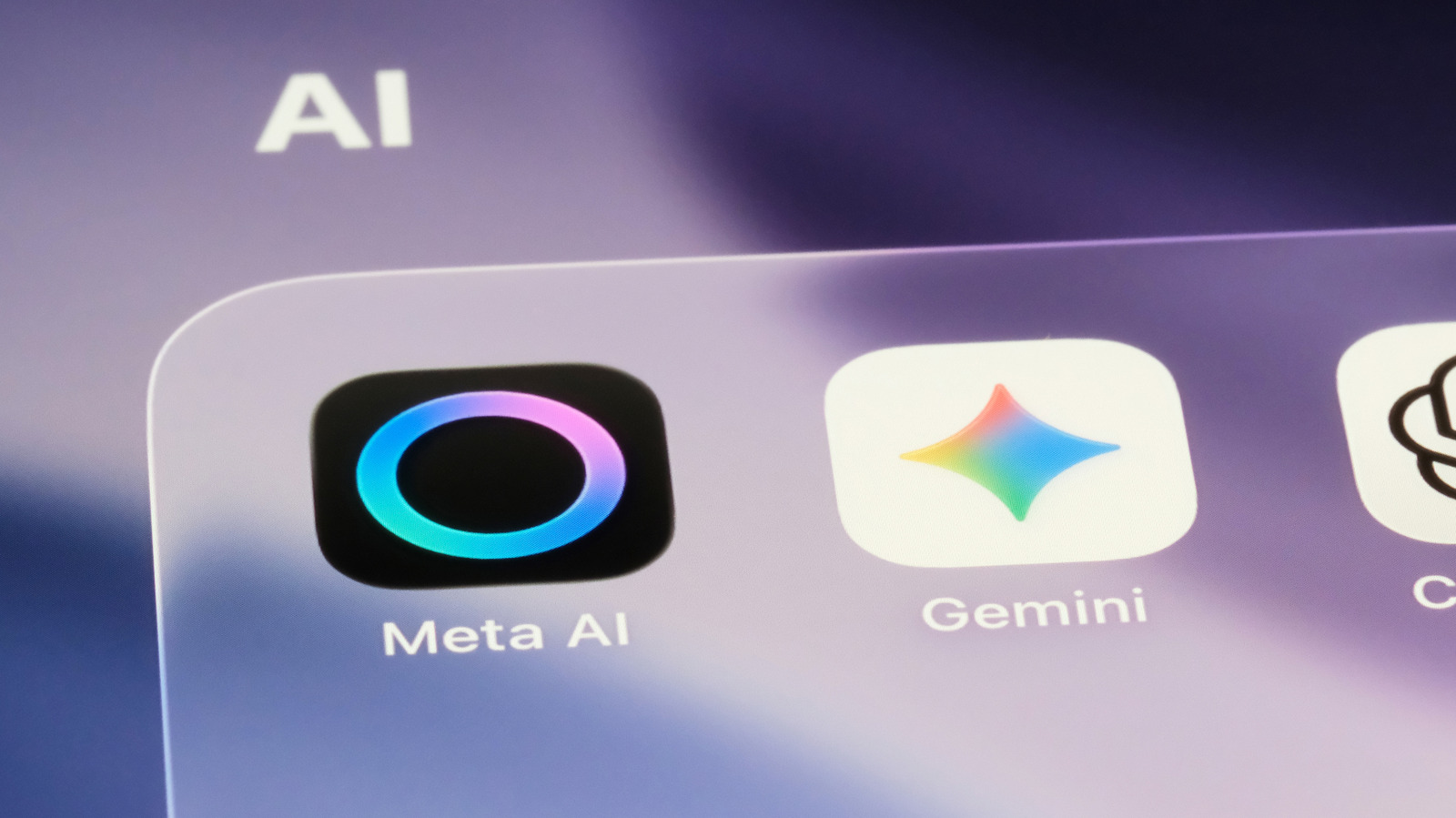
💡Capacity constraints at Google are impacting major partners, signaling potential bottlenecks for large-scale AI users.
⚡ 30-Second TL;DR
What Changed
Google restricted Meta's access to Gemini AI models
Why It Matters
This highlights the growing strain on AI infrastructure as major tech companies rely on each other's models. It underscores the importance of diversifying model providers to avoid service bottlenecks.
What To Do Next
Evaluate your dependency on single-provider model APIs and implement a fallback strategy using alternative models to ensure service continuity.
Key Points
- •Google restricted Meta's access to Gemini AI models
- •Usage caps were implemented due to limited compute capacity
- •The restriction affects Meta's internal coding and chatbot development efforts
🧠 Deep Insight
AI-generated analysis for this event — not the original article.
🔑 Enhanced Key Takeaways
- •The usage caps are reportedly part of a broader strategy by Google to prioritize internal AI projects and Google Cloud enterprise customers over third-party API consumers.
- •Meta has been utilizing Gemini models as a secondary or auxiliary engine to augment its own Llama model development, specifically for specialized coding tasks.
- •Industry analysts suggest this move highlights the growing 'compute scarcity' crisis among major hyperscalers as demand for large-scale model inference outpaces GPU supply.
- •Google's infrastructure limitations are exacerbated by the massive energy and cooling requirements needed to maintain Gemini's high-parameter models at scale.
- •Meta is reportedly accelerating its efforts to reduce dependency on external proprietary models by optimizing its internal infrastructure to handle more complex coding workloads autonomously.
📊 Competitor Analysis▸ Show
| Feature | Google Gemini (API) | Meta Llama (Open Weights) | OpenAI GPT-4o (API) |
|---|---|---|---|
| Access Model | Closed/API-based | Open Weights/Self-hosted | Closed/API-based |
| Primary Use Case | Enterprise/Cloud Integration | Research/Custom Deployment | General Purpose/Consumer |
| Compute Dependency | High (Google Infrastructure) | Variable (Self-managed) | High (Azure Infrastructure) |
🛠️ Technical Deep Dive
- The restrictions are enforced via rate-limiting at the API gateway level, specifically targeting high-concurrency requests associated with Meta's automated coding agents.
- Meta's integration relied on Gemini's long-context window capabilities, which are computationally expensive to serve compared to standard inference tasks.
- Google's infrastructure constraints are linked to the allocation of TPU v5p clusters, which are currently prioritized for internal model training and high-priority Google Cloud customers.
- The throttling mechanism utilizes dynamic load balancing that monitors real-time token throughput to prevent system-wide latency spikes.
🔮 Future ImplicationsAI analysis grounded in cited sources
⏳ Timeline
Weekly AI Recap
Read this week's curated digest of top AI events →
👉Related Updates
AI-curated news aggregator. All content rights belong to original publishers.
Original source: Engadget ↗
This is a summary, not the original. Read the source, or get the weekly briefing.
Weekly AI briefing
One email a week. Unsubscribe anytime.