Google Reportedly Fears Losing Demis Hassabis
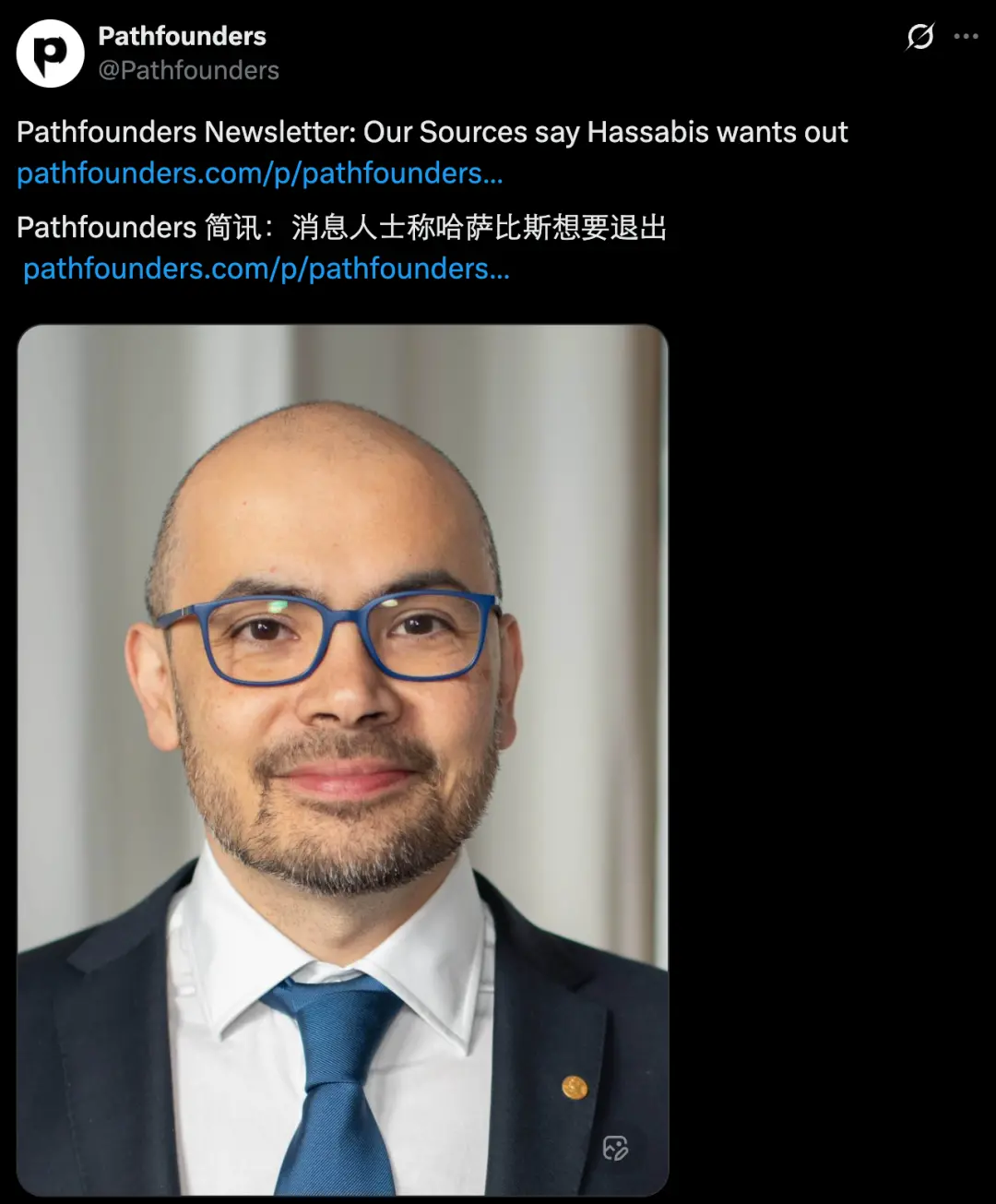
Google’s top AI leadership is shifting—potentially affecting research, products, and ecosystem priorities.
30-Second TL;DR
What Changed
Jeff Dean announced his departure from Google after 27 years.
Why It Matters
The departures and role changes could influence Google’s AI research priorities, organizational structure, and ability to retain senior technical leadership. AI companies and developers relying on Google’s ecosystem should watch for changes in product direction and research investment.
What To Do Next
Review your Google Cloud and Gemini dependencies and document a fallback provider before any leadership-driven roadmap changes affect service priorities.
Key Points
- •Jeff Dean announced his departure from Google after 27 years.
- •Demis Hassabis stepped down as DeepMind CEO and became its chairman.
- •Hassabis also took on the role of chief scientist at Google parent Alphabet.
- •Unverified reports claim Hassabis may have considered leaving Google entirely.
Deep Insight
AI-generated analysis for this event — not the original article.
Enhanced Key Takeaways
- •The transition of Demis Hassabis to Alphabet Chief Scientist is part of a broader strategic consolidation aimed at unifying Google's disparate AI research efforts under a single technical vision.
- •Internal friction reportedly stemmed from disagreements over the pace of productization versus fundamental research, with Hassabis advocating for more autonomy for DeepMind's scientific pursuits.
- •Jeff Dean's departure marks the end of an era for Google's infrastructure division, as the company shifts focus from traditional search-centric engineering to generative AI-first architectures.
- •Alphabet's retention strategy for Hassabis included significant equity incentives and a direct reporting line to CEO Sundar Pichai to ensure alignment on high-stakes AI deployment.
- •The restructuring is widely viewed by industry analysts as a defensive move to prevent a 'brain drain' of top-tier AI talent to well-funded competitors like OpenAI and Anthropic.
Future ImplicationsAI analysis grounded in cited sources
Timeline
- 2010-06Demis Hassabis co-founds DeepMind Technologies.
- 2014-01Google acquires DeepMind for approximately $500 million.
- 2023-04Google merges DeepMind and Google Brain to form Google DeepMind.
- 2026-08Jeff Dean departs Google and Hassabis transitions to Alphabet Chief Scientist.
Event Coverage
Weekly AI Recap
Read this week's curated digest of top AI events →
Related Updates
AI-curated news aggregator. All content rights belong to original publishers.
Original source: cnBeta (Full RSS) ↗
This is a summary, not the original. Read the source, or get the weekly briefing.
The weekly digest
One email a week. Unsubscribe anytime.