Google Play to host rival app stores starting July 22
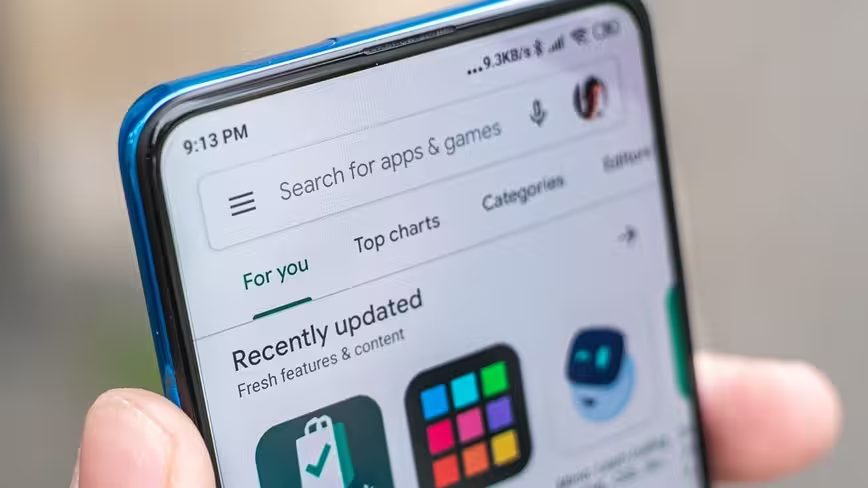
💡A major shift in Android distribution that impacts how developers deploy AI-powered mobile applications.
⚡ 30-Second TL;DR
What Changed
Third-party app stores will be accessible via the official Google Play Store.
Why It Matters
This change significantly alters the mobile app distribution landscape, potentially reducing Google's monopoly on Android software distribution. It opens new channels for developers to distribute AI-powered apps outside of Google's strict oversight.
What To Do Next
Evaluate whether your AI app distribution strategy should include alternative app stores to reach users outside the Google ecosystem.
Key Points
- •Third-party app stores will be accessible via the official Google Play Store.
- •The policy change is scheduled to take effect on July 22.
- •The decision follows a legal battle involving Epic Games.
🧠 Deep Insight
AI-generated analysis for this event.
🔑 Enhanced Key Takeaways
- •The integration requires third-party stores to undergo Google's Play Protect security scanning to ensure apps distributed through them meet safety standards.
- •Google will implement a new 'Store Listing' API that allows these third-party stores to manage updates and installations directly within the Play Store interface.
- •This policy change is part of a broader compliance effort following the Epic Games v. Google antitrust verdict, which mandated greater interoperability for Android app distribution.
- •Third-party stores hosted on Play will still be subject to Google's billing policies unless they qualify for specific exemptions granted under the settlement terms.
- •Developers utilizing third-party stores via this integration will retain access to Google Play's analytics and crash reporting tools, provided they integrate the necessary SDKs.
📊 Competitor Analysis▸ Show
| Feature | Google Play (Third-Party Hosting) | Apple App Store | Amazon Appstore |
|---|---|---|---|
| Openness | High (Allows rival stores) | Low (Walled Garden) | Moderate |
| Commission Fees | Variable (Settlement dependent) | 15-30% | 15-30% |
| Sideloading | Native Support | Restricted (EU Only) | Supported |
🛠️ Technical Deep Dive
- Implementation utilizes the Android Package Installer API to allow external stores to trigger background installations without leaving the Play Store context.
- Security verification is handled by the Play Protect cloud-based scanning service, which performs static and dynamic analysis on APKs/AABs submitted by third-party stores.
- The integration uses a new intent-based protocol that allows the Play Store to act as a frontend for the third-party store's backend catalog.
- Developers must implement the Play Asset Delivery (PAD) system if they wish to leverage Google's CDN for large app binaries distributed through these rival stores.
🔮 Future ImplicationsAI analysis grounded in cited sources
⏳ Timeline
Weekly AI Recap
Read this week's curated digest of top AI events →
👉Related Updates
Same topic
Explore #app-distribution
Same product
More on google-play-store
Same source
Latest from The Next Web (TNW)
EU Orders Google to Open Android to AI Rivals

UK abandons VPN restrictions following internal research

Face ID pioneer raises $52M for NeuroAI brain analysis

Oracle leads bid for Japan's secure air-gapped cloud
AI-curated news aggregator. All content rights belong to original publishers.
Original source: The Next Web (TNW) ↗