🇨🇳cnBeta (Full RSS)•Freshcollected in 56m
Google Open-Sources 3D Emoji Collection
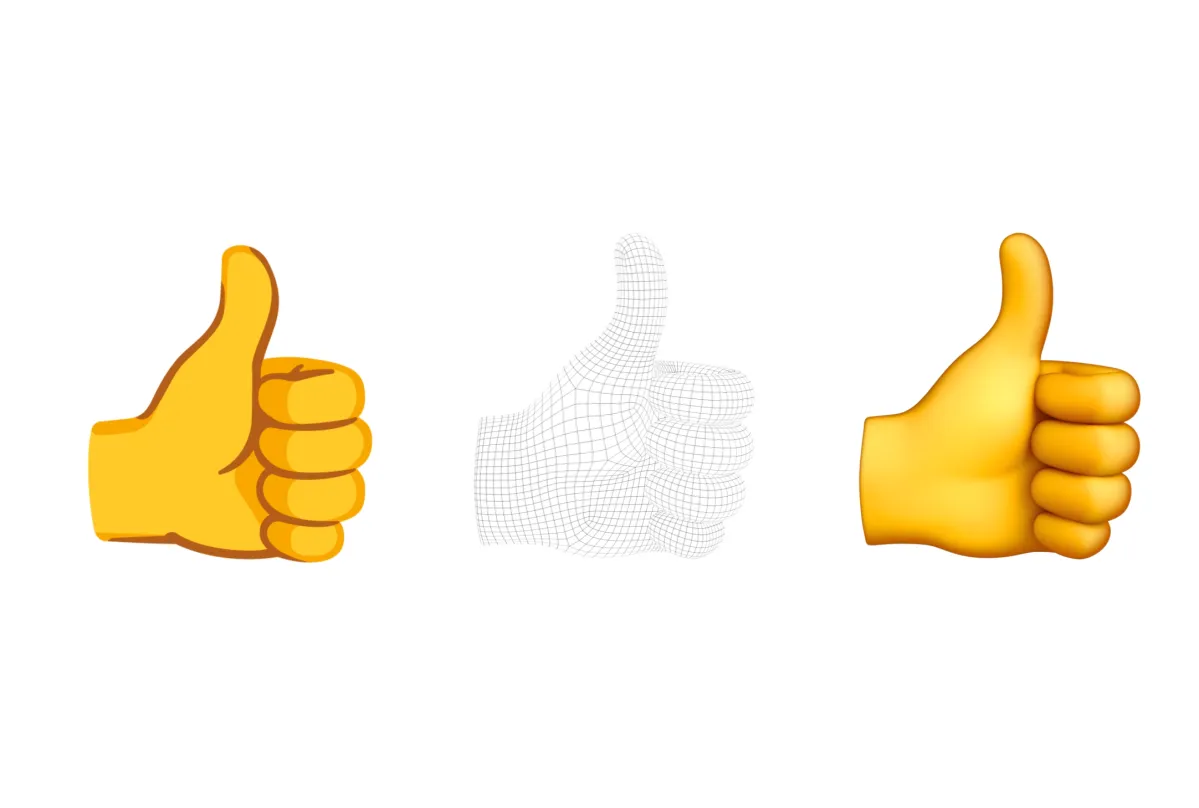
💡Access high-quality, open-source 3D assets from Google to elevate your application's visual interface.
⚡ 30-Second TL;DR
What Changed
Google open-sourced its full 3D emoji library on World Emoji Day.
Why It Matters
This provides creators and developers with professional-grade UI assets, potentially standardizing 3D emoji usage across web and mobile platforms.
What To Do Next
Download the open-source assets from the official repository to enhance your UI/UX design with consistent 3D visual elements.
Who should care:Developers & AI Engineers
Key Points
- •Google open-sourced its full 3D emoji library on World Emoji Day.
- •The release includes design documentation and asset files.
- •Developers can now integrate these 3D assets into their applications freely.
🧠 Deep Insight
AI-generated analysis for this event.
🔑 Enhanced Key Takeaways
- •The emoji collection was released under the Apache License 2.0, allowing for broad commercial and non-commercial use.
- •Google utilized the Noto Emoji project as the foundation for this open-source release, ensuring compatibility with the Unicode Standard.
- •The assets are provided in multiple formats, including PNG and SVG, alongside the original 3D source files to facilitate customization.
- •This initiative is part of Google's broader 'Noto' (No More Tofu) project, which aims to eliminate 'tofu' (missing character boxes) across all languages and platforms.
- •The 3D designs were originally developed to provide a more expressive and modern visual language across Google's ecosystem, including Android, Gmail, and ChromeOS.
📊 Competitor Analysis▸ Show
| Feature | Google (Noto Emoji) | Apple (Memoji/Emoji) | Microsoft (Fluent Emoji) |
|---|---|---|---|
| Licensing | Open Source (Apache 2.0) | Proprietary | Proprietary |
| 3D Availability | Full Library Open Source | Restricted to Apple Platforms | Restricted to Microsoft Platforms |
| Customization | High (Source files provided) | Low (System-level only) | Low (System-level only) |
🛠️ Technical Deep Dive
- The assets are rendered using a consistent lighting model and material palette to ensure visual harmony across different emoji categories.
- Source files are primarily provided in .blend format, compatible with Blender, allowing for 3D mesh manipulation and re-rendering.
- The design system employs a modular approach where base shapes are combined with specific feature sets to maintain stylistic consistency.
- Vector-based SVG versions are generated from the 3D renders to ensure high-fidelity scaling for UI/UX implementation.
- The project includes metadata mapping to ensure the 3D assets correctly correspond to Unicode codepoints for cross-platform text rendering.
🔮 Future ImplicationsAI analysis grounded in cited sources
Increased adoption of 3D emoji in third-party cross-platform messaging apps.
The availability of high-quality, open-source 3D assets removes the barrier to entry for developers who previously lacked the resources to create custom 3D emoji sets.
Standardization of 3D emoji aesthetics across the Android ecosystem.
By providing a unified open-source library, Google encourages OEMs to adopt the Noto 3D style rather than developing fragmented, proprietary emoji designs.
⏳ Timeline
2013-07
Google launches the Noto project to support all languages in Unicode.
2021-07
Google announces the transition to a new, modern 3D emoji style for Android.
2022-02
Google begins rolling out 3D emoji support across Gmail, Chat, and other Workspace apps.
2026-07
Google officially open-sources the full 3D emoji library on World Emoji Day.
📰
Weekly AI Recap
Read this week's curated digest of top AI events →
👉Related Updates


AI-curated news aggregator. All content rights belong to original publishers.
Original source: cnBeta (Full RSS) ↗