📰The Verge•Recentcollected in 19m
Google open-sources 3D emoji assets for developers

💡Access high-quality, open-source 3D assets from Google to accelerate your VR/AR UI and spatial computing development.
⚡ 30-Second TL;DR
What Changed
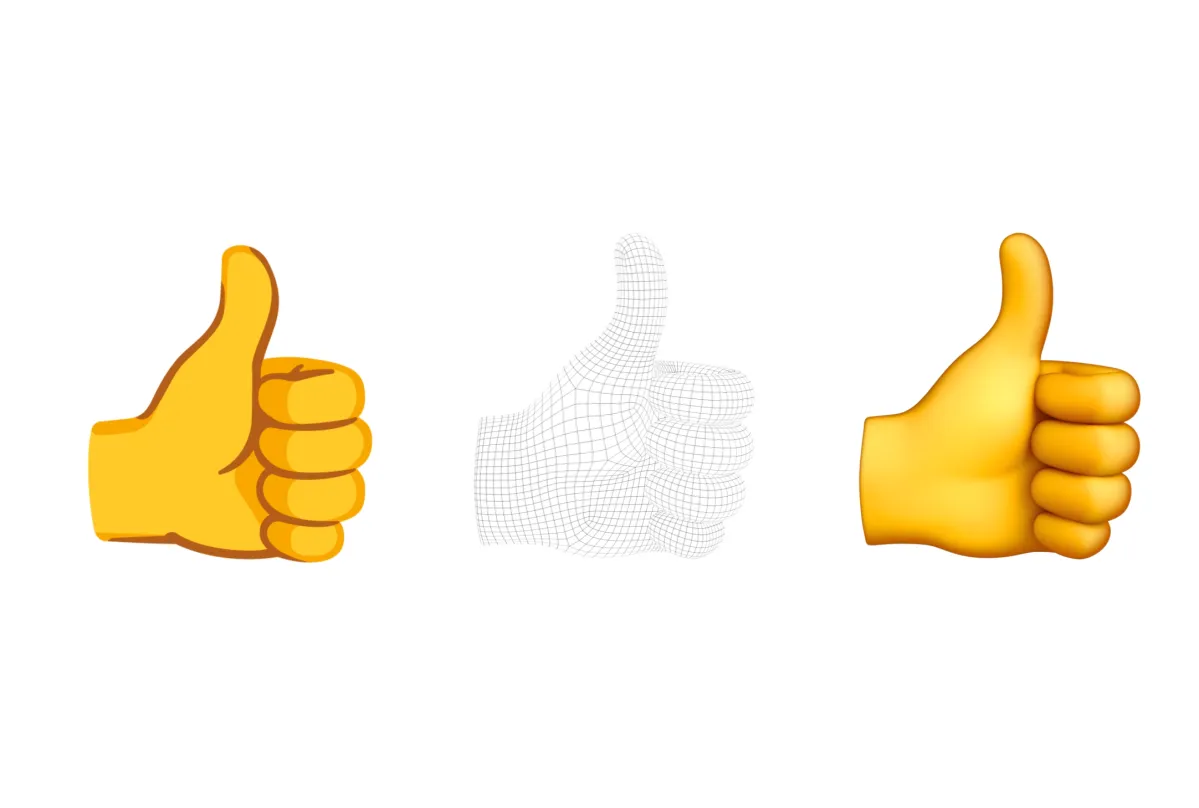
Google released raw .OBJ files for its entire 3D emoji collection.
Why It Matters
This provides high-quality, standardized 3D assets for developers working on spatial computing and metaverse applications, reducing the need for custom asset creation.
What To Do Next
Download the .OBJ files from Google's repository and import them into Unity or Unreal Engine to prototype UI elements for your next VR project.
Who should care:Developers & AI Engineers
Key Points
- •Google released raw .OBJ files for its entire 3D emoji collection.
- •The move aims to support creators building immersive VR and AR worlds.
- •The release includes insights into the design challenges of translating 2D pictograms to 3D models.
🧠 Deep Insight
AI-generated analysis for this event.
🔑 Enhanced Key Takeaways
- •The emoji assets were released under the Apache License 2.0, allowing for broad commercial and non-commercial use.
- •Google utilized a specific design language known as 'Nudge' to ensure the 3D emojis maintained legibility and personality across different screen sizes.
- •The project was originally developed by Google's design team to unify emoji representation across Android, Gmail, and other Workspace applications.
- •The .OBJ files include vertex color data, enabling developers to render the emojis without needing complex texture mapping in some environments.
- •This release is part of a broader 'Google Fonts' or 'Google Design' initiative to standardize open-source assets for the developer community.
📊 Competitor Analysis▸ Show
| Feature | Google (Open 3D Emoji) | Apple (Memoji/Animoji) | Microsoft (Fluent Emoji) |
|---|---|---|---|
| Licensing | Open Source (Apache 2.0) | Proprietary | Proprietary/Restricted |
| Format | Raw .OBJ (Universal) | Proprietary (iOS/macOS) | SVG/PNG (Web/Office) |
| VR/AR Ready | Yes (Native 3D) | Limited (System-level) | No (2D/Flat focus) |
🛠️ Technical Deep Dive
- The assets are provided as .OBJ files which are compatible with most 3D engines including Unity, Unreal Engine, and Blender.
- Models utilize vertex coloring rather than traditional UV mapping to reduce file size and complexity for real-time rendering.
- The geometry is optimized for low-to-medium polygon counts to ensure performance in mobile AR and VR applications.
- Assets are designed with a consistent lighting model to ensure they appear cohesive when placed in diverse virtual environments.
🔮 Future ImplicationsAI analysis grounded in cited sources
Standardization of 3D communication in the Metaverse
By providing a free, high-quality 3D asset library, Google lowers the barrier for cross-platform emoji consistency in emerging VR/AR social spaces.
Increased adoption of 3D UI elements in web development
The availability of these assets will likely lead to a surge in 3D-enhanced web interfaces using libraries like Three.js or React Three Fiber.
⏳ Timeline
2020-07
Google announces a major redesign of its emoji set for Android 11.
2021-07
Google begins rolling out 3D-rendered emoji designs across Gmail and Google Chat.
2022-09
Google updates its emoji library to include Noto Emoji, focusing on monochrome and color scalability.
2026-07
Google open-sources the 3D emoji collection as .OBJ files for developer use.
📰 Event Coverage
📰
Weekly AI Recap
Read this week's curated digest of top AI events →
👉Related Updates
AI-curated news aggregator. All content rights belong to original publishers.
Original source: The Verge ↗