SourceTestingCatalog•Stalecollected in 43h
Google Launches Workspace Intelligence for Gemini
#ai-context#productivity#cloud-nextworkspace-intelligencegoogleworkspace-intelligencegemini-workspacegoogle-workspace
💡AI context from emails/files unlocks smarter Workspace automation
⚡ 30-Second TL;DR
What Changed
Debuted at Cloud Next ’26 event
Why It Matters
This unifies Workspace data for smarter AI insights, boosting enterprise collaboration. It positions Google as a leader in AI-augmented productivity tools.
What To Do Next
Log into Google Workspace admin console to enable Intelligence features.
Who should care:Enterprise & Security Teams
Key Points
- •Debuted at Cloud Next ’26 event
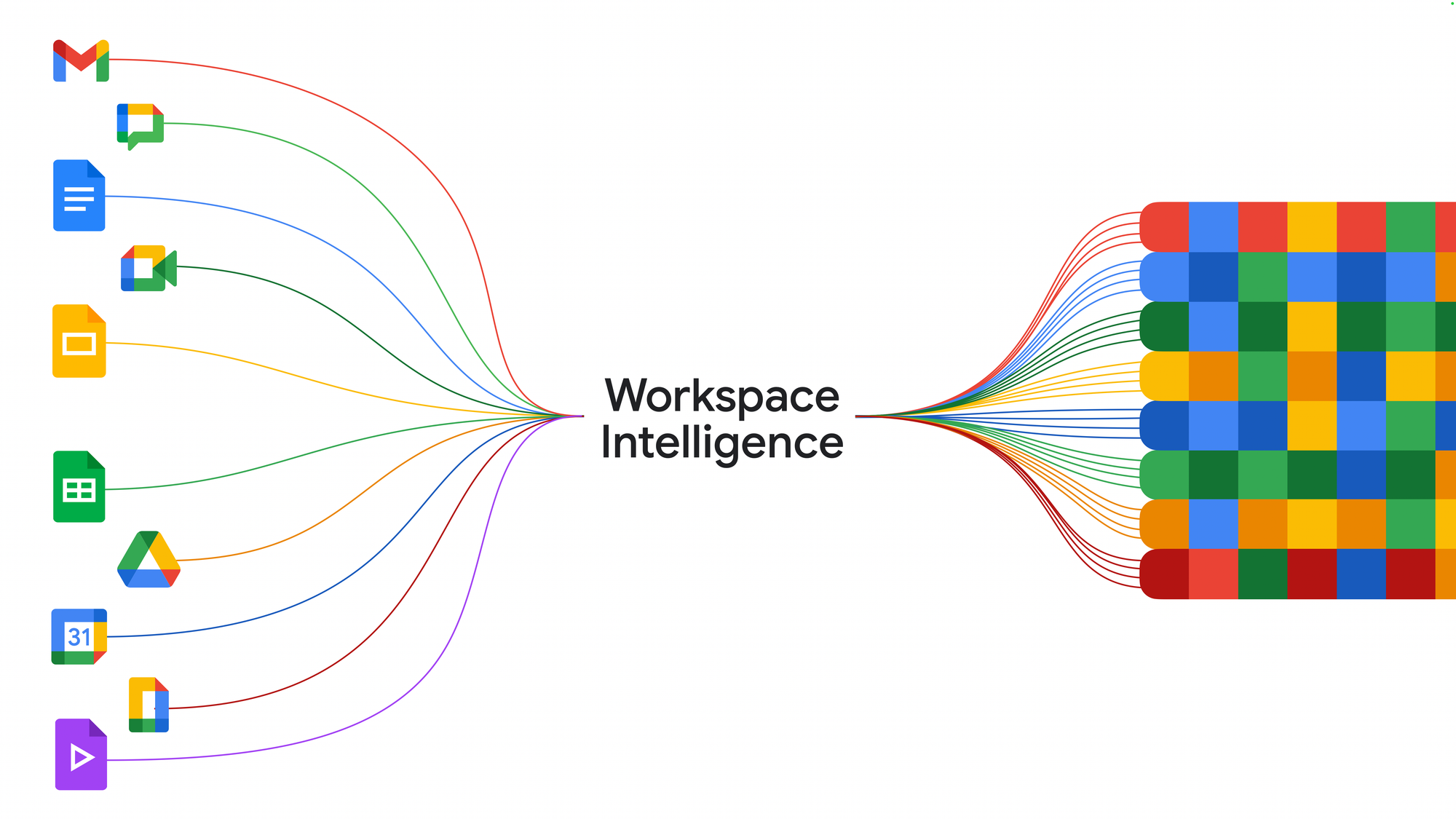
- •Integrates emails, chats, files, and projects
- •Delivers AI-powered context in Google Workspace
🧠 Deep Insight
AI-generated analysis for this event — not the original article.
🔑 Enhanced Key Takeaways
- •Workspace Intelligence utilizes a new 'Unified Context Graph' that maps cross-application relationships in real-time, moving beyond simple RAG (Retrieval-Augmented Generation) to maintain state across long-running projects.
- •The feature introduces 'Proactive Synthesis,' which automatically generates briefing documents for meetings by aggregating data from Drive, Gmail, and Meet without requiring manual user prompts.
- •Google has implemented a 'Privacy-First Compute' architecture, ensuring that the cross-app data indexing occurs entirely within the user's tenant boundary, preventing data leakage into base model training sets.
📊 Competitor Analysis▸ Show
| Feature | Google Workspace Intelligence | Microsoft 365 Copilot | Notion AI |
|---|---|---|---|
| Core Architecture | Unified Context Graph | Microsoft Graph | Knowledge Graph (Internal) |
| Integration Depth | Native across Workspace suite | Deep M365/Windows integration | Third-party app connectors |
| Pricing Model | Per-user add-on (Enterprise) | Per-user subscription | Per-user subscription |
🛠️ Technical Deep Dive
- •Architecture: Built on a multi-modal agentic framework that utilizes Gemini 1.5 Pro as the reasoning engine for cross-app orchestration.
- •Data Indexing: Employs a vector-based semantic index that updates incrementally as documents are edited or emails are received, reducing latency for context retrieval.
- •Security: Utilizes Confidential Computing (TEE - Trusted Execution Environments) to process sensitive user data during the synthesis phase, ensuring data remains encrypted in memory.
- •API Layer: Exposes a new 'Context API' for enterprise developers to inject custom business logic or third-party data sources into the Workspace Intelligence graph.
🔮 Future ImplicationsAI analysis grounded in cited sources
Enterprise adoption of Workspace Intelligence will reduce average meeting preparation time by over 40%.
Automated synthesis of cross-app project data eliminates the manual overhead of gathering context from disparate sources.
Google will shift its primary AI monetization strategy from standalone chatbot subscriptions to platform-wide intelligence integration.
The focus on deep, cross-app context makes the AI utility inseparable from the core productivity suite, increasing user lock-in.
⏳ Timeline
2023-03
Google announces initial generative AI features for Workspace (Docs and Gmail).
2023-12
Gemini Pro is integrated into Google Workspace for enterprise customers.
2024-05
Google introduces Gemini 1.5 Pro with a 1-million-token context window for Workspace.
2025-04
Google launches 'Gemini for Workspace' agents capable of multi-step task automation.
2026-04
Google unveils Workspace Intelligence at Cloud Next '26.
📰
Weekly AI Recap
Read this week's curated digest of top AI events →
👉Related Updates
AI-curated news aggregator. All content rights belong to original publishers.
Original source: TestingCatalog ↗
This is a summary, not the original. Read the source, or get the weekly briefing.
The weekly digest
One email a week. Unsubscribe anytime.