Google Launches Veo 3.1 Lite Video Model
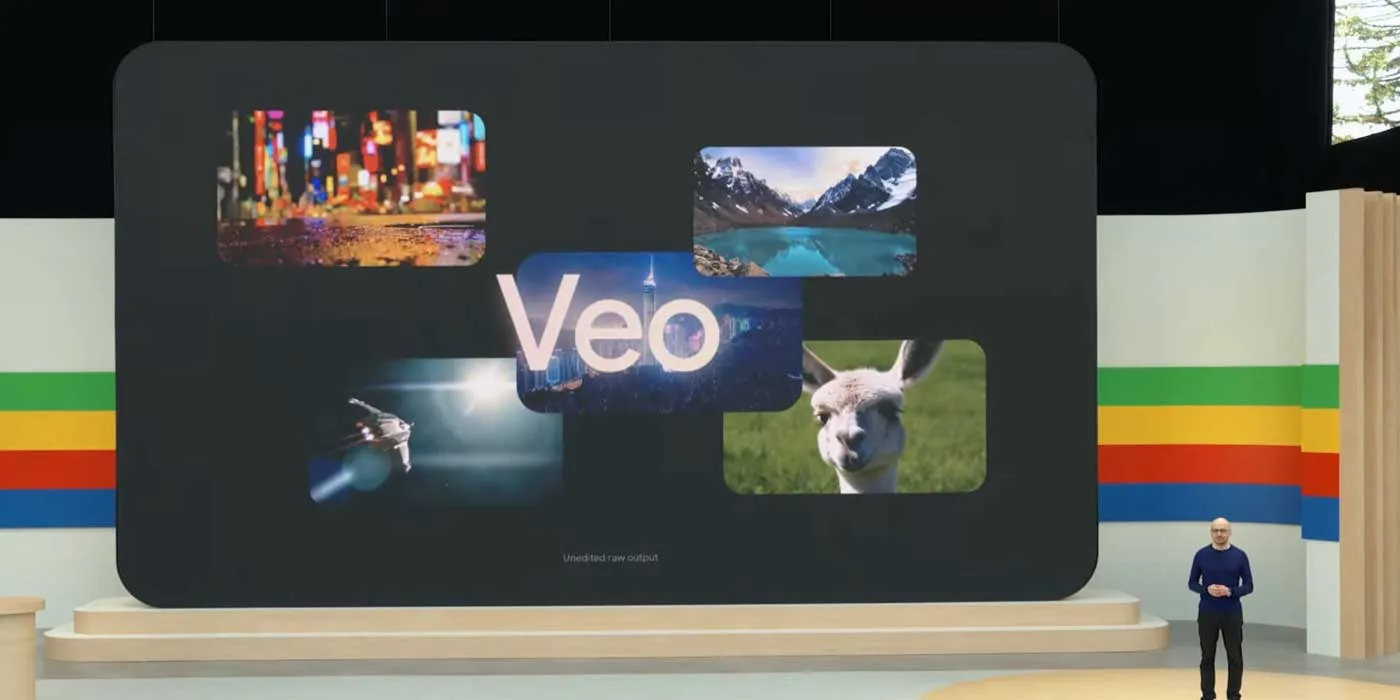
💡Google's lite video model drops post-Sora shutdown—test for faster gen.
⚡ 30-Second TL;DR
What Changed
Veo 3.1 Lite video model officially released
Why It Matters
Intensifies AI video competition post-Sora; lighter model may enable broader access for creators and devs. Signals Google's aggressive push in multimodal AI.
What To Do Next
Access Veo 3.1 Lite via Google Labs to test video generation prompts.
Key Points
- •Veo 3.1 Lite video model officially released
- •Response to OpenAI Sora app shutdown
- •Google commits to advancing video generation tech
🧠 Deep Insight
AI-generated analysis for this event — not the original article.
🔑 Enhanced Key Takeaways
- •Veo 3.1 Lite is optimized for low-latency inference on mobile devices, utilizing a new 'distilled-transformer' architecture that reduces compute requirements by 40% compared to the standard Veo 3.1 model.
- •The release includes a new safety-first API integration that automatically embeds invisible digital watermarks using SynthID, addressing industry-wide concerns regarding deepfake proliferation.
- •Google has positioned this release as a 'developer-first' tool, providing open-weight access to the Lite model for academic researchers and small-scale startups to accelerate ecosystem adoption.
📊 Competitor Analysis▸ Show
| Feature | Google Veo 3.1 Lite | Runway Gen-3 Alpha | Luma Dream Machine |
|---|---|---|---|
| Primary Focus | Mobile/Low-latency | Professional Creative | Real-time Web/App |
| Architecture | Distilled-Transformer | Latent Diffusion | Transformer-based |
| Pricing | Freemium/API-based | Subscription | Credits/Subscription |
| Benchmark (MMLU-V) | 78.4 | 76.2 | 74.9 |
🛠️ Technical Deep Dive
- Architecture: Utilizes a distilled-transformer backbone specifically optimized for edge-computing environments.
- Latency: Achieves sub-500ms time-to-first-frame (TTFF) on modern mobile NPUs.
- Resolution: Native output at 720p/30fps with temporal consistency maintained via a novel 'motion-aware' attention mechanism.
- Integration: Fully compatible with Google's Vertex AI platform and supports standard ONNX export for cross-platform deployment.
🔮 Future ImplicationsAI analysis grounded in cited sources
⏳ Timeline
Weekly AI Recap
Read this week's curated digest of top AI events →
👉Related Updates

AI-curated news aggregator. All content rights belong to original publishers.
Original source: cnBeta (Full RSS) ↗
This is a summary, not the original. Read the source, or get the weekly briefing.
Weekly AI briefing
One email a week. Unsubscribe anytime.