Google Labels Battery-Draining Android Apps
💡Google's battery warnings hit Android devs—audit wake locks for your AI apps now.
⚡ 30-Second TL;DR
What Changed
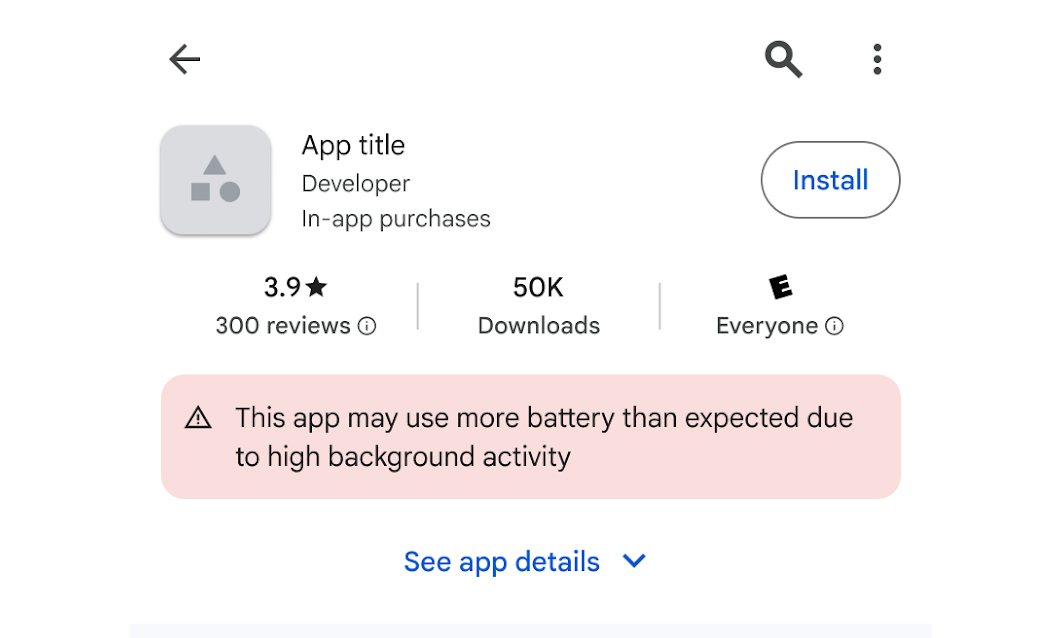
Warning label reads: “This app may use more battery than expected due to high background activity.”
Why It Matters
Encourages developers to optimize battery usage, improving Android user retention. AI practitioners building on-device inference apps must ensure efficient background processing to avoid warnings.
What To Do Next
Profile your Android app's wake lock usage with Android Studio's Battery Historian to preempt Play Store warnings.
Key Points
- •Warning label reads: “This app may use more battery than expected due to high background activity.”
- •Rollout began around March 1, appearing gradually on impacted apps.
- •Targets abuse of partial wake lock API, with exceptions for audio, location etc.
- •Apps may be excluded from Play Store discovery and recommendations.
🧠 Deep Insight
Background and context from public sources — not the original article. 4 sources cited.
🔑 Enhanced Key Takeaways
- •Apps are flagged if they hold partial wake locks for more than 2 hours per day on average, based on an automated monitoring system developed with Samsung using telemetry data from Android devices and Samsung hardware.[1][2]
- •The enforcement process includes three stages: initial private monitoring over 28 days, a warning zone for apps exceeding thresholds in 5% of sessions with potential visibility impact, and public badges for persistent offenders.[2]
- •Developers can access detailed metrics in the Android Vitals console, including P90/P99 wake-lock statistics, specific wake lock tags, session durations, and optimization recommendations.[1][2]
🛠️ Technical Deep Dive
- •Excessive Partial Wake Lock metric measures duration an app keeps the device awake (CPU active) after screen-off, tracked via real-world telemetry from Android devices and Samsung data, visible in Android Vitals console.[1]
- •Threshold: >2 hours of wake lock hold per 24-hour period; exceptions for user-beneficial activities like music playback or initiated downloads; calculated over 28 consecutive days.[1][2]
- •Enforcement tiers: Private alerts in Play Console with P90/P99 stats; warning if exceeded in 5% of sessions; public badge and ranking demotion for non-compliance.[1][2]
🔮 Future ImplicationsAI analysis grounded in cited sources
⏳ Timeline
📎 Sources (4)
Factual claims are grounded in the sources below. Forward-looking analysis is AI-generated interpretation.
Weekly AI Recap
Read this week's curated digest of top AI events →
👉Related Updates
AI-curated news aggregator. All content rights belong to original publishers.
Original source: Engadget ↗
This is a summary, not the original. Read the source, or get the weekly briefing.
Weekly AI briefing
One email a week. Unsubscribe anytime.