Google Cloud Next: AI Everywhere Now
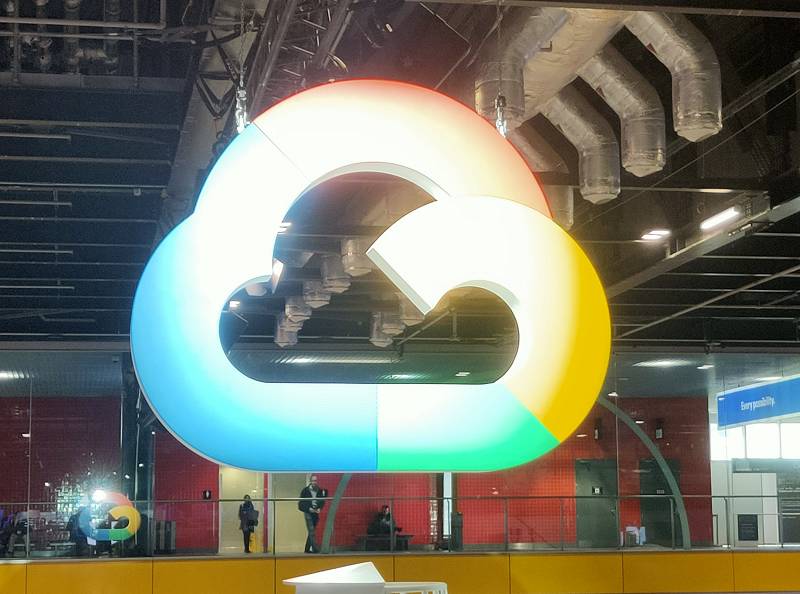
💡Google Cloud Next reveals AI's total takeover – check for infra shifts
⚡ 30-Second TL;DR
What Changed
Google Cloud Next highlights AI-first strategy
Why It Matters
Signals deepening AI commitment from Google Cloud, potentially accelerating enterprise AI adoption. Practitioners may see new tools emerging from event announcements.
What To Do Next
Explore Google Cloud Next session recordings for new AI service previews.
Key Points
- •Google Cloud Next highlights AI-first strategy
- •Event underscores pervasive AI integration in cloud services
- •Kettle newsletter covers GCN and Mythos updates
🧠 Deep Insight
AI-generated analysis for this event — not the original article.
🔑 Enhanced Key Takeaways
- •Google Cloud Next 2026 focused heavily on the integration of 'Mythos,' a new proprietary agentic framework designed to automate complex multi-step cloud infrastructure orchestration.
- •The conference introduced 'Gemini-on-Demand' pricing tiers, allowing enterprises to dynamically scale compute resources based on real-time inference latency requirements rather than fixed instance types.
- •Google announced a strategic shift toward 'Sovereign AI' clusters, enabling European and APAC clients to deploy localized, air-gapped instances of their latest LLMs to comply with regional data residency mandates.
📊 Competitor Analysis▸ Show
| Feature | Google Cloud (Mythos/Gemini) | AWS (Bedrock/Q) | Microsoft Azure (Copilot/OpenAI) |
|---|---|---|---|
| Agentic Framework | Mythos (Orchestration-focused) | Bedrock Agents (Task-focused) | AutoGen/Copilot Studio |
| Pricing Model | Latency-based dynamic scaling | Usage-based/Provisioned throughput | Token-based/Reserved capacity |
| Sovereign AI | Localized air-gapped clusters | AWS Dedicated Local Zones | Azure for Operators/Sovereign Cloud |
🛠️ Technical Deep Dive
- •Mythos Architecture: Utilizes a hierarchical multi-agent system where a 'Controller' model manages sub-agents specialized in network topology, security policy enforcement, and resource provisioning.
- •Inference Optimization: Implementation of 'Speculative Decoding' at the hardware level using TPU v6p chips to reduce time-to-first-token by a reported 40% compared to previous generations.
- •Data Integration: Native support for Vector Search within BigQuery, allowing for RAG (Retrieval-Augmented Generation) pipelines to operate directly on petabyte-scale structured and unstructured data without external indexing.
🔮 Future ImplicationsAI analysis grounded in cited sources
⏳ Timeline
Weekly AI Recap
Read this week's curated digest of top AI events →
👉Related Updates
AI-curated news aggregator. All content rights belong to original publishers.
Original source: The Register - AI/ML ↗
This is a summary, not the original. Read the source, or get the weekly briefing.
The weekly digest
One email a week. Unsubscribe anytime.